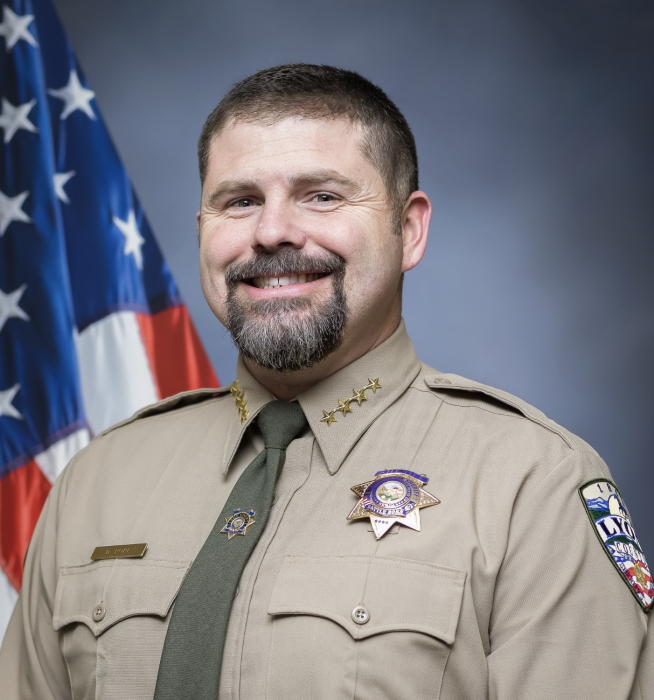
On Friday, Lyon County Sheriff Brad Pope issued his message of the week with a new twist: instead of talking about what the Lyon County Sheriff’s Office has been up to, he instead focused on what they want to do — ask legislators to close a legal loophole allowing noncompliant sex offenders to not be held accountable for failing to register as required by law.
Pope’s message is as follows:
Message of the Week 08/21/2026
Summary: This is a very long message this week, so I am providing a summary at the top. The Lyon County Sheriff’s Office has identified a “loophole” that prevents sex offenders who do not register on time or appropriately from avoiding prosecution. The Lyon County Sheriff’s Office is submitting a 103-page proposal to our legislative representatives to close that “loophole” and prosecute sex offenders who are arrested for noncompliance. Our goal is straightforward: clear laws, accurate records, enforceable requirements, and accountability for those who violate them.
Message of the Week:
Over the past several months, members of the Lyon County Sheriff’s Office have been reviewing Nevada’s sex offender registration laws and the processes used to track compliance with those laws. Through that review, we have identified areas where I believe Nevada law and the systems used to enforce it can be improved.
Nevada law places specific registration requirements on convicted sex offenders. Depending on their classification, offenders must appear in person and verify their information at established intervals. Tier III offenders, for example, are required to appear not less frequently than every 90 days.
The Lyon County Sheriff’s Office has a zero-tolerance approach to sex offenders who fail to meet their registration requirements. When an offender misses a required verification and probable cause exists for an arrest, we will take enforcement action.
During our review, however, we identified a significant problem between the law as written and the administrative process used to document compliance.
Here is a simple example.
A Tier III offender is required to verify by April 4th but fails to appear. Our Deputies locate and arrest the offender several days later for the violation. We still require the offender to complete the overdue verification because, regardless of the criminal violation, we need accurate information about where that person lives, works, and can be located.
Once that late verification is submitted and processed by the State Registry, the offender is returned to a compliant status. If the State’s official record does not preserve the period when the offender was actually out of compliance, it becomes extremely difficult to later prosecute the missed-verification case.
The prosecuting authority serving Lyon County has advised us that, for cases involving a missed periodic verification, it requires a Certificate of Record from the State Registry confirming the offender was out of compliance during the relevant period before it will prosecute the charge.
That creates a problem. Our Deputies can identify the violation, establish probable cause, make an arrest, and then do what the law also expects us to do—get the offender back into compliance. But that subsequent compliance can leave the official State record without the historical documentation necessary to prosecute the violation that already occurred.
Compliance is important. Accountability is also important. One should not erase the other.
Nevada law already criminalizes violations of sex offender registration requirements. We are not asking the Legislature to create a new crime or increase existing penalties. We are asking for a system that accurately documents when a missed-verification violation occurs and preserves that history after the offender returns to compliance.
We are proposing a standardized process allowing local law enforcement to promptly notify the State Registry when an offender misses a required verification, along with preservation of that historical noncompliance in the offender’s official registration record.
We are also asking the Legislature to consider a second issue involving certain high-risk sex offenders. Nevada currently imposes geographic restrictions on some offenders while they are on probation, parole, or lifetime supervision, including restrictions involving locations primarily used by children. We believe it is worth examining whether narrowly tailored protections should remain available in appropriate cases after correctional supervision ends when the individual remains subject to sex offender registration requirements.
We recognize that Nevada has previously faced litigation involving geographic restrictions. Any proposal must respect constitutional protections and be carefully written. We are not advocating for a blanket restriction on every registered offender.
Our staff has developed a formal legislative concept proposal addressing these issues, supported by Nevada law, information obtained directly from the Nevada Sex Offender Registry, relevant court decisions, and examples from other states. We intend to provide that proposal to our legislative representatives for consideration.
Law enforcement works with these statutes every day. When we identify a gap between what the law requires and what actually occurs in practice, I believe we have a responsibility to bring that issue forward and propose a reasonable solution.
Our goal is straightforward: clear laws, accurate records, enforceable requirements, and accountability for those who violate them.
We will continue to aggressively and professionally enforce Nevada’s sex offender registration laws and work with our local and State partners to protect the citizens of Lyon County.
Respectfully,
Sheriff Brad Pope