I have had some interesting questions in the last few weeks. A friend lives in the Lakeview area of Carson City and has a dozen deer who regularly browse and damage the plants in her yard. She wants some flowers or maybe some blooming shrubs for her planters that they won’t eat.

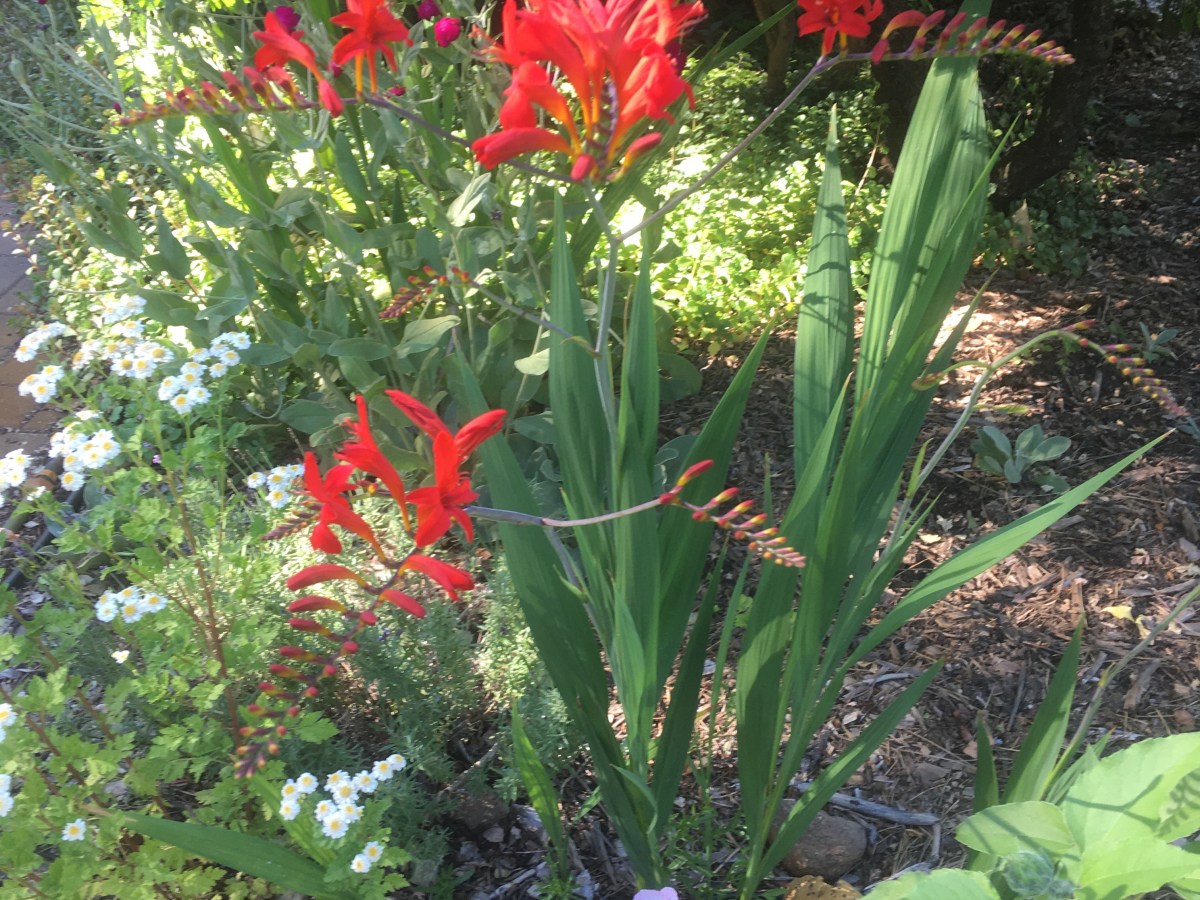
While deer will eat just about anything if they are hungry, the following perennials and shrubs are on my “A” list of “Rarely Bothered” plants: catmint, hyssop, daffodils, lamb’s ears, lavender, iris, mint, monkshood (needs shade), peony, santolina, sweet woodruff. Shrubs include barberry, butterfly bush, Oregon grape, potentilla. Go here for the link to my article on deer resistant plants.
Someone asked me what my favorite overall spring fertilizer is. I have to say I like a 16-16-16 analysis product (percent of nitrogen, phosphorus, potassium in product). I use it on everything – flowers, shrubs, lawn. The nitrogen is low enough that it doesn’t burn tender new shoots of flowers and doesn’t encourage rapid growth, which can suffer in our late freezes. Check out the bag front for the numbers. I will apply a 21-0-0 plus sulfur later in the spring for the lawn.
Here’s a good request: “What can I use on my crabapple trees to prevent fruit development?” Products that contain ethephon or naphthalene acetic acid (NAA) can be applied to prevent unwanted fruit on trees by causing blossom abortion. These sprays must be applied during full bloom to inhibit fruit set on ornamentals. Check with a quality nursery such as Greenhouse Garden Center for products. Please be careful with these products because significant plant damage can occur if you don’t read and follow the label. See link here.
Another reader suggested I discuss horticultural oil sprays, because, although it’s late to apply dormant oil sprays since leaves are out, summer weight oils are timely now. Horticultural oils are generally highly refined petroleum products that are filtered and distilled to remove compounds that can harm plants.
However, plant-based horticultural oils are less refined and may burn plants more readily. Summer oilis applied when plants are in leaf at a lower concentration than dormant oil. Superior oil, sometimes called supreme oil, doesn’t contain sulfur and can also be applied when plants are in leaf. Go here for the link to my publication on horticultural oils for pest and disease control.
If you have a gardening question, drop me an email at skellyj@unr.edu. Happy gardening!
— JoAnne Skelly is an Associate Professor and Extension Educator, Emerita, University of Nevada Cooperative Extension. She can be reached at skellyj@unr.edu.