8 minute read
Hello readers, I’m back with another update on the City Hall project.
We are still working through the full scope of the City Hall and Parking Garage Project, and are working with the city to nail down specifics. While the project proposal as a whole includes many factors, I want to focus in on the scope of the City Hall build project and, later, the Parking Garage project alone for this round of updates.
This is meant to serve as a bite-size overview of the recent actions relating to the City Hall project. We’ll continue to follow it and provide updates and explanations as we receive more information.
Also, our poll results are in from our previous “Weigh in on the City Hall Project” Carson Now poll:
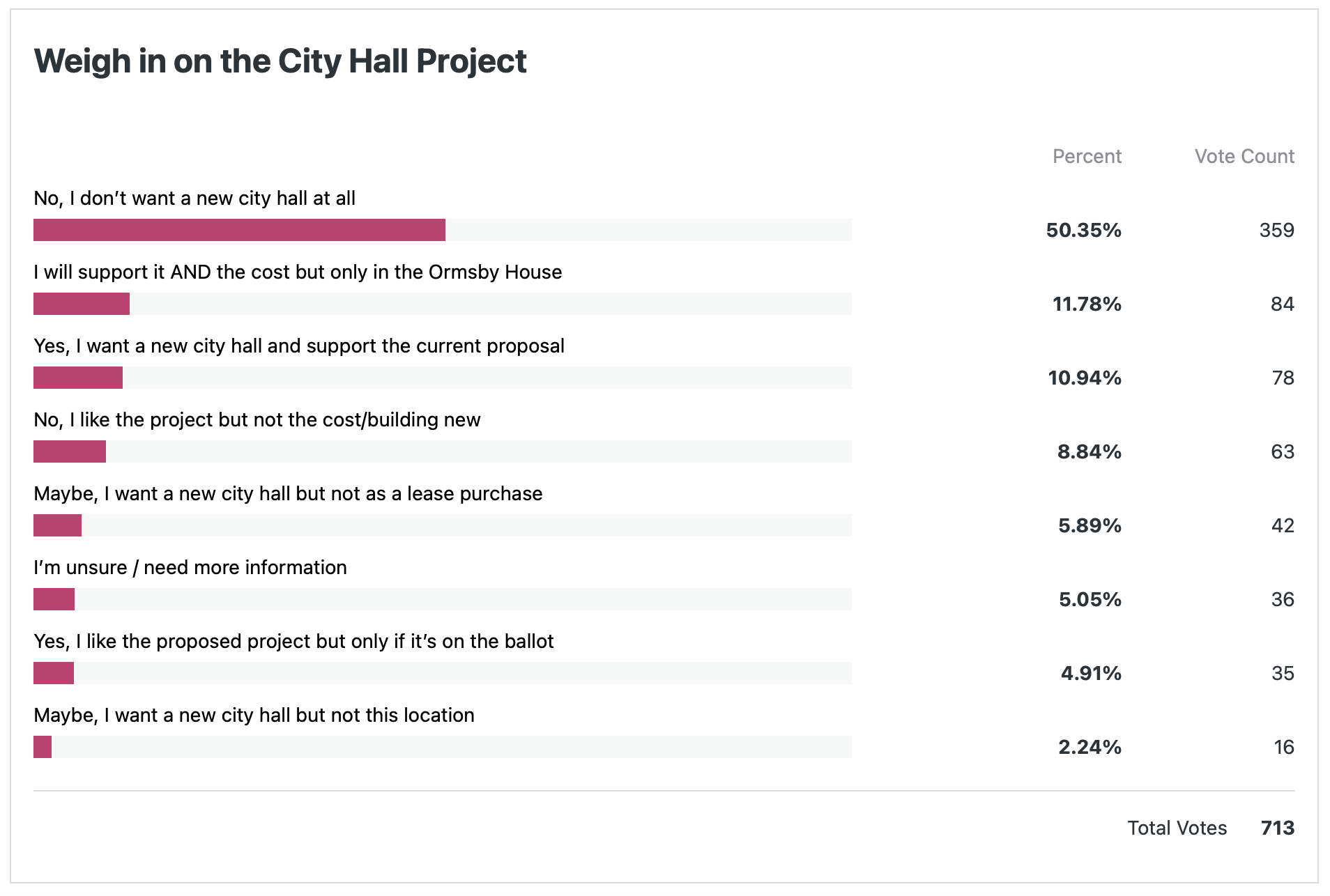
At the recent September 3 Board of Supervisors meeting, two items came before the board for consideration:
- Agree findings have been met to declare that the city hall building project is in the public interest and authorize staff to proceed with the financing process for up to $30 million with a final agreement returning later for final approval.
- Approve the parking-garage proposal as serving a public purpose, and direct staff to prepare the future development agreement and supporting terms for later approval. We’ll jump into that in a subsequent breakdown.
The primary purpose of that resolution, according to city staff in response to Carson Now, was to allow staff to take the proposed Lease Purchase Agreement to the Debt Management Commission and Taxation for their approval, demonstrating that the City met the requirements of NRS 350. The board determined the findings were met on both and moved them forward.
Let’s dig into what they said, what we know, and what we’re still trying to get answers to.
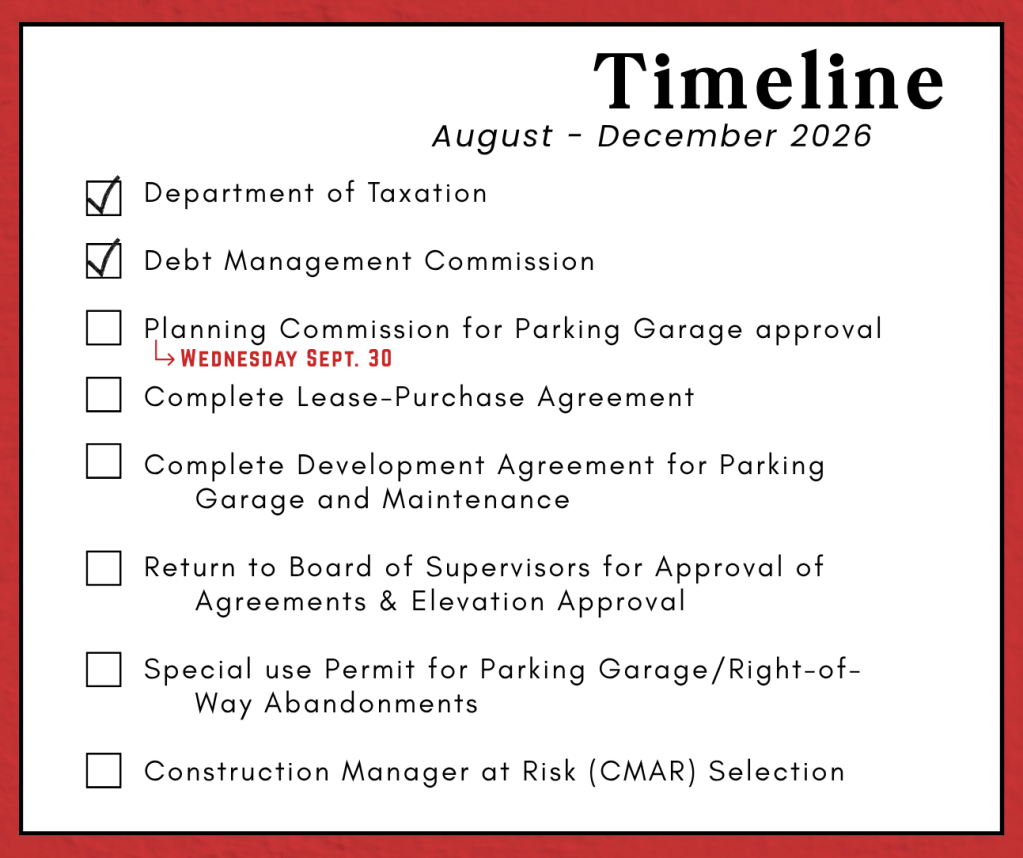
City Hall: Facts and Evidence
During its Sept. 3 meeting, the Carson City Board of Supervisors voted 4-1 to adopt a resolution finding that the public interest requires the city to pursue a lease-purchase agreement with the Mop and Mae Adams Foundation (HMAF) of up to $30 million (principal, around ~$55 million total) for the proposed City Hall.
What does public interest mean?
In this context, “public interest” means that the project would benefit the public enough to justify taking on the debt, and the board must state the facts supporting that conclusion before they can approve it, as dictated by state law.
Facts cited:
- More space is needed because of projected growth and limited room in aging city facilities.
- A new City Hall would improve city services for residents.
- The city says it cannot pay for the project outright from existing funds because of current budget constraints and competing needs.
Space needs
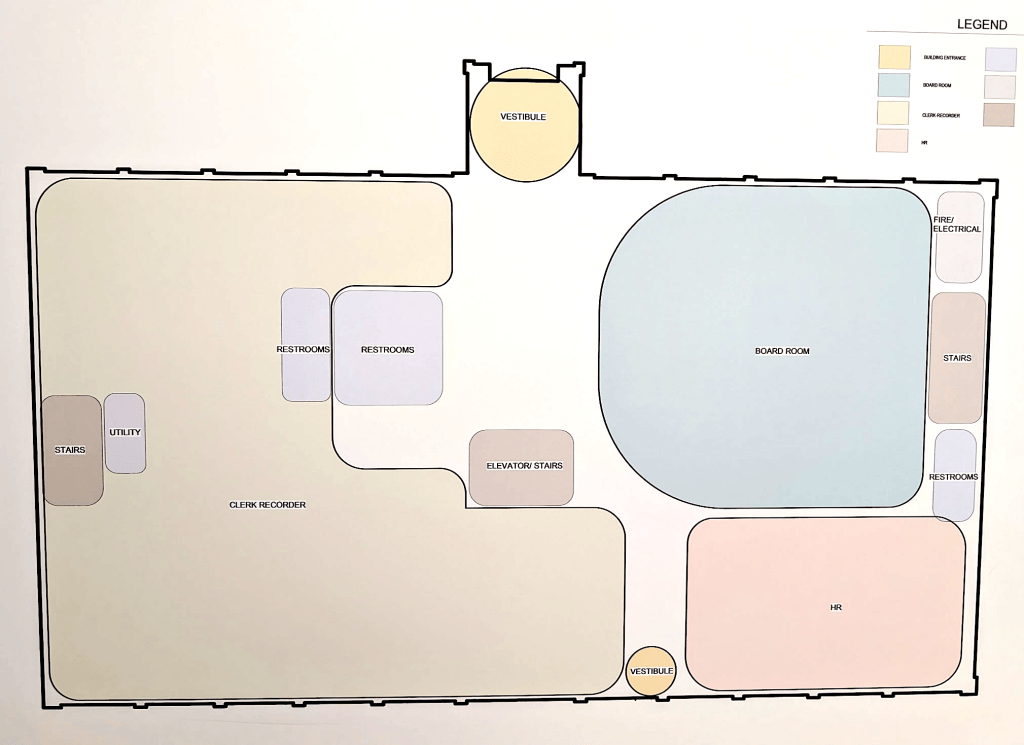
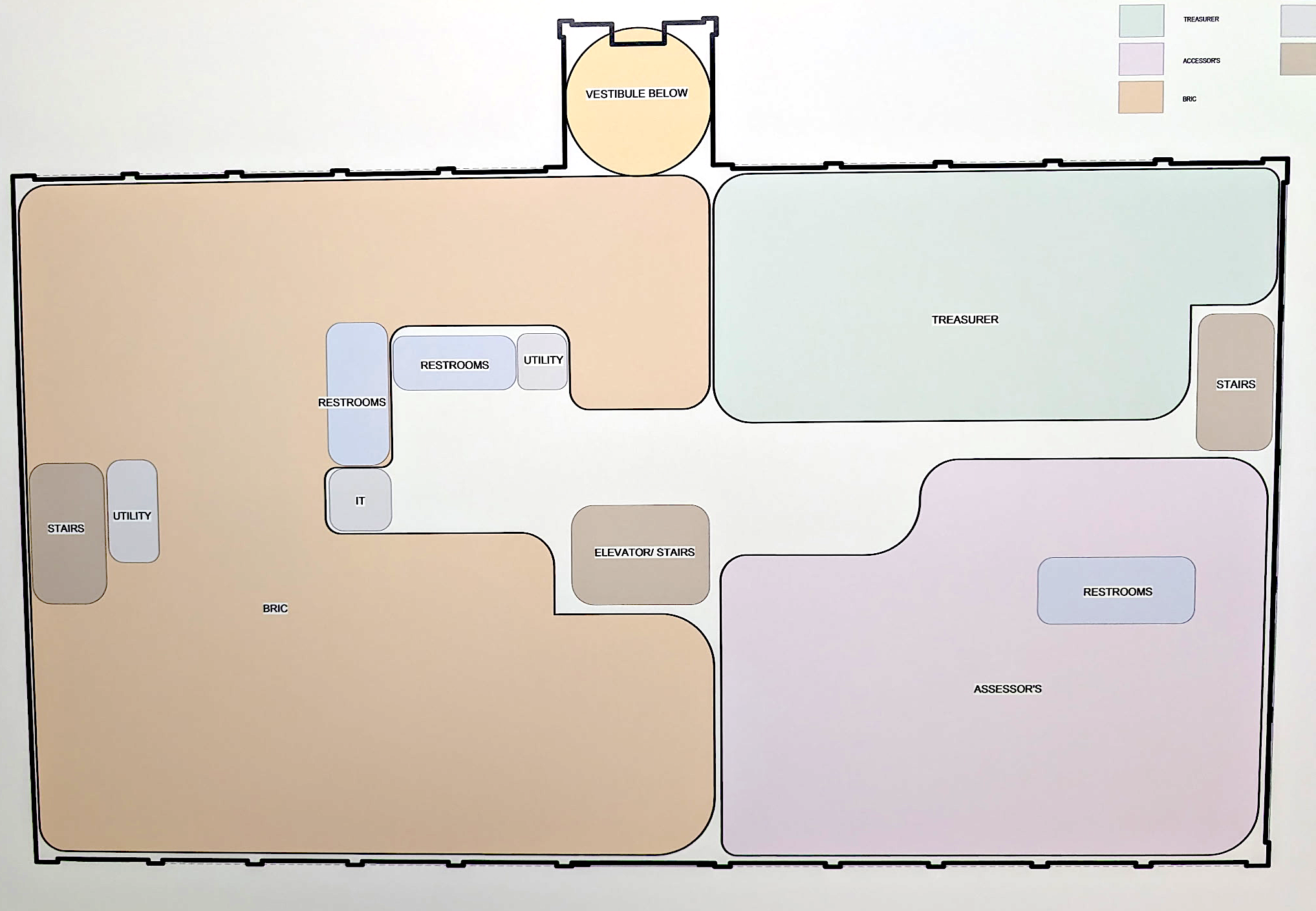
The city is basing their need for additional space based on a cited 2022 space-needs study, which looked at spaces that were occupied at the time by departments, and added a 10% contingency, arriving at roughly a 43,000 to 44,000 square foot need.

Questions raised:
The city confirmed to Carson Now that no third-party space-needs assessment was conducted before those presentations and that the 2022 figures were developed by staff using personnel levels, existing space and assessor records. No records exist relating to the work done as part of that assessment aside from the presentations given at the time. The city also said the board has not requested a subsequent space or parking study, meaning the approximately 45,000-square-foot proposal now under consideration is rooted primarily in that earlier staff analysis rather than a newer independent needs assessment.
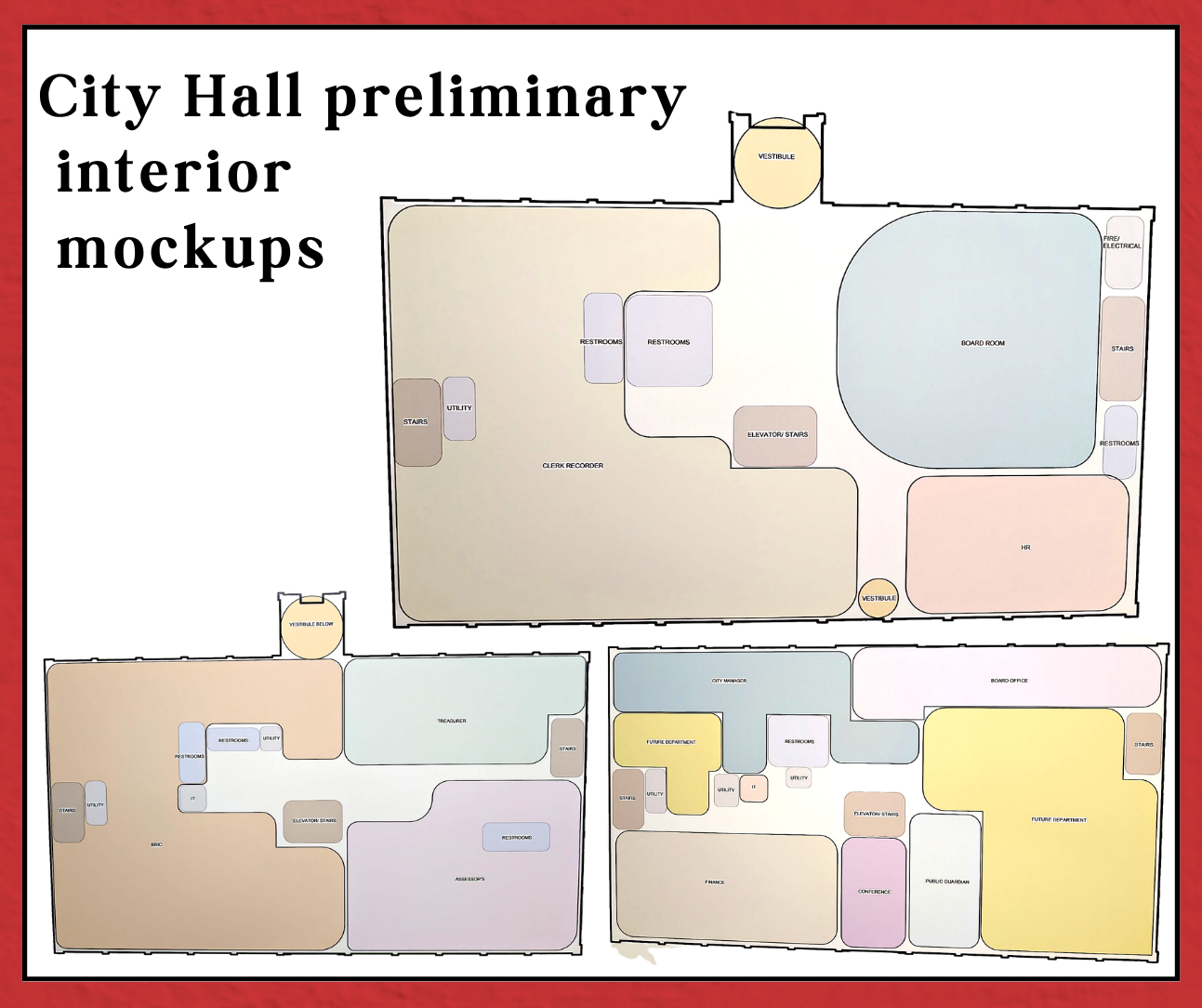
Closer look

Improve City Services for Residents
The city has said a new City Hall would improve services by consolidating departments that are currently spread across multiple buildings into a single location. The city says that would create a centralized customer service center, make services easier for residents to access and improve coordination among roughly 100 employees.
Questions raised:
At this time, the city has not made public what the documented current issues are as far as service access goes, or how efficiency would improve. The resolution states that projected growth and limited space in existing facilities create a need for a new City Hall “in order to improve services to residents.”
Costs
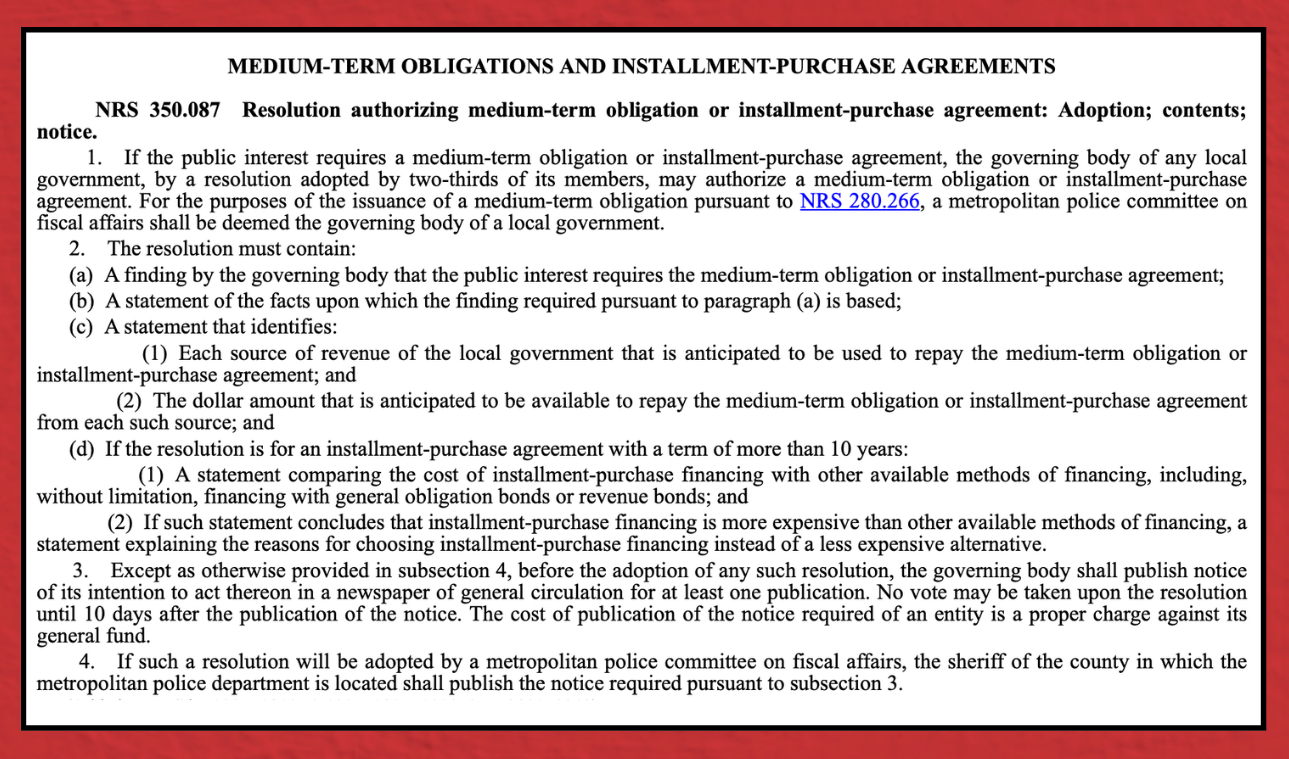
Since the city is proposing a lease-purchase agreement lasting more than ten years, state law requires the Board must do four things before an approval can be made:
- Find that the public interest requires the lease-purchase agreement and state the facts supporting that finding.
- Identify the specific anticipated repayment sources and the amounts from each fund to be used.
- Compare the cost of the lease-purchase with other available financing, including general obligation and revenue bonds.
- If the lease-purchase is more expensive, explain why the city is choosing it instead of a less expensive alternative.
City Explanations
- (explained above)
- The city identified “legally available funds” as the repayment source, to be determined by future boards during each budget cycle. Payments would be ~$1.96 million per year for as long as 30 years, with the General Fund identified as an available source. Staff said the current plan is to use Redevelopment Area 1 (RDA-1) funds as a bridge from 2029 – 2031 when RDA ends, then shift the General Fund into the role of primary funding source.
- JNA Consulting Group found the lease-purchase through HMAF will cost more than two other financing bond (large public loans) options currently available to the city. The lease-purchase is estimated at 5%, compared with 4.68% for GO-revenue bonds and 4.8% for revenue bonds.
- The city says it chose the more expensive lease-purchase because HMAF owns the property and plans to retain control during construction. The resolution says the lease-purchase is necessary for that ownership structure and could help meet the city’s March 2029 occupancy target.
Questions raised:
Why did the funding plan change?
In July, the city proposed using redevelopment money from both RDA-1 and RDA-2 funds for the City Hall payments until those funds sunset in 2031 and 2034, at which point the General Fund would absorb those payments.
On Sept. 3, staff said RDA-1 would be used only through 2031 as a “bridge,” and RDA-2 wouldn’t be used at all. The resolution instead uses the broader term “legally available funds.”
In response to questions about why funding plans have changed between July and now, the city responds:
Plans are becoming more defined as staff make adjustments. The Board allocates funding for the Lease Purchase Option annually, requiring the City to demonstrate its ability to pay from a Legally Available Funding Source. The City has met this requirement, as both the General Fund and Redevelopment District I qualify as Legally Available Funding Sources.
What does the term “legally available funds” actually mean, and how was the board able to use it to satisfy state law requirements?
NRS requires that the board provide a statement identifying each source of revenue anticipated to be used, and the dollar amount from each source. However, instead JNA and bond counsel said no single revenue source is pledged.
The resolution does not specify dollar amounts from individual revenue sources. Carson Now has asked the city and counsel how the ‘legally available funds’ language satisfies the statutory requirement identifying anticipated revenue sources and amounts.
“The reason it’s written like this is to provide flexibility to the city,” JNA’s John Peterson said. “So that would include, for instance, the General Fund of the city. … the redevelopment agency would also fall under that umbrella of all legally available funds. It’s not meant to obfuscate. It’s meant to provide as broad of a base for the city to pay this from as possible.”
Instead, future boards are tasked with deciding, at the beginning of each budget year, which “legally available funds to use”, with the General Fund serving as the “main backstop,” according to Peterson.
If a board does not (or cannot) appropriate the money for the payment, the lease-holder (HMAF) can evict the city and reclaim the building.
In response to a question for additional clarification, the City wrote:
Because it is a Lease Purchase Option, and subject to Non-Appropriation, the City is required to show that it has legally available funds to pay the Debt. Staff showed that the General Fund is sufficient. “Legally Available Funds” just means unrestricted funds, i.e., legally, it is not restricted for another purpose, via NRS, Donors, grants, etc.
Can the city use RDA money, and does it need to?
State law requires a finding that no other reasonable financing is available before redevelopment money is used for this type of improvement.
The city’s own financial analysis says the General Fund can afford the roughly $2 million annual payment, and JNA identified cheaper bond options the city can use as soon as next month.
That raises a separate question about whether the city can show that no other reasonable financing is available before using redevelopment money. Carson Now asked the City if it is able to use RDA funding if General Fund monies are available.
In response, the City said:
If Staff proposes using Redevelopment Funding for FY 2029 -FY2031 during each of the budget cycles, it will be in conjunction with the Capital Improvement Plan, and the Board will determine if there is a need for Redevelopment Funds from District 1 each year; when we do a funding resolution, which is approved by a 2/3rds vote of the Board.
What would paying from the General Fund affect?
JNA’s affordability analysis stated that debt service must come before other capital projects or major maintenance. That raises the question of what other projects or spending could be delayed or reduced to make the City Hall payment. The majority of the General Fund is made up of employee pay and benefits.
Roads already have a dedicated funding source through the Regional Transportation Fund and Street Maintenance Fund through taxes. However, the City previously stated that allocating 2% of the General Fund would put around $2 million more per year towards road funding, but doing so would reduce spending for the Sheriff’s Office, Fire Department or Parks.
When asked to comment on how this project’s $2 million payment would not reduce funding towards other departments, the City responded:
Debt Service in the General Fund starts reducing in FY 2031 and drastically reduces in FY 2034, so if approved, this financing would replace current debt service payments (previously approved for a new detention facility, 25-year bond).
What is the long-term financing plan?
Staff says the City intends to refinance the lease-purchase with bonds as soon as possible and they negotiated a no prepayment penalty. What remains unclear is when that would happen, what it would cost and how much interest the city expects to pay before refinancing.
In addition, if the City has not refinanced into a bond by the time RDA ends in 2031, and HMAF still owns the building, the city could be required to pay ~$400,000 in property taxes each year, according to HMAF.
This is meant to provide you, the public, with a broad overview of where the project is in the process, what questions we are looking into, and what answers we have received. We will continue working with the City and other sources of information as the process continues.
Next up: the parking garage project. Stay tuned!