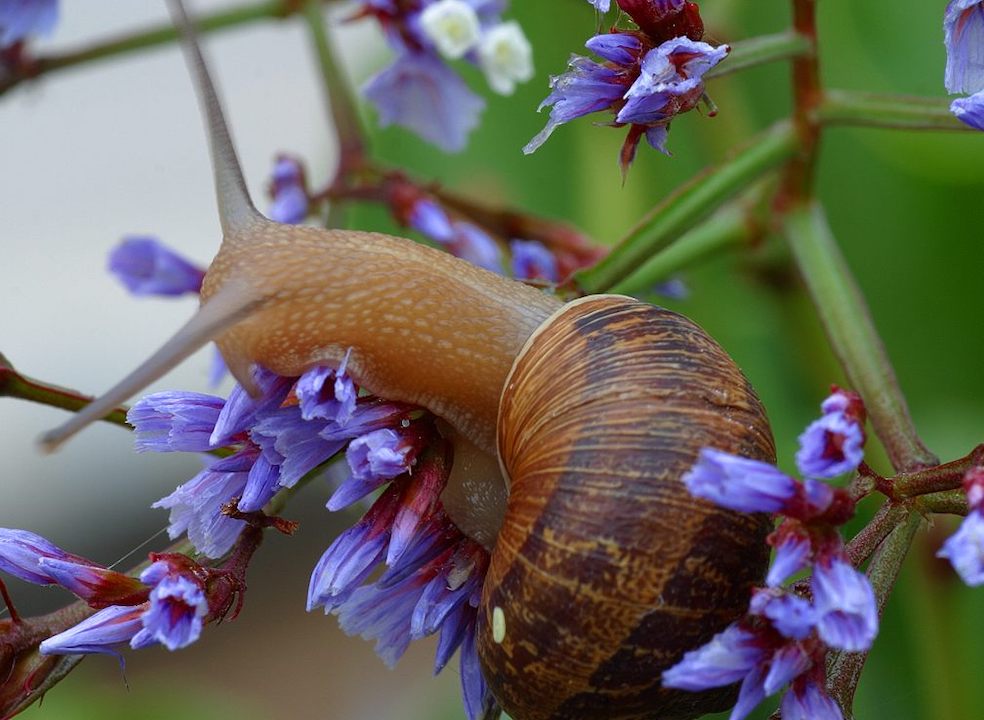
One of my yoga buddies has a problem with snails, even though I have rarely seen snails here in Nevada. Snails in home landscapes are usually non-native. They get introduced on infected purchased plants materials and then become invasive pests.

These despised garden annoyances chew irregular holes in leaves and flowers of many plants. They particularly like seedlings and plants with lush foliage. They even eat marigolds, which have a natural repellant in them to most pests.
Snails can lay about 80 eggs six times per year. That’s a lot of snails! It does take about two years for snails to mature. They hibernate in the soil in the winter.
According to UC Davis IPM (UCIPM): “Management requires vigilance and a combination of practices that includes eliminating moisture and hiding spots, trapping, exclusion, and handpicking. Baits can be helpful but by themselves don’t provide adequate control in areas that contain plenty of shelter, food, and moisture.”
The best time to find these critters is early morning, at night, or on cloudy days. Sometimes all you will see is the plant damage or slimy silvery trails. The trick to snail management is to handpick them daily initially. After a while, weekly picking may suffice. UCIPM recommends wearing rubber/latex gloves. Seal them up in a plastic bag and put it in the trash. Some people prefer to crush them. (YUCK!)
Using drip irrigation versus overhead watering can reduce moist surfaces and humidity. The best time to irrigate is in the early morning so the soil can dry out quickly and reduce snail activity. Cultivate soil shallowly to allow eggs to dry out.
The UCIPM website has a section on creating traps, such as an inverted melon rind. There are many kinds of traps, and all need to be checked daily. Copper bands around planting boxes and trees deter snails until they become tarnished. You can clean them with a vinegar solution.
Toads, snakes, ground beetles, birds and even rats, will eat snails, but usually don’t provide decent population reduction. However, chickens and other fowl do provide good control, if they are penned in an infested area.
Snail baits are available, but by themselves do not effectively manage snails. It can take several days to a week for the snails to die. There are some baits that can be used in organic situations. Timing of baiting is important with application in the late afternoon being best. Check out the UCIPM website for detailed information.
— JoAnne Skelly is an Associate Professor and Extension Educator, Emerita, University of Nevada Cooperative Extension. She can be reached at skellyj@unr.edu.