
Road funding is probably the most often brought up topic when it comes to issues in Carson City. Being the capital city, road issues can get complicated. We are a county unto ourselves, with several state-operated roads twining through. A vast majority of commercial real estate within town is also owned and operated by the state, which does not pay property tax but brings hundreds of drivers onto the roads each day.
In total, according to City Manager Nancy Paulson, the city would need $25.5 million each year to maintain the city’s local roads in fair condition, and regional roads in satisfactory condition.
However, project funding hangs only around $4.5 million.
This year, the city proposed one way to alleviate some of this deficit: two ballot measures dedicated solely to road funding. The first asked voters to increase the city’s sales tax by 0.25%. The second asked voters to authorize a government services tax of one cent per each dollar of a vehicle’s valuation during registration each year.
Both were unpopular with voters, which shot both down by nearly 70%.
According to Paulson, the measures combined would have brought in around $7 million annually, allowing the city to construct another four to five miles of local roads each year.
“If the ballot questions had passed, projects would have included roads near Mark Twain Elementary School and Pioneer High School, as presented to the RTC in June,” Paulson said.
Now that the measures have been squashed, many are left to ask: now what? For several years road funding has been one of the most — if not the number one — topic brought up when it comes to issues in Carson City.
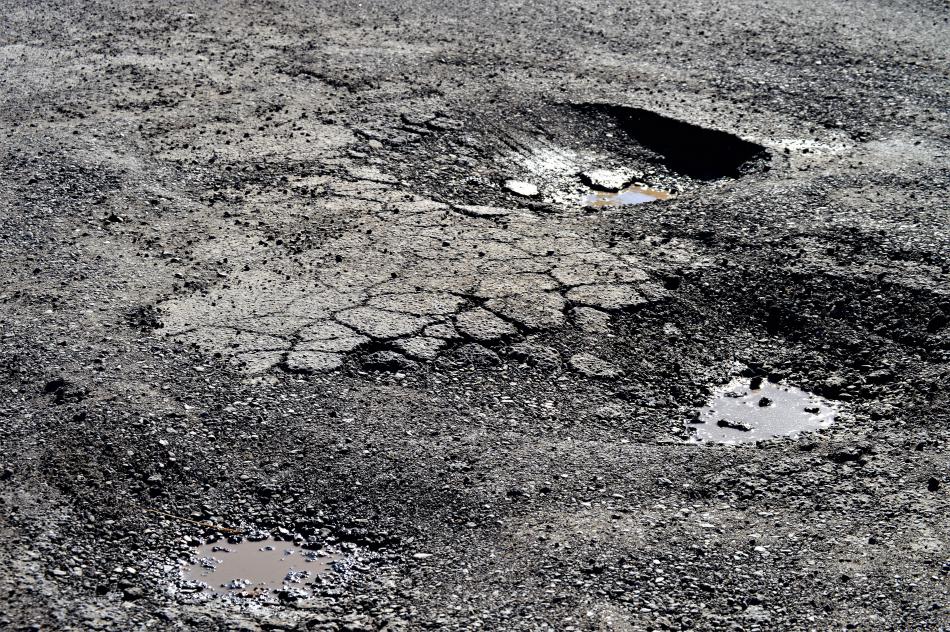
According to Paulson, there are currently 286 miles of paved roads in town, and its estimated that the city needs to be able to reconstruct 15 to 20 miles per year to improve the overall Pavement Condition Index (PCI). Currently, ranging from 0 to 100 with 100 equaling a brand new road, the PCI of all roads in Carson City is around 62. Without additional revenue, by 2050 that number will have dropped to 33.
The Board of Supervisors approved spending $2.5 million in ARPA funding in 2023, and this year, the Carson City Regional Transportation Commission (RTC) approved $3.5 million in transportation funding for projects in 2025, including the preservation of Stewart Street, Fairview Drive, and 5th Street, along with the reconstruction of Little Lane near the post office.
Still, these are only drops in the bucket for the overall issue.
“The problem is not going away,” Paulson said. “Without additional funding, the city’s ability to address these problems will be reduced each year as construction increases and the current revenue remains the same.”
Paulson said city staff will continue to prioritize and deliver road projects using available funding, and plans to coordinate with the RTC in the coming months to review past options and consider additional options not previously analyzed.
“Although that list is now shorter, it may include discussing the conversion to unpaved roads and new preservation methods,” Paulson said, adding, “Their work to solve the road funding challenge continues.