
In other items:
-Omitted uncontested candidates to appear on general election ballot after primary blunder
-Deputy District Attorney three-year contract approved with $600K over projections
-Board approves $3.8 million budget augmentation to account for new grants, unexpected costs
-And other items
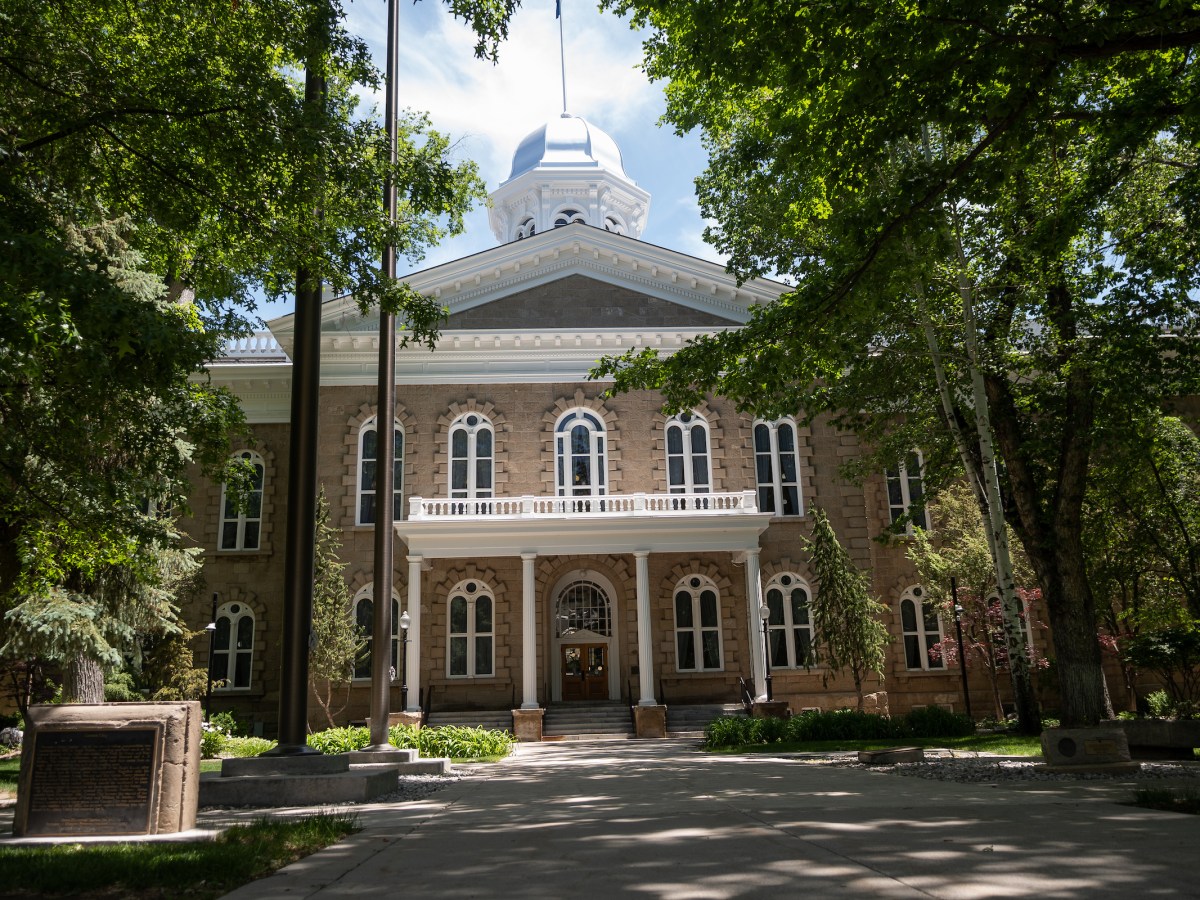
On Thursday, Carson City Supervisors met to tackle a number of items including an election snafu, budget augmentations, awards to employees (including one very special pup), and more.
Before we get into the rest of the meeting, the most important item on the list is: Double Halloween is officially confirmed! This year, trick-or-treating in Carson City will take place — not on Oct. 31, 2026 — but on Friday, Oct. 30 as the Nevada Day Parade will fall on the formal Nevada Day date of Oct. 31. More on that below:
Now, to the rest of the meeting:
Omitted uncontested candidates to appear on general election ballot after primary blunder
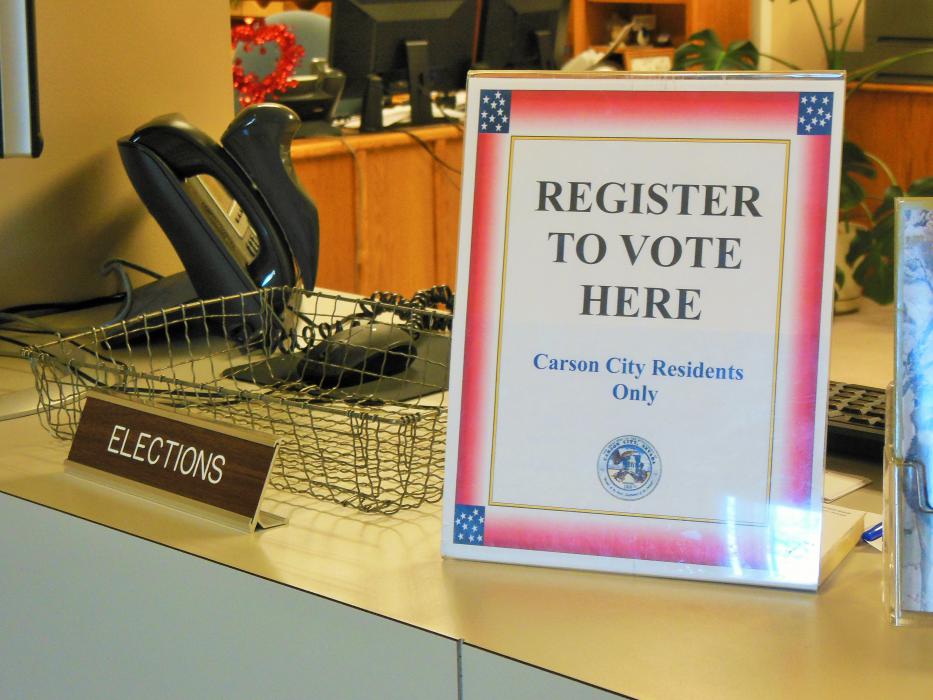
Supervisors unanimously certified the results of the June 9 primary election on Thursday, while publicly addressing an error that left uncontested nonpartisan candidates off the primary ballot — including Clerk-Recorder Scott Hoen himself.
During the Supervisors meeting, Hoen said that all elected officials in Carson City serve in nonpartisan roles. Under Nevada law, candidates for uncontested nonpartisan offices are required to appear on the primary election ballot; if a candidate receives at least one vote, they are declared elected and are not placed on the general election ballot.
However, he said due to a “procedural error,” the names of uncontested nonpartisan candidates were omitted from the June 2026 primary ballot.
To resolve the issue, these candidates will instead appear on the upcoming general election ballot.
Hoen told the board that the error has not compromised the election. Working with the district attorney and the Nevada Secretary of State’s office, he said they determined placing those candidates on the general ballot would not harm candidates or the electorate.
“There is no adverse impact to voters and no eligible voter is disenfranchised,” Hoen said, and told the board all affected candidates were contacted and agreed to the corrective approach.
Because the races are uncontested, the candidates will face no delays in assuming office following the general election.
Because there were no competitive nonpartisan contests, Carson City did not print a separate nonpartisan ballot for the primary.
However, nearly 100 registered nonpartisan voters utilized Nevada’s same-day registration to update their party affiliation so they could participate in the Republican or Democratic primaries.
This is not the first time Carson City elections has had a snafu on the ballot; in 2024, mail-in ballots had to be resent to all voters in Carson City after an American Independent Party candidate (a party which has historically leaned on the alt-right side of the political spectrum) was incorrectly listed as a Democrat. In addition, several drop-off locations listed on the ballot did not exist:
Following the explanation of the recent error, Chief Deputy of Elections and Marriages Shauna Bakkedahl presented the official canvass of the vote.
According to the canvass, 10,772 of the city’s 23,612 registered active voters cast a ballot, resulting in a 45.62% voter turnout.
The Board of Supervisors voted unanimously to accept the canvass and officially certify the election results.
Deputy District Attorney three-year contract approved with $600K over projections
The Carson City Board of Supervisors voted 4-1 on Thursday to authorize a new three-year collective bargaining agreement for the district attorney’s office, granting substantial salary and benefit increases despite warnings of impending economic austerity.
The agreement with the Carson City Deputy District Attorneys Association, which takes effect July 1, 2026, will cost the city hundreds of thousands of dollars more than originally budgeted.
Addressing the board, City Manager Glen Martel explained that applying the new terms pushes the three-year payroll projection for the deputy district attorneys to $8,652,193. This represents a $600,944 increase above the city’s previously approved three-year projections for the department.
According to city documents, the nearly $601,000 increase stems from a sweeping overhaul of the attorneys’ compensation structure. The new contract establishes higher pay grade ranges for Deputy District Attorneys I, II, and III. It also guarantees annual cost-of-living adjustments between 1% and 3%, alongside a 5% merit pay increase on July 1, 2026, and a 4% annual merit increase thereafter for those meeting expectations.
Beyond base salaries, the agreement expands several financial benefits. The city will implement longevity pay for attorneys upon completion of six years of service. The contract also introduces a new “Bail Reform Stipend” that pays attorneys $450 per day to attend pretrial release hearings on weekends or holidays. Additionally, weekly stipends for being on-call for legal consultations were increased to $1,400 a week for criminal division attorneys and $500 a week for juvenile division attorneys.
The significant price tag drew sharp criticism from Supervisor Maurice White, who cast the lone dissenting vote against both the collective bargaining agreement and a subsequent resolution that revised benefits and salary ranges for unclassified city employees.
“I still believe that we are headed for austerity measures and I personally think this is very inappropriate to keep passing these, putting out this kind of money, especially when our neighbors are already implementing austerity measures,” White said before voting against the contract.
In government, austerity measures generally refer to strict financial policies — such as municipal budget cuts, hiring freezes, or reduced public services — implemented to rein in deficits during difficult economic periods.
Despite White’s economic warnings, the remaining four board members approved the agreement without further public debate.
Board approves $3.8 million budget augmentation to account for new grants, unexpected costs
Supervisors unanimously approved a resolution to augment the city’s 2025-26 fiscal year budget by nearly $3.8 million, reconciling the books by officially logging newly acquired grant money and covering unexpected municipal expenses.
Chief Financial Officer Sheri Russell-Benabou described the exactly $3,791,950 adjustment as a “last punch at the budget” for the 2026 fiscal year.
The augmentation primarily accounts for new money entering the city’s coffers.
According to the city’s financial reports, $3,228,496 of the total stems from newly added revenue, predominantly consisting of intergovernmental grants.
This includes $1,595,376 for the Regional Transportation Fund and $1,198,628 for the Grant Fund, alongside miscellaneous income and interest earned across various departments.
The remaining $563,454 of the augmentation is drawn from existing working capital and fund balances from accounts such as the Workers’ Compensation, Fleet Management, and Insurance funds.
Simultaneously, the city utilized the budget amendment to ensure no active department budgets fell into a deficit due to unanticipated costs. The city moved $2,109,489 out of its existing General Fund contingency to cover a series of surprise bills.
The steepest unexpected expense was a $684,816 bill for wildland fire operations overtime. The shifted contingency funds also covered various annual and sick leave payouts resulting from unpredicted employee retirements across multiple departments.
“We have contingency for, and we have moved that contingency into those budgets so there’s no budget violation,” Russell-Benabou told the board.
The measure, designated as Resolution 2026-R18, passed without any opposition from the board or the public.
In other items:
To encourage economic growth and protect the downtown’s aesthetics, the board unanimously introduced an ordinance to exempt certain non-residential properties in Redevelopment Area 1 (RDA1) from on-site parking requirements. City officials noted that enforcing parking requirements for the area’s numerous small lots creates financial barriers for new businesses and often forces the paving over of existing landscaping, even though ample street parking already exists. The exemption, which applies strictly to already-developed lots under one-third of an acre, acts as a test case that will automatically expire in January 2031 alongside the redevelopment area itself.
In a move directly related to the district attorney compensation debate, the board also voted 4-1 to revise the employment benefits for unclassified city employees. The resolution, which drew another solitary “no” vote from Supervisor White citing economic austerity, updates salary ranges, establishes new longevity pay and increases annual merit pay raises from 3% to 4% for those meeting expectations. The new unclassified benefit structure will take effect alongside the start of the new fiscal year on July 1, 2026.
On the federal funding front, the board unanimously approved $392,927 in Community Development Block Grant (CDBG) funding primarily designated for the construction of ADA-compliant sidewalks and curb ramps along Division and 10th Streets. Additionally, officials authorized $293,425 annually for three years in Community Support Services Grants (CSSG) to local nonprofits. Supervisor Stacey Giomi abstained from the CSSG vote, citing a legal conflict of interest because he is employed by Nevada Health Centers, and serves as a volunteer board member for Advocates to End Domestic Violence.
Supervisors recognized long-standing city employees for their service. Honorees included Assistant Sheriff Jim Primka for 30 years of service, Parks and Recreation Director Jennifer Budge for a decade of leadership, and several other veterans of the city’s engineering and judicial departments.
The best of the best (in this reporter’s opinion) was awarding a special five-year service certificate to Camper, a Carson City Deputy K9 trained to serve in the local elementary schools. By all accounts, he has been doing a stellar job in his many roles which include the extremely important task of playing unsupervised with children at recess in addition to his more serious roles of keeping students safe.
Wrapping up the session, city officials and residents highlighted several upcoming community initiatives designed to bolster local commerce and culture. City Manager Glen Martel promoted the newly launched “Walkabout William Street,” a passport program incentivizing residents to visit 23 businesses along the East William Street corridor.
You can watch the full meeting below: