This year marks the third year of the Carson High School Career and Technical Education (CTE) Early Childhood Education (ECE) program under teacher Kendra Tuttle.
This isn’t the first time the class has been offered at Carson High, but it has been around two decades since the last time students could take ECE courses through the high school — and Tuttle’s was one of the last classes to take it before the program ended.
After graduating, she knew she wanted to return to the classroom and obtained her teaching degree. Now, back at her own high school, teaching the course that helped cultivate her love for education, she is thrilled to be able to help develop the next generation of teachers.
“This honestly is a dream job for me,” Tuttle said.
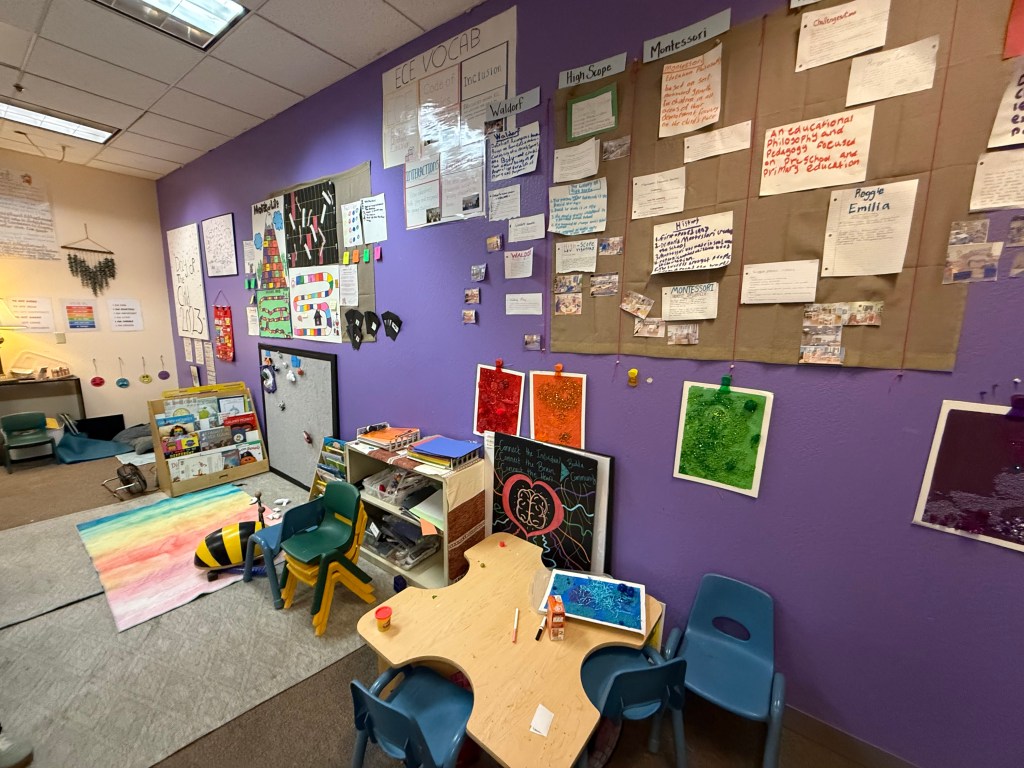
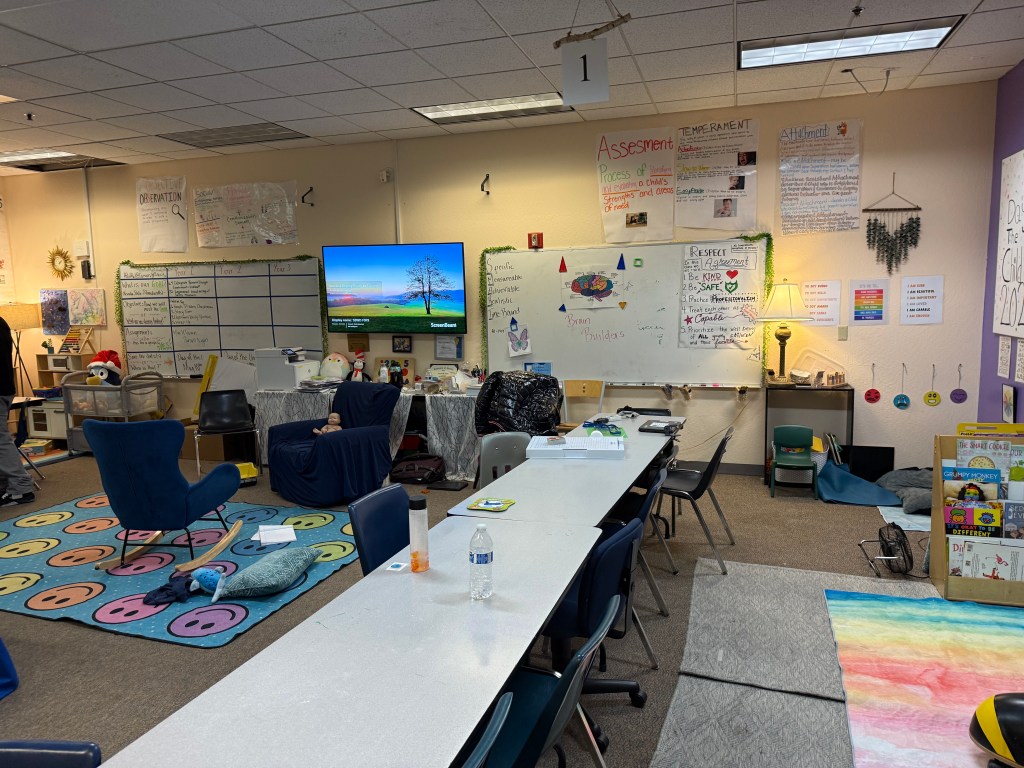
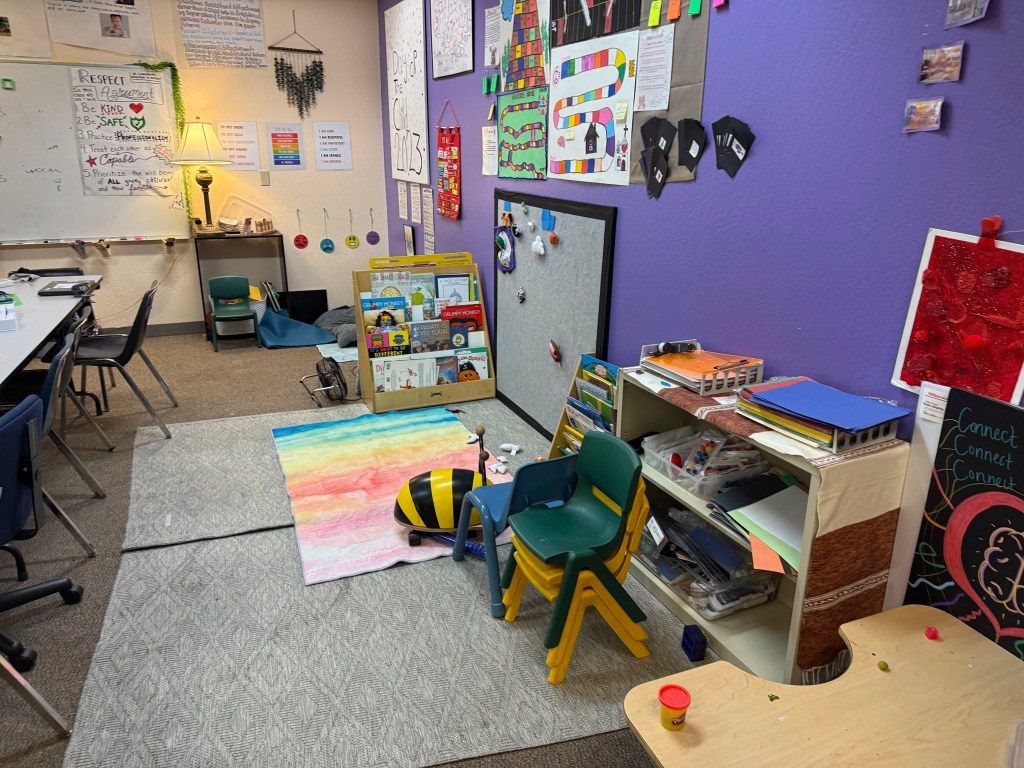
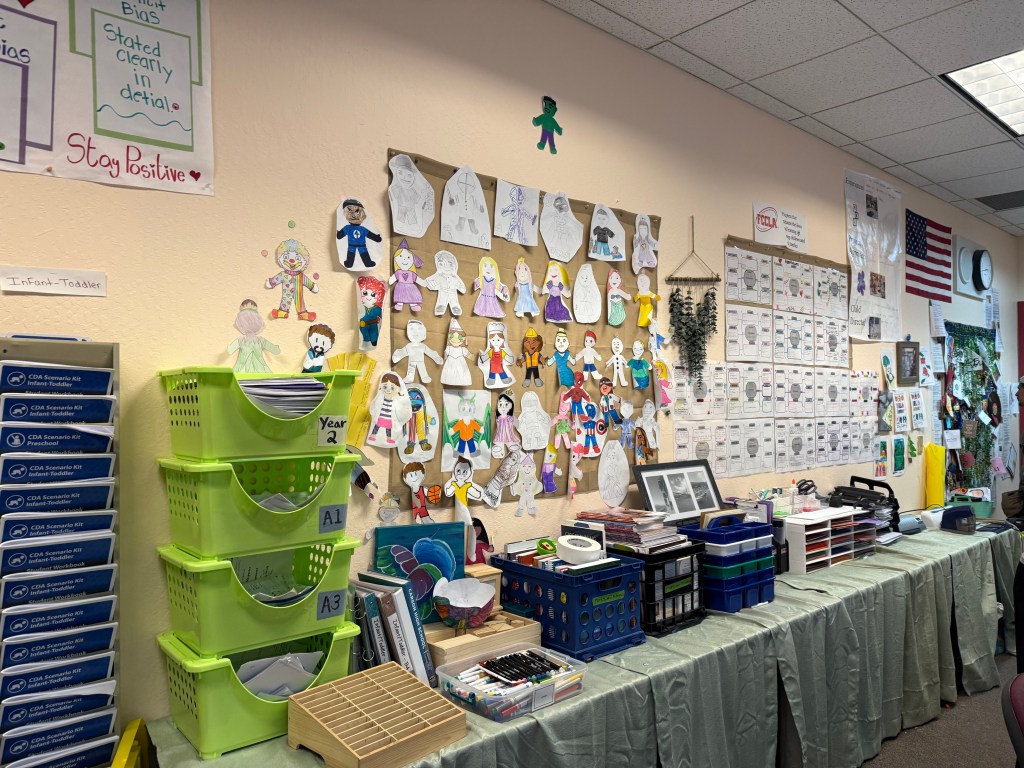
But this isn’t a regular course learned traditionally, inside a classroom with textbooks or videos. CTE courses are all about preparing students for the real world, and part of that means they are learning in the real world, through internships, events, community partnerships, and more.
The program is extremely popular — so much so that it boasts a 400 student waiting list to get in — but many in the community are unaware of its existence.
The Program
The program is spread across two years, and if those are completed, students can remain on to take advanced studies if they choose.
The district has an agreement with Western Nevada College that if students finish the two-year course and pass a test offered by WNC, they receive nine college credits.
So far, out of the 90 students who have taken the test, 94% have successfully received their college credits.
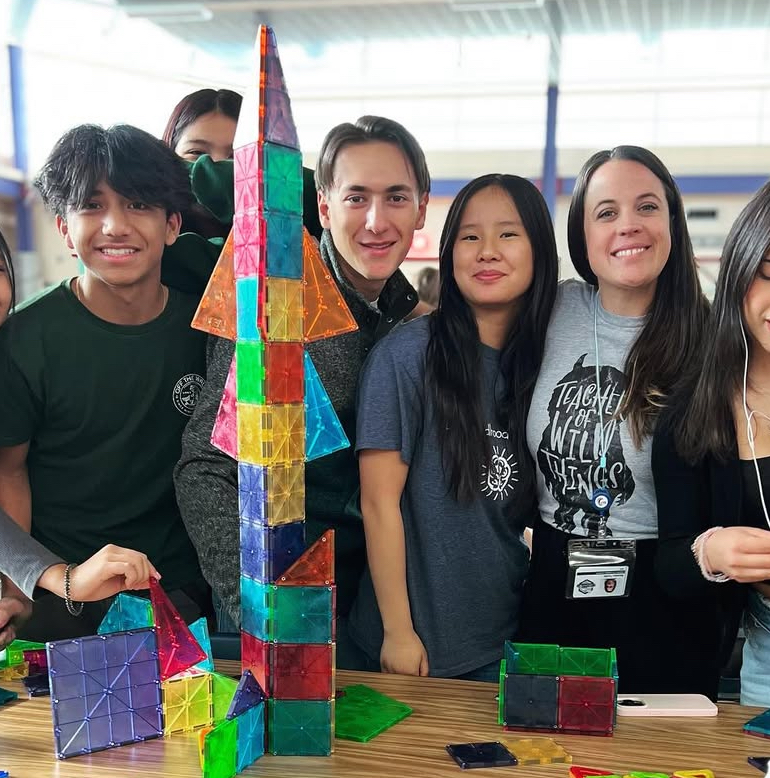
Taking classroom learning into the real world
In the first semester, the course covers everything from child development, to various educational philosophies, child abuse and neglect, brain growth and function, prenatal development, and more.
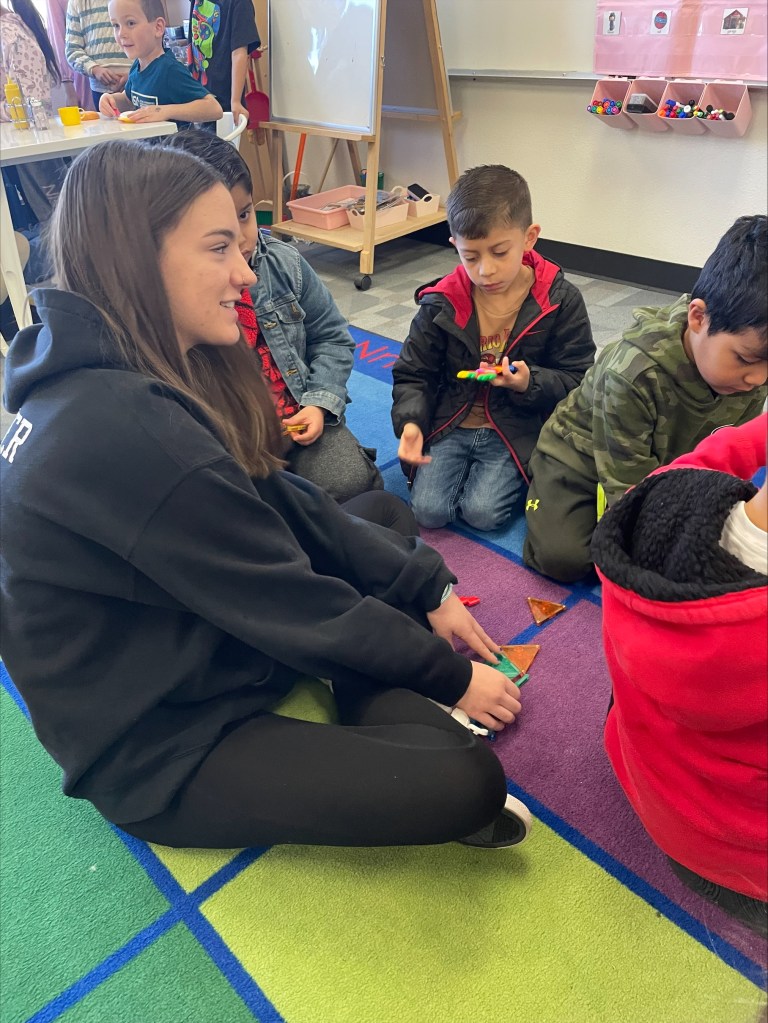
Then, with the basics in hand, students are sent into the real world to learn first hand how to apply their theories of development, and see what it’s like to work with young children.
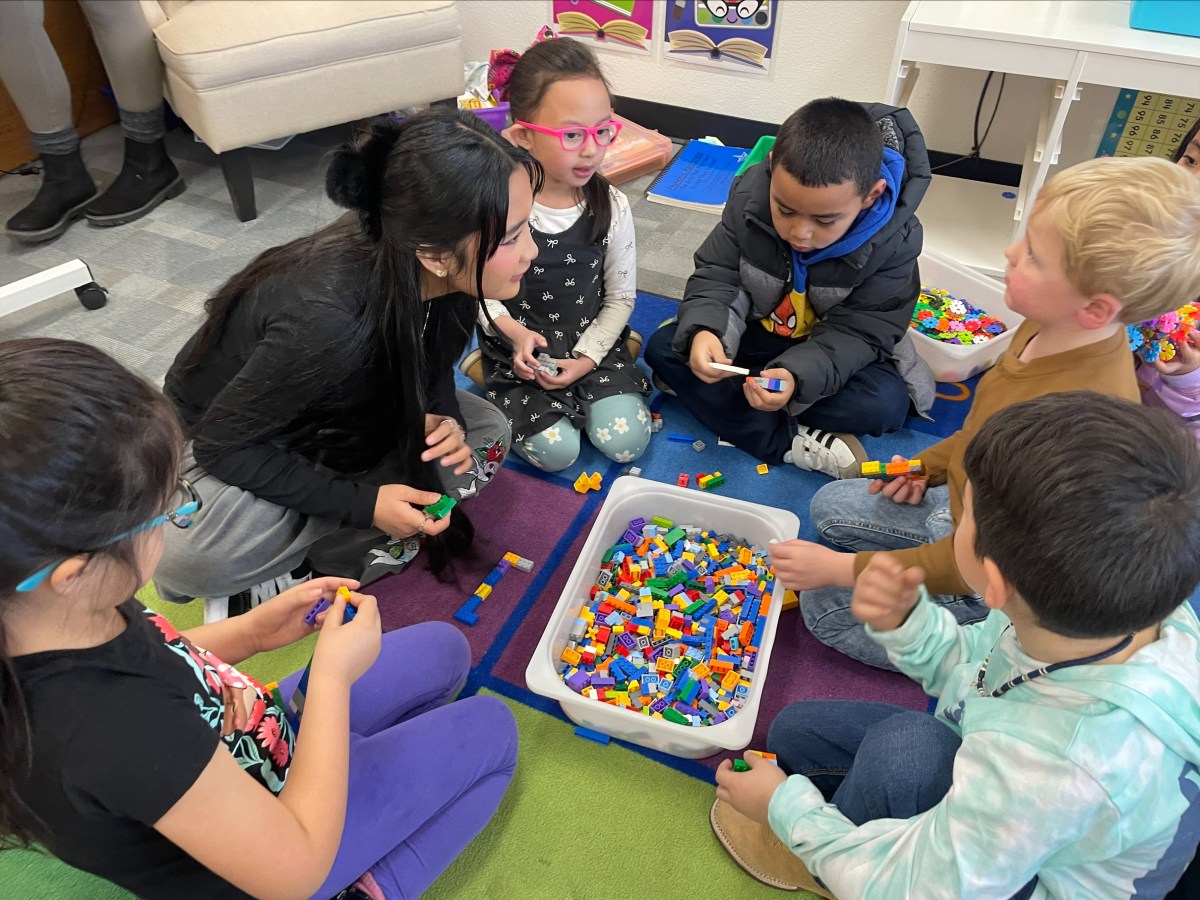
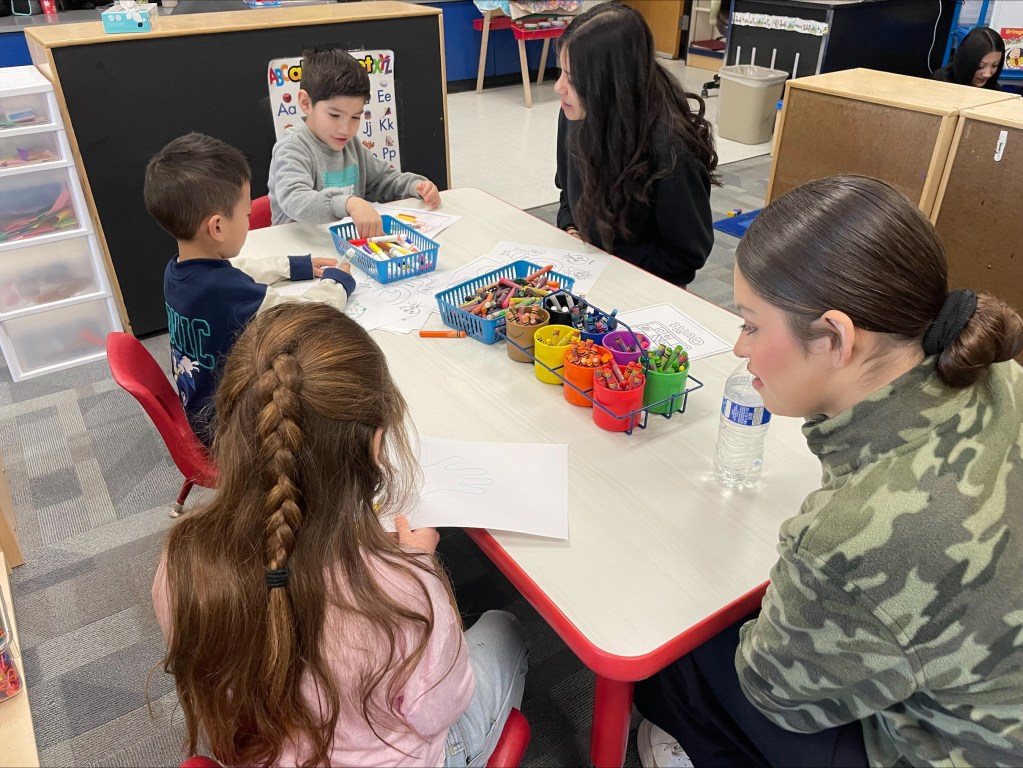
Once a week, the first year students will walk to one of the nearby elementary schools once a week to participate in the Pre-K or Kindergarten classes, while older students will go multiple times a week.
During the year, the students also participate in internships within the community, whether serving in other district school Pre-Ks, private daycares, or other programs. Students complete around 40 hours within their internships during each semester.
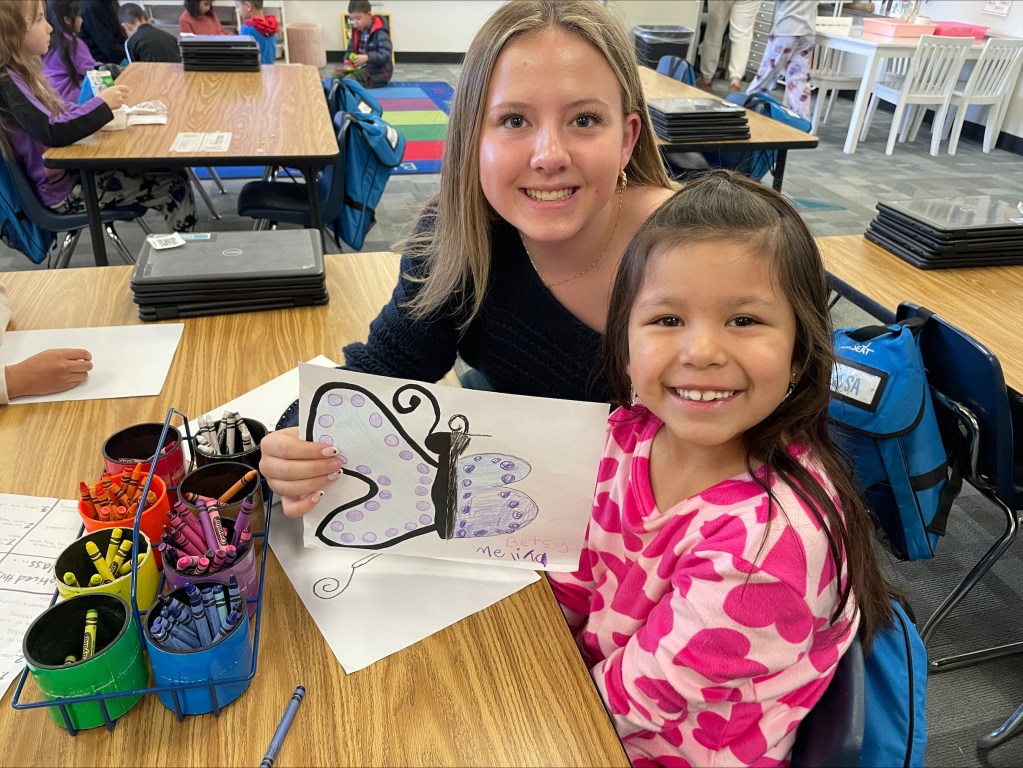
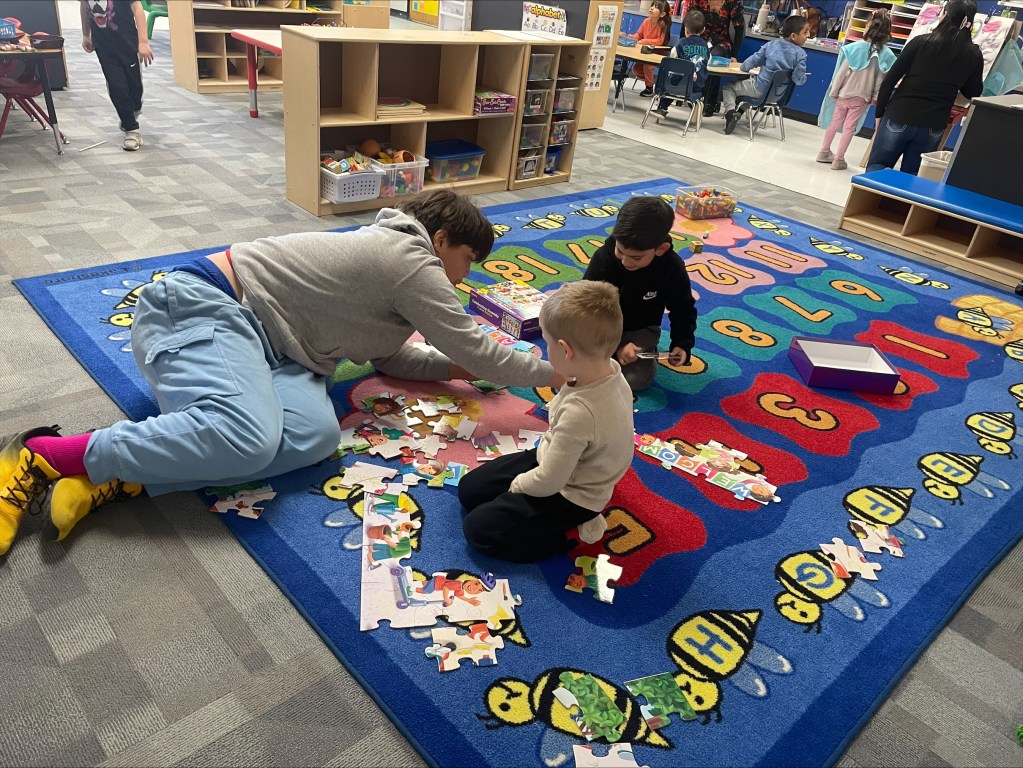
Tuttle said within these school programs, her students will implement lesson plans with the teachers, assist in projects with the students, or simply spend time with them one-on-one.
According to student Ethan Victorio, the best part of the program is working with the students in the classrooms, because they respond so differently to the teenagers than the other adults.
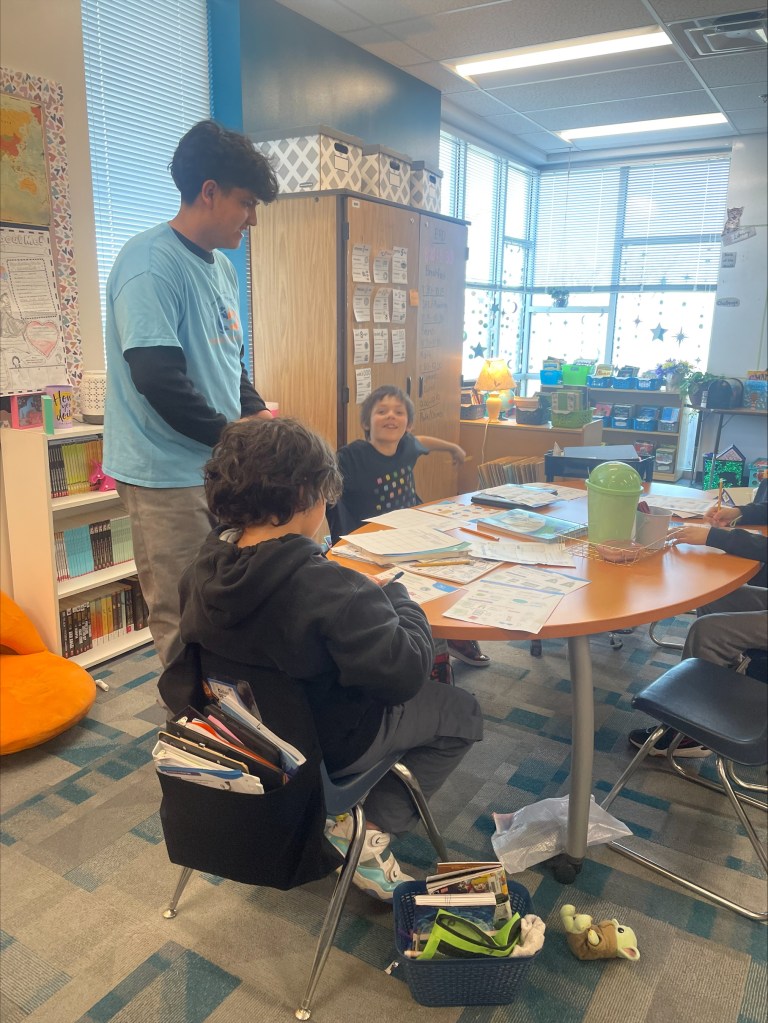
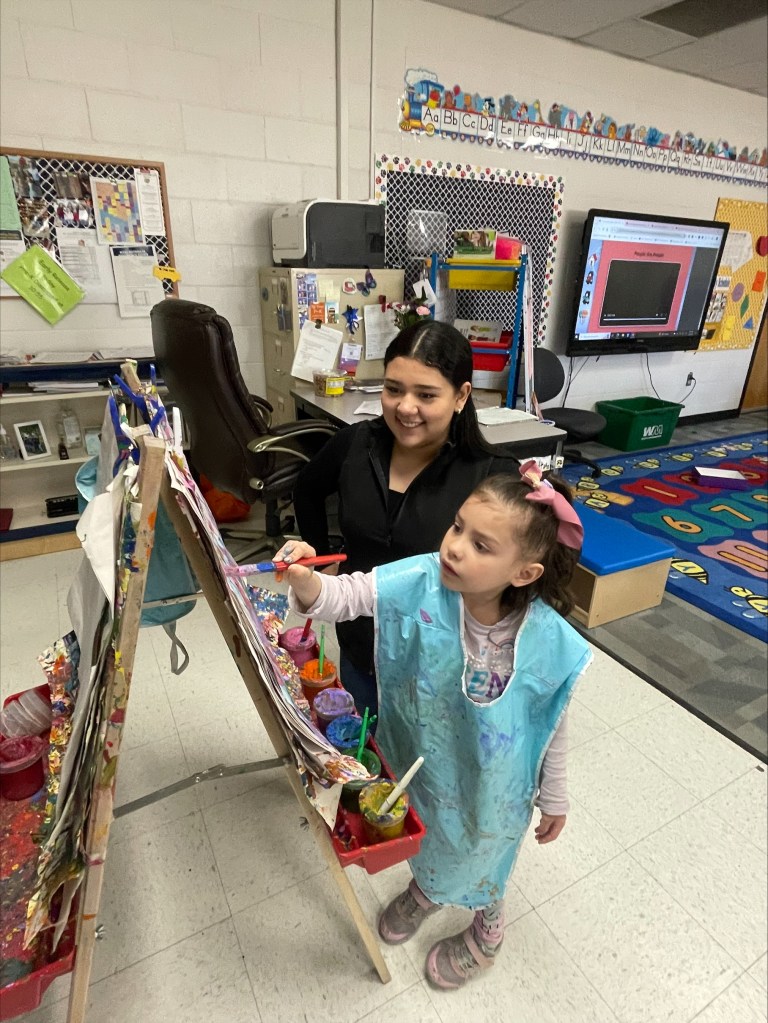
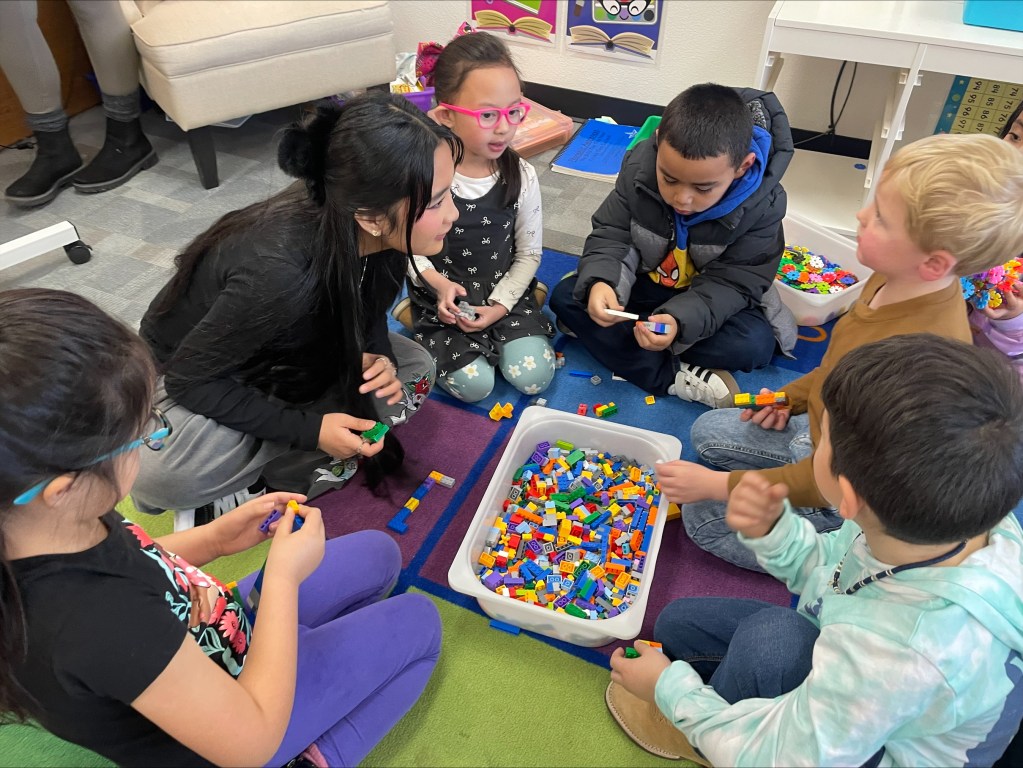
“They get so excited, and they’re so engaged,” Victorio said.
Victorio also introduced himself as the “future State President of the ECE.” Tuttle explained there is a national organization known as FCCLA (Family, Career and Community Leaders of America), which is similar to SkillsUSA.
Victorio said each CTE program has a Career and Technical Student Organization (CTSO), and their class is currently working to “take it over,” and he expects to be at the helm.
However, Tuttle clarified that Victorio would like to run for State Office for FCCLA, adding, “We are not planning to take over anything, we just want to increase our participation.”
She asked Victorio what his favorite part of the curriculum was, and he said creating classrooms.
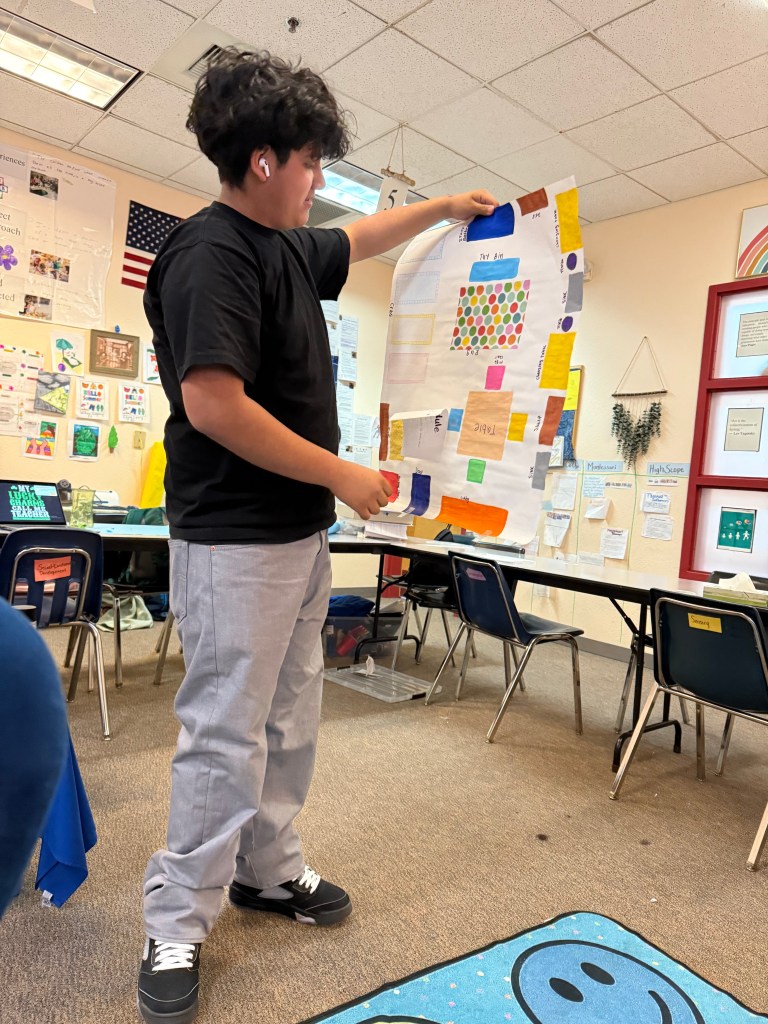
Part of the curriculum is for students to create scale classrooms of an ideal ECE classroom — which must adhere to state licensing requirements as well as local and state health departments.
“Then, I come around as the inspector, and I either approve it or I don’t based on licensing requirements,” she said. “If I don’t, they have to restart.”
Once all have been approved, Tuttle puts the classrooms together at the end of the project to create a childcare center out of their designs.
While many of her students do intend to work in early childhood development, social work or other related professions, other students have said that they took the course in the hope to learn how they can become better parents — obviously, far down the line.
Shaping the future
The curriculum has also given students insight into their relationships with their own parents, because they themselves are still being parented.
“These kids aren’t far removed from it, because they’re still being parented,” Tuttle said. “So the kids are gaining skills that they’re actually using every day. We analyze behavior of adults, teens, and children. Plus, they get to see a range of teaching.”
By being trusted to teach younger children, the teens are placed in a higher tier of responsibility, and they’ve risen to the challenge.
Student Valeria Valencia said that, within the classrooms, the teachers are grateful to have their help, and they feel respected by them.
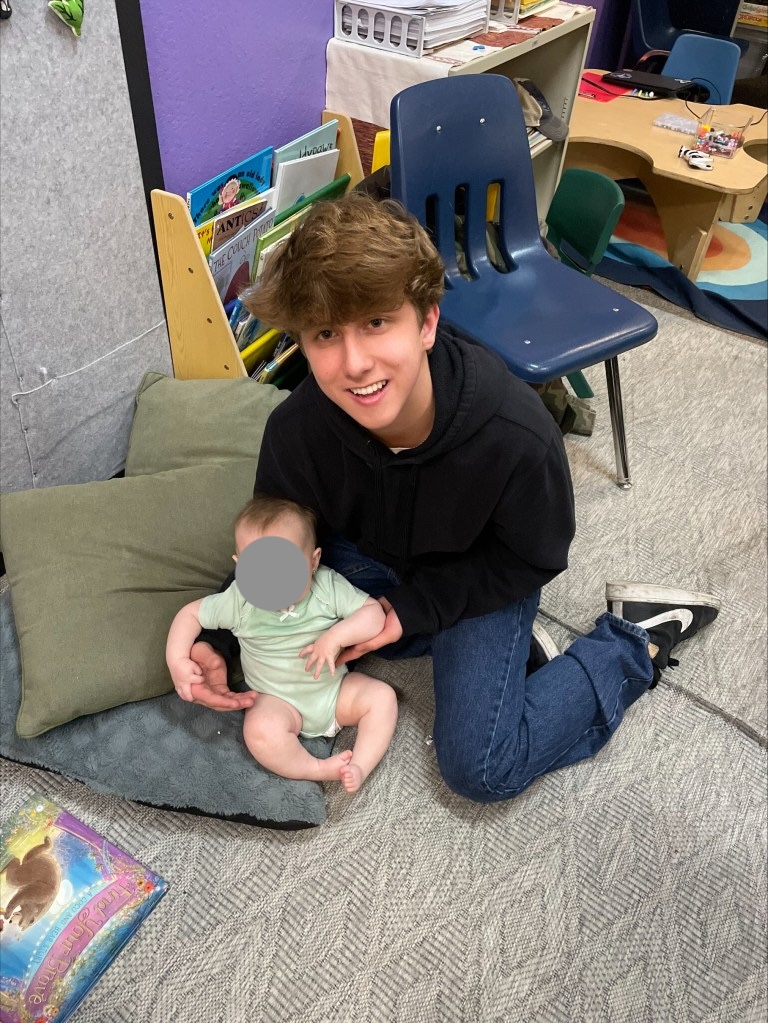
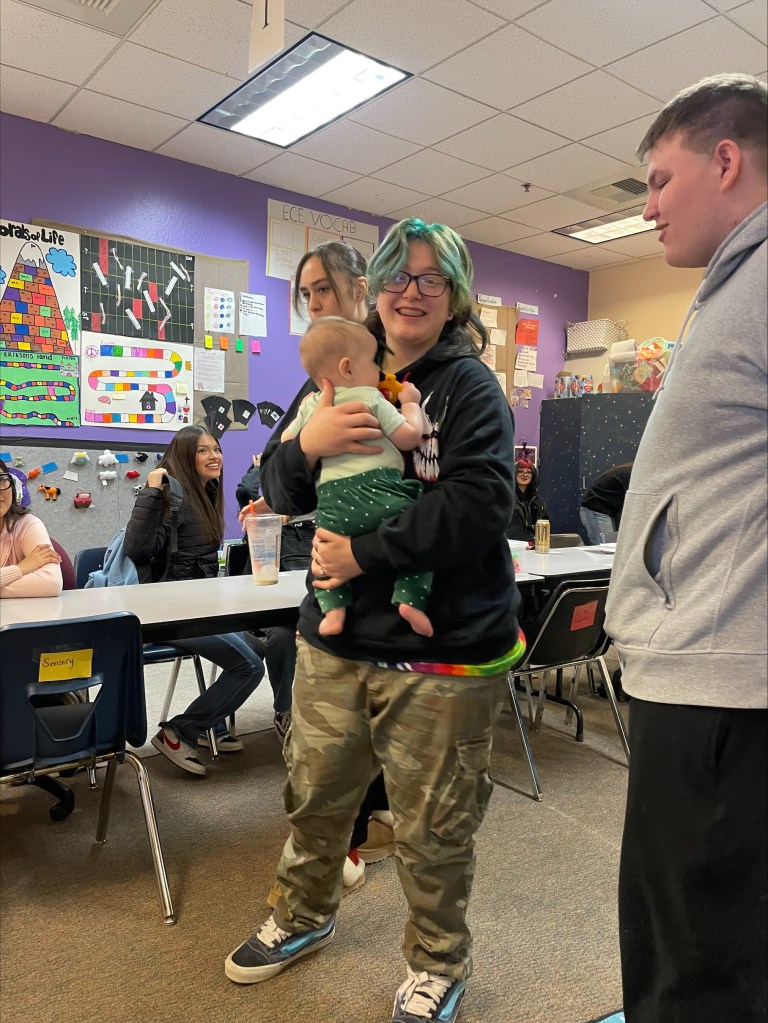


Tuttle said that she has adult expectations for her students when they are working in the schools or daycares, but she also asks for grace from the teachers.
“They’re still kids, they’re still learning. Those expectations are made very clear, and I’m careful on what teachers they go to, but there’s a huge population of teachers who want to grow more teachers. There are so many teachers within our district who love their job and want to be a part of this, because they know how great the program is.”
Tuttle said that investing in ECE programs benefits not only the students themselves, but the entirety of the community, because as many states (especially Nevada) have seen, the economy cannot function without accessible and safe childcare.
“This [program] benefits society as a whole,” Tuttle said. “What’s hard for people to really see is the investment — it’s down the road, these kids are going to be the teachers of your children, or your grandchildren. It’s a holistic perspective.”
Tuttle said her job is to teach her students, while they themselves are teaching the younger students in a tiered system.
Student Johnny Alvarado said they just returned from presenting their final projects at an FCCLA conference. Students developed a lesson plan focused on how teachers and ECE childcare professionals can focus more on children, then utilized that lesson plan to engage with their students, and presented their results at the conference.
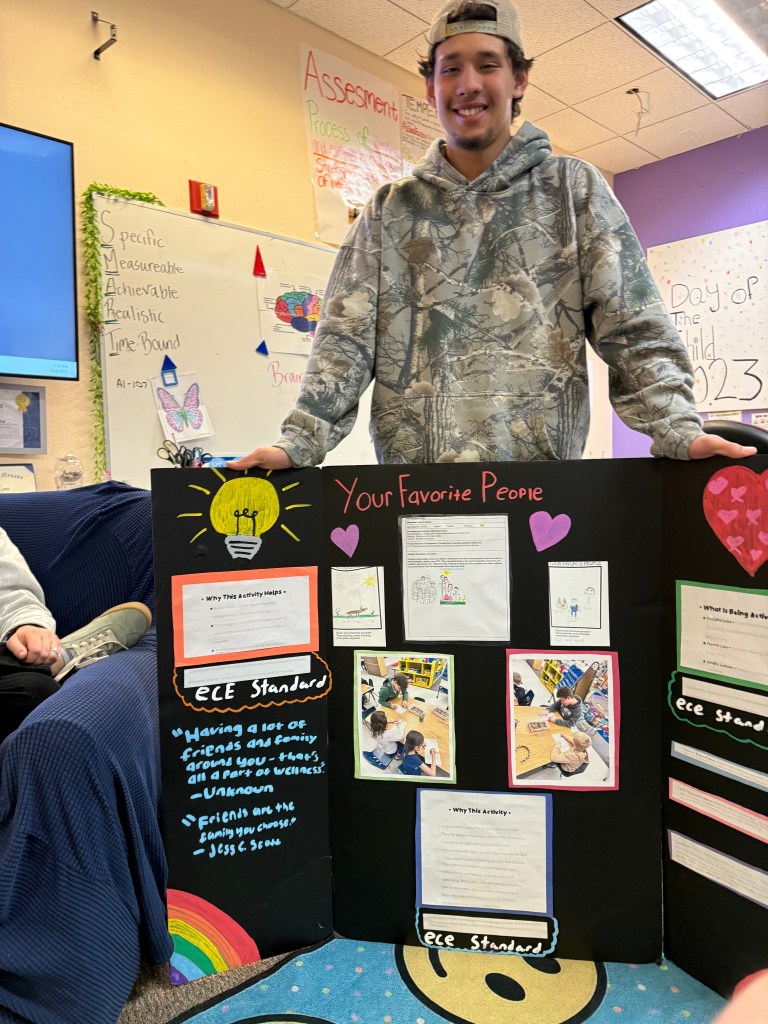

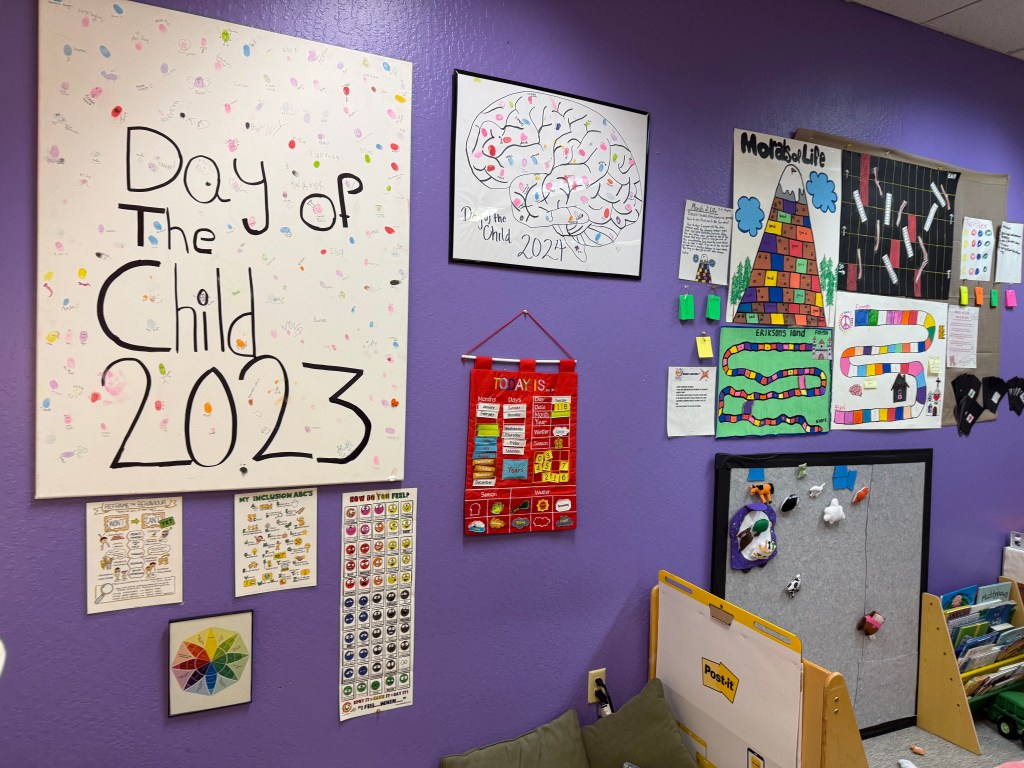
Students are also expected to engage in a significant number of events throughout the school year including Toys for Tots, Craft Fairs, the BOOnanza, Trunk or Treat, and the year’s biggest event which is coming up soon on May 10: Day of the Child.
“Day of the Child is our annual celebration of all things young children and their families,” Tuttle said. “The students share their yearlong projects, and we provide families with resources for anything from food to financial planning.”
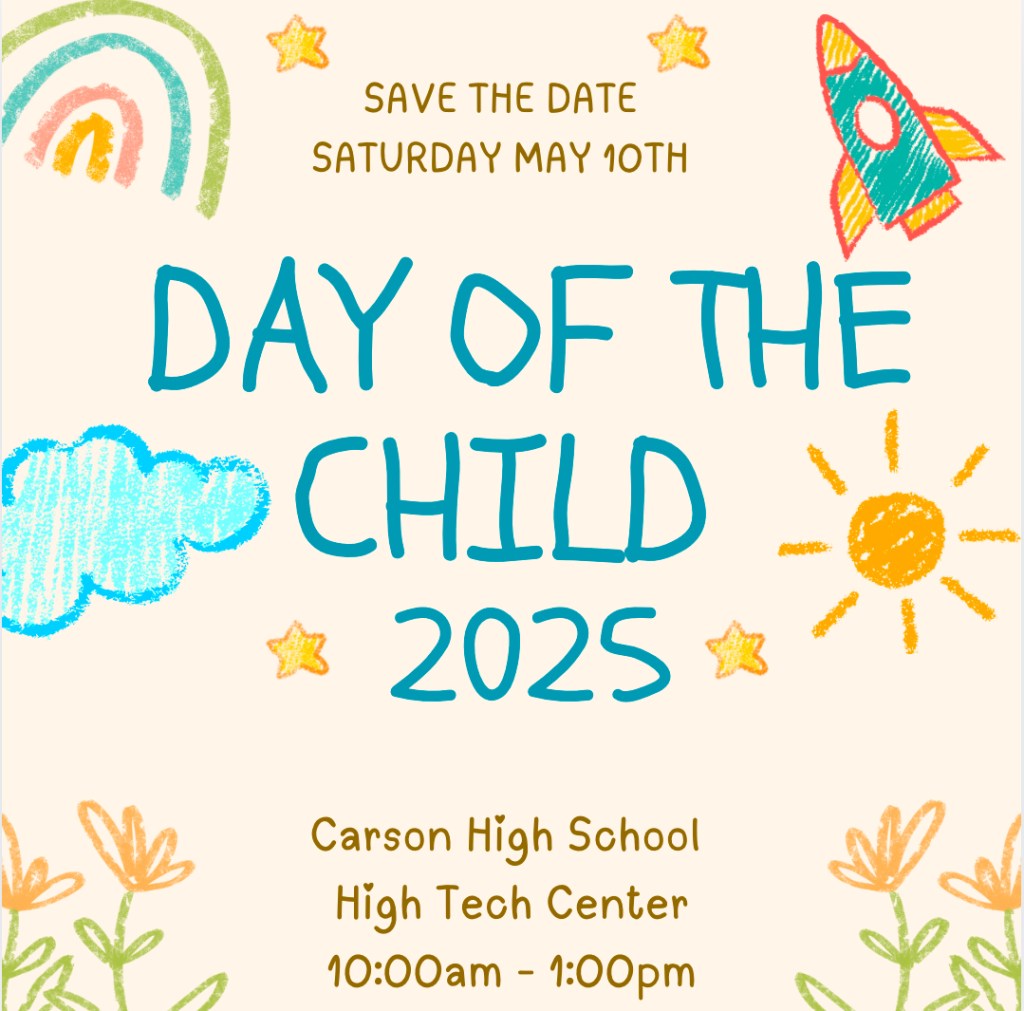
However, Tuttle said one of the most meaningful things they do for the community is offering childcare for families who take parenting classes through the district.
The parenting classes are offered once a week in the evenings within the CHS campus, and Tuttle’s students take care of the younger children while parents attend. They do so, she said, because otherwise, families may not be able to engage in the courses that can help those very children succeed.
“The very best way to get those parents to take those classes is to offer childcare,” Tuttle said.
Currently, there is a waiting list of over 400 students who want to get into the program.
“This program is very hard to get into, and I’m pretty intentional about there being a strong, equally male presence within the class. And I work really closely with the counselors and who is chosen.”
One of the benefits of the program that many may not think of is parenting — not only becoming better parents in the future, but in understanding their own parents, and how other families, cultures, and community members parent differently.
And, by extension, how young children are able to fit into society at large.
“We talk about this a lot in class — we all have different personalities, we were all parented,” Tuttle said. “You can see from [our classwork], they make us who we are. But we are not building a society that understands kids are kids. Kids cry, kids laugh, kids should be loud, and they need to be a part of things or else they have to find their way. It shouldn’t be so hard to find your way [in society].”
Tuttle said that the students in her classes all have a variety of personalities, but due to the nature of the project-based classwork, they all become very close by the end of the year.
“In this class the kids love each other,” Tuttle said. “By the end of the school year, we’re able to build such a [community], because our goal is the same. We want to help make good humans one day. And so they get very close.”
The importance of play, language, and hands-on work
Working with the younger children is also helpful for the teens in the program who get to experience physical activity and play when they might otherwise be stuck at a desk.
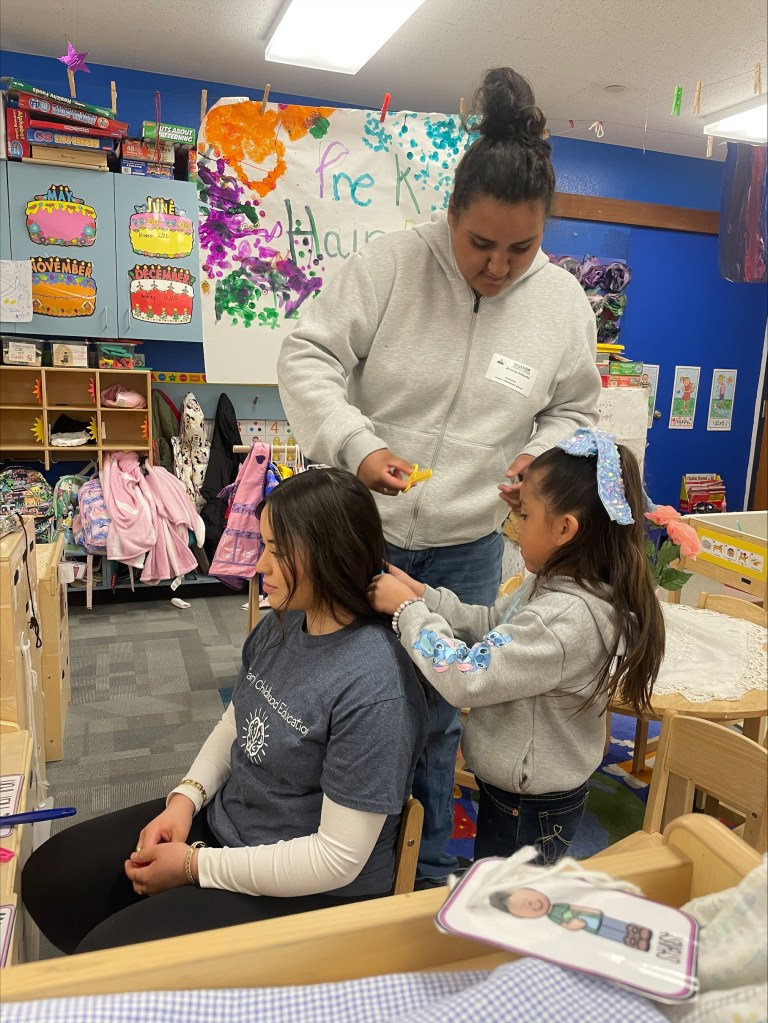
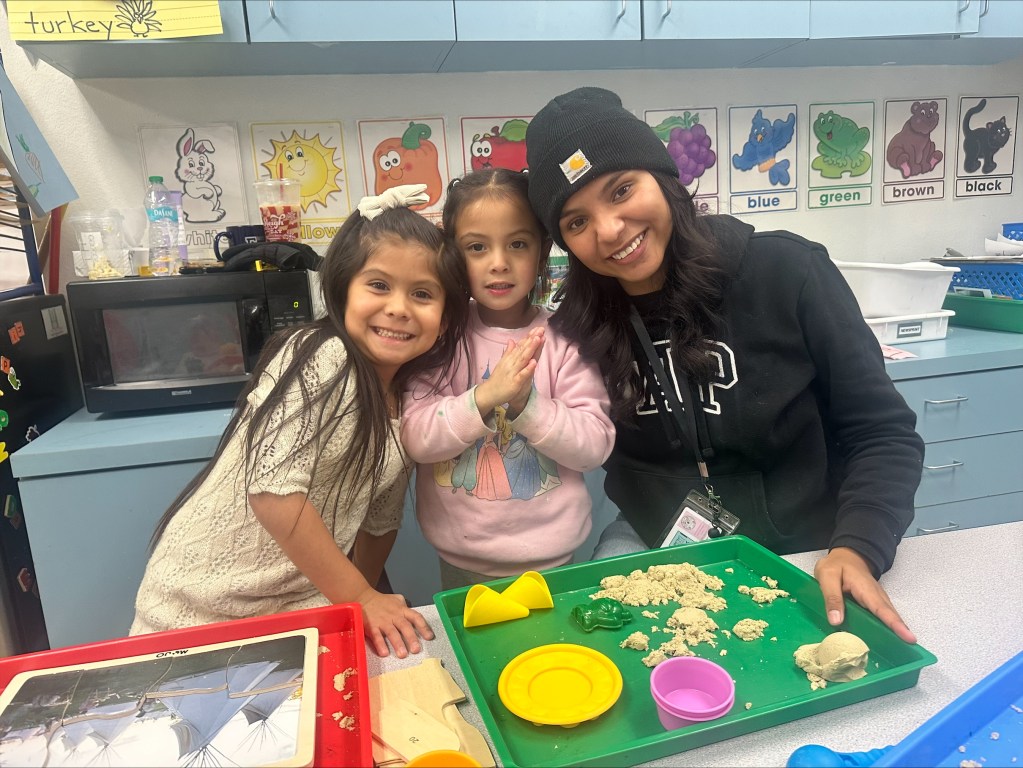
“Play is the most rigorous activity, and kids need to play,” Tuttle said.
Within the Pre-K classroom of Empire Elementary School, Tuttle’s students joined the teachers and classroom volunteers to assist the young students during class time.
Michelle Ortiz and Britney Montero are two of the program’s familiar faces, who both believe that having their hands-on internships is helping prepare them for their future, but in different ways.
Montero went to Empire herself, and after graduation, she plans to attend WNC and study Early Childhood Education.
Ortiz however, plans to study political science, and took the class because she hadn’t heard of a class like the CTE program being offered before, but was curious. However, since starting, she feels that her experience working in public education is preparing for her ultimate goal of working in the public sector.
Montero said they are bringing techniques and their education into the classrooms exposing not only the students to it, but other teachers as well.
“There have been a few times where we’ve talked about different techniques or philosophies that the teachers themselves hadn’t heard about,” Montero said.
Both Ortiz andMontero are also Spanish speakers, which they said is extremely important for working with younger students who have Spanish as their first language.
Tuttle said that within both the community and the district as a whole, Spanish is spoken just as much as English is, and she encourages students to speak in their primary languages with the younger students.
“When you speak to the younger students in Spanish, they light up,” Montero said. “They are able to listen to you so much easier and faster, and they do want to listen, but it’s hard when they’re still learning English.”
Breaking barriers and stereotypes
Tuttle’s program is also breaking barriers and stereotypes about young men working with children, and it is intentional — both by Tuttle and the students themselves.
Johnny Alvarado is one of Tuttle’s original students who began the program as a freshman and has earned his college credits, but stayed with the program for a third year to pursue advanced studies.
He said he stayed in the program first and foremost, because of Tuttle.
“I think she’s the best teacher. She actually understands and listens to you. With most other teachers, if you were late, or missing an assignment, they would say ‘Okay, grab the paper, turn it in,’ but Ms. Tuttle would ask you why, what happened, are you good? And she’d make sure you’re all good. She actually cares about you as a person.”
Secondly, Alvarado said he likes teaching the kids because even if they may not remember him when they’re older, the steps you take with them will help them grow in the future.
“The way they grow up is the way you taught them,” he said.
He said that it’s important for more young men to get involved with ECE and teaching because it offers male role models to some students who may not otherwise have them in their lives.
“It’s very important to me because most men want to go into firefighting or something — like a very manly job,” he said. Most of them don’t really think about early childhood. There’s a lot of children in life that can use a father figure as a teacher, so that’s one of the main reasons I want to do this because there’s not really men in the system.”
Tuttle said in her first year, she only had three boys out of 90 — one for each class, and Alvarado was one of those three.
Now, roughly half of each class of 30 or so students are male students.
After graduating, Alvarado plans to continue playing football, but after he finishes college, he hopes to return to Carson and open an early childhood education center right next to the high school.
He said his dream would be to create an early childhood center that would also function as a holistic hub for the community to receive resources — with liaisons from community partners such as the Ron Wood Center, or Advocates to End Domestic Violence, and state agencies, all housed within one building so families wouldn’t have to drive to receive all the help they need to support their children.
“We’re hoping eventually it would just be the hub for building future professionals, and a place for babies to be babies,” Tuttle added.
“The future is bright.”
Looking forward, Tuttle hopes to continue to expand the program, not only in how many students can participate, but in how the community can participate in turn.
She has been talking with Carson City Parks and Recreation on placing their students in internships with programs such as Music and Tot Time, Baby Swim Classes, outdoor recreation, and more.
“The city is on board, which is great,” Tuttle said. “So we’re working on building a partnership with them, so that we will have interns who work with [Carson City Parks and Recreation’s Anna Freeman]. She and I are building a partnership right now so that she can access our program, and vice versa. We’re hoping to be able to because the standards were written to really be an immersive experience for the teens.”
“Enhancing our program is really the goal that I have,” Tuttle said. “Then, ideally, I’d love to have a lab, which would be a functioning preschool. That’s something down the road that I would love to have.”
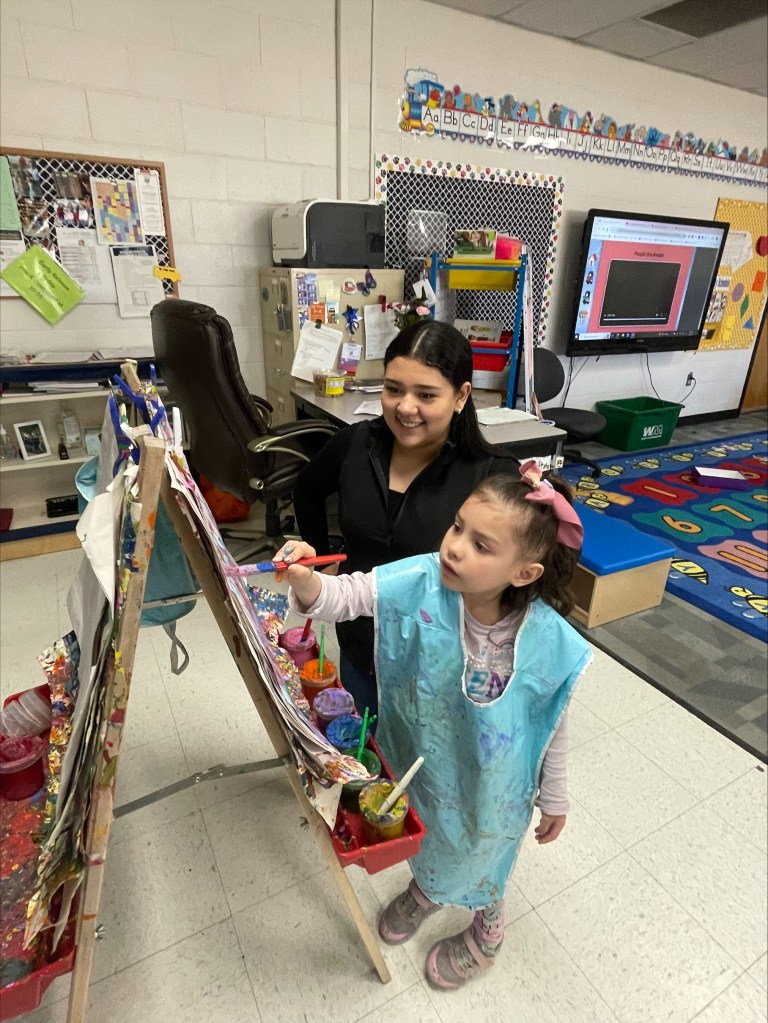
She said that they are currently working on instituting a weekly play group, where families can bring their children and learn alongside them from the program’s students, and in the future, even expanding the play group to include senior citizens.
“There’s just so much to be said for community building for all ages,” Tuttle said. “I think if you start with ages, then you can bring in culture, then you can bring in a more individualistic approach. But if we just start valuing humanity, I mean, that’s really the goal. I just want these kids to grow up, value humanity and see people as individuals, not as what they present.”
When asked if the students have a positive outlook on their futures, and on the future of humanity, all agreed they did.
“Working with the [younger] students, you look at them and realize, ‘You’re going to be a future person,’” another of Tuttle’s students said. “I think that’s the first step. Because you are working with the future, so you have to try and make a positive pathway for them.”
Tuttle said she just wants to make sure the community knows that their program exists, and they are always looking for partnerships, whether it be through internships, or with organizations who just want to know more about what her students are accomplishing.
“We are here, and the future is bright.”