Lake Tahoe is big. It is about 22 miles long and 12 miles wide, and 191 square miles. On a surface that big at an elevation of 6,224 feet and full of snowmelt, situations on the water can change rapidly and be unpredictable.
Saturday, June 21, 2025 was evidence that this is true, and it was a day that was even more unpredictable than normal.
Eight people died after their boat capsized on the water. El Dorado County Sheriff’s Office identified those who died: Paula Bozinovich, 71 years old, from Redwood City, Calif. Terry Pickles, 73 years old, from Redwood City, Calif. Joshua Antony Pickles, 37 years old, from San Francisco, Calif. Peter Bayes, 72 years old, from Lincoln, Calif. Timothy O’Leary, 71 years old, from Auburn, Calif. Theresa Giullari, 66 years old, from Honeoye, New York, James Guck, 69 years old, from Honeoye, New York, Stephen Lindsay, 63 years old, from Springwater, New York.
The Sheriff’s Office was asked about life jackets and cause of death. The sheriff’s office stated Tuesday that the matter is still under investigation.
As for the storm Saturday, there were no wind warnings, though the day before, there was a Red Flag warning to the east in the Reno/Carson City area, while Lake Tahoe had a Wind Advisory that expired Friday night.
A thunderstorm quickly developed Saturday afternoon with the outflow winds in a north-to-south direction, something that can happen in the winter, but not normally this time of year, according to the National Weather Service (NWS) in Reno. The wind was influenced by the rain showers, but looking at all of the data from Saturday, the wind wasn’t that high. The NWS forecaster said the situation was peculiar and not normal. As the weather system moves away, the winds from the north caused by the thunderstorm normally change direction and come from the west, and that is what they did later on Saturday.
At 2:10 p.m. Saturday, the wind was 7 mph, coming from the west and southwest, it was sunny and there were scattered clouds over the lake. The temperature was 55 degrees. Over the next 43 minutes, the wind changed direction, and it was 16-24 mph with gusts up to 36 mph, and the temperature had dropped to 43.
At 3:24 p.m., a mutual aid call went out to all agencies on the lake to respond to multiple capsized boats along the south and southwest shoreline of Lake Tahoe. Rain started at 3:30 p.m. Over the next one hour the wind was recorded at 14-18 mph with gusts to 29 mph with a temperature of 37. By 4:25 p.m. the breeze was 3 mph, the rain had stopped, and the skies were clearing with high, scattered clouds once again.
Saturday morning’s forecast originally didn’t have thunderstorms in it, but by 1 p.m. there was a 10-20% chance of thunderstorms, according to NWS Reno. The storm that capsized boats, led to the rescue of at least 19 people by local fire and police department boats, and the death of eight boaters was a “sudden, localized and of limited predictability,” said the NWS.
At its peak, the wind never reached the criteria of “severe thunderstorm activity” which is 60 mph and above.
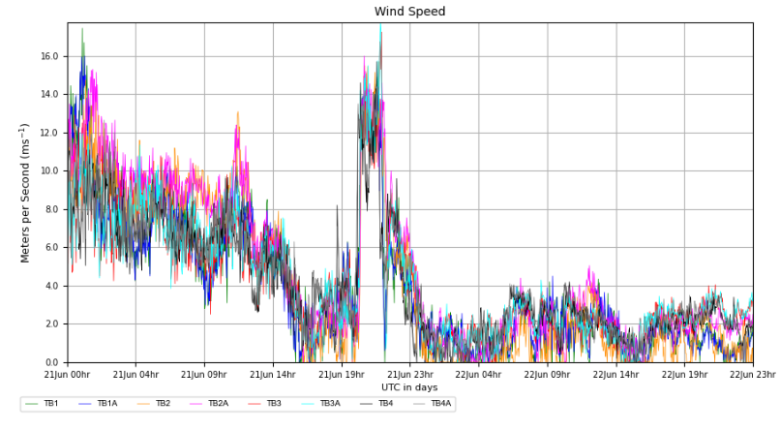
There is a lot of data that can be retrieved from Lake Tahoe, from NWS and the NASA Jet Propulsion Laboratory buoys on the lake, but the one thing they don’t track is wave size.
The waves at the time of the capsize were estimated to be 8-10 foot, on top of swelling water which behaves different on Lake Tahoe than on the ocean. Lake Tahoe is deep, but shallower than oceans, and narrower for the north-to-south winds to pass over.
The developing thunderstorm over the north end of the lake created the wind that created the waves that built up until they hit the D.L. Bliss, Camp Richardson and South Lake Tahoe shore.
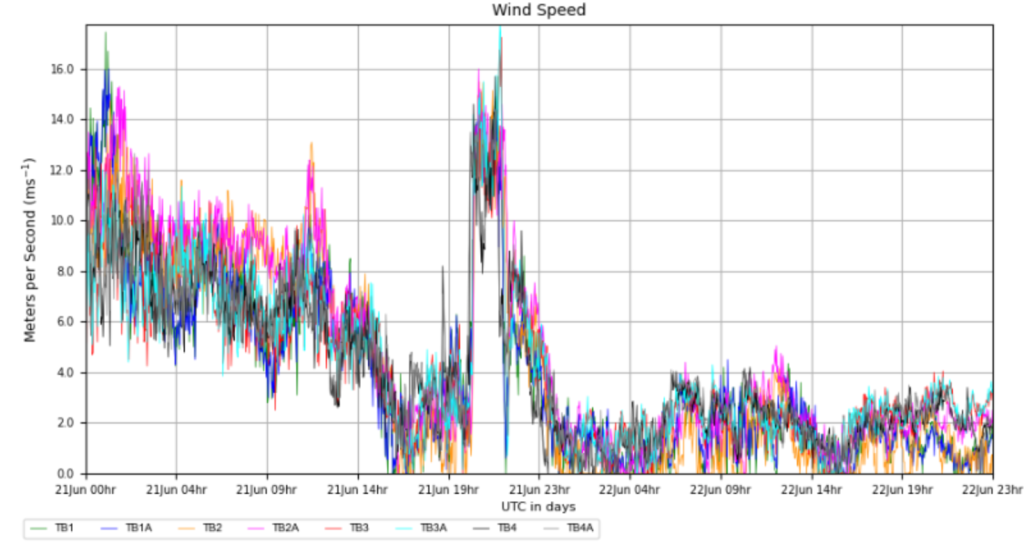
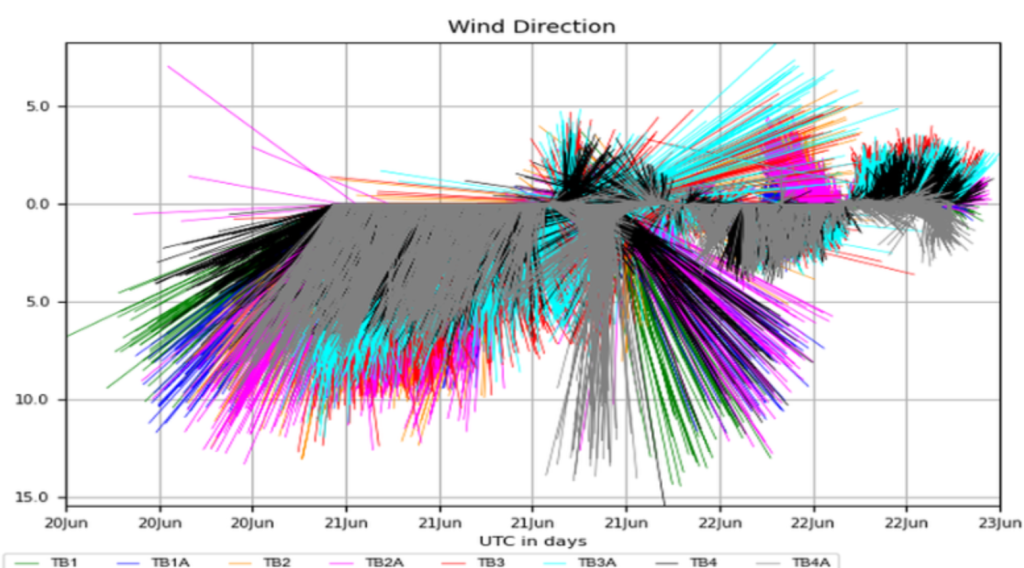
Graphs above from the NASA Jet Propulsion Laboratory’s eight buoys on Lake Tahoe.