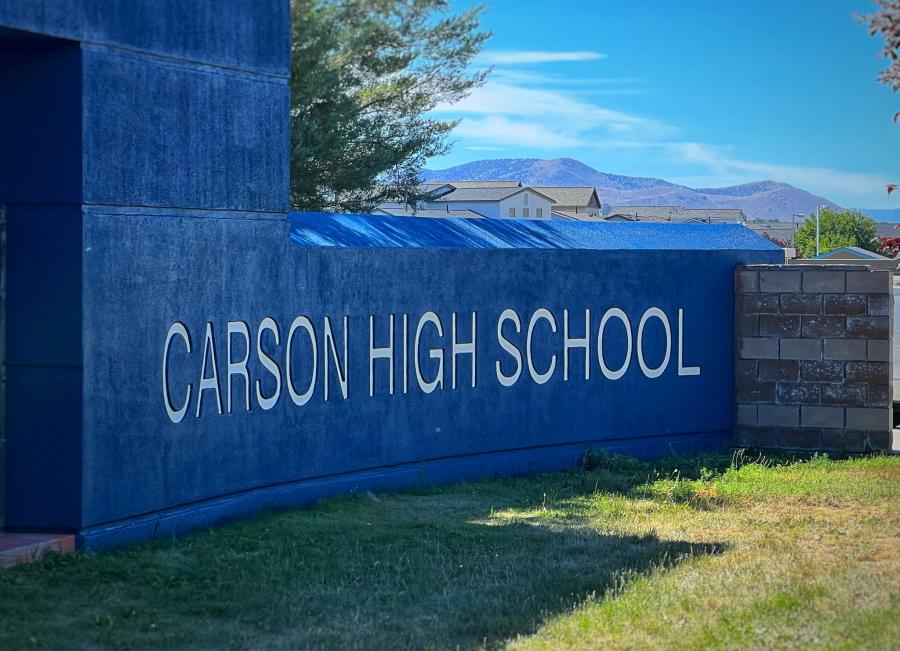
On Tuesday, the Carson City School Board heard an update from Sheriff Ken Furlong, Sgt. Taylor Mieras, who leads the Student Resource Officer (SRO) program, and Chief of Juvenile Services Ali Banister on the program and other statistics in the school district.
“Our partnership with the Carson City Sheriff’s Office and the SROs is absolutely amazing,” Banister said. “I also want to recognize that our partnership with CCSD has been huge in the last two years.”
Our juveniles are not a tremendous problem.
Sheriff Ken Furlong
Banister also said the two new positions within the schools has contributed significantly to the decrease in referrals. This year, two outreach juvenile specialist positions were filled and brought into the schools for the first time.
“They’re facilitating programs such as Play by the Rules, which is in the middle schools and in the seventh grade health class,” Banister said. “They’re also facilitating an anger-management program, which is an evidence-based program, a forward thinking program, an in-school suspension [program], which is also evidence-based, and also the sworn program that we parter up with the Carson City Sheriff’s Office in the elementary school to facilitate. We like to call it a kind of new D.A.R.E. program, and they’re teaching about drug enforcement and the sings of [drug use].”
Deputy Chief of Juvenile Services Linda Lawler said she was “super excited” they get the opportunity to work in the school district.
“Early intervention is huge to keep kids out of probation and out of trouble in the schools,” she said. “And just to share with you guys, our outreach specialists have done 94 classes in the school district in 2024 and touched 375 students. They did 24 parent education nights in the 2024 and … our referrals went down 9.9%.”
Lawler said the number of referrals are still “outrageous,” but the fact they’ve decreased by nearly 10% is “evidence that we’re doing is working, what the school resource officers are doing, their presence in the schools, those numbers are going down.”
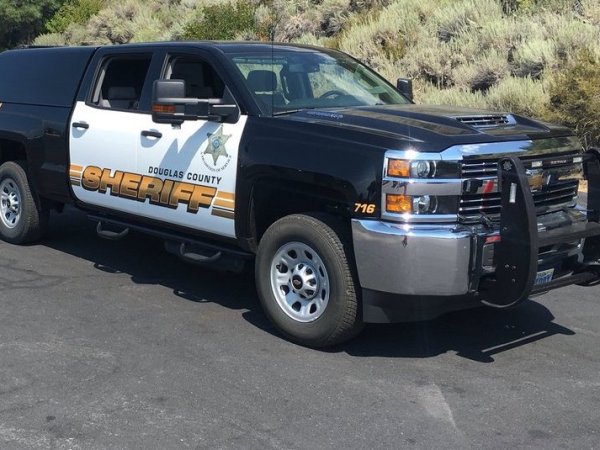
Sgt. Mieras leads the SRO team of five deputies, which supplies the high school with two deputies, one deputy at each middle school, and a “roving and assisting” deputy.
The team also has K9 Deputy Camper, who assists with narcotics searches throughout the schools. Mieras said they try to use Camper as a presence, and he searches the schools weekly “to keep everybody on their toes.”
“I would say when I go to the schools and I’m walking around, they ask where Camper is … and they don’t even know [handler] Deputy Kepler’s name. So huge, huge, huge impact it has on the kids. We’ve used Camper just as rewards too for behavior kids which has been successful.”
In addition to providing law enforcement and safety services, the SROs are also tasked with counseling sessions, Mieras said.
“That’s sitting down with kids, talking about home life, talking about school, sports, girlfriends, boyfriends, you name it,” Mieras said. “They cover a wide array there. They mentorship for some of the juveniles is also something that comes up frequently.”
We have not had, knock on wood, any threats of violence in over a month.
Sgt. Taylor Mieras
Mieras said, in addition to the decrease in referrals, they’ve also seen a decrease in threats of violence.
He said at the beginning of the year, there had been an increase in threats with violence, and the district “jumped right in,” with Public Information Officer Dan Davis providing educational materials, and notifying the community about what was occurring.
“We have not had, knock on wood, any threats of violence … in over a month, which is good,” Mieras said.
Trustees asked about the history of the SRO program, which began expanding around 2015 when Sheriff Furlong received the COPS grant, which was able to fund SRO expansion and supports for four years. After seeing the effects, the city then worked to provide funding for the program, half of which comes from the general fund.
Superintendent AJ Feuling said after speaking with school administrators he has heard “overwhelmingly our folks are very happy with the level of service and the availability” of the SROs and Mieras.
Trustee Michelle Pedersen, who was participating in her first school board meeting following her election, said she appreciated the relationships the SROs had cultivate with the students. She shared a story from volunteering at Safe Grad during the last school year, during which go-kart tracks were set up for the students, and one go-kart was fashioned as a police car, with a siren and flashing light. She said after things began slowing down during the event, SRO Deputy Sean Palamar got onto the track, took the police go kart and began hiding around corners so he could chase down “speeders” with his lights and sirens.
“The amount of kids that stopped what they were doing to line up along the fence, and they weren’t cheering their friends, they were cheering on the officer as he was engaging with the kids,” Pedersen said. “I really appreciate … having that presence and familiarity … knowing they can build that relationship and they are not just a looming presence but they’re a tangible level of security, and … if kids do feel like there’s something that they need to talk to somebody about or there’s a threat, they’re not going into an unknown territory with an unknown person they’re going to somebody that they already have exposure a relationship with.”
Trustee Richard Varner asked if five SROs were enough to cover the schools, and if they have seen calls for service go up or down this year.
“Are five adequate? We would love to have 15, but we know there are budget constraints,” Furlong said. “I believe very strongly that our five is a good commitment to our schools when we have incidents that occur, both juvenile and the patrol division are responding, so we have a tremendous workforce that are supporting the schools.”
Furlong said it’s an important distinction that the five SROs are on site for regular activities, but during incidents, there could be 10-15 deputies responding from the sheriff’s office.
Furlong said he shares Banister’s notion that support to juvenile services is an avenue to continue serving the students and district, but currently, Carson City’s kids aren’t a “tremendous problem.”
“Our juveniles this year have been an advantage, and that’s a compliment to the district entirely. Each school, each administrator, each instructor, teacher — we’ve had a good year. The five is adequate for normal operations.”
Furlong said the key to success in law enforcement and crime fighting is an overlap in jurisdictional responsibilities, and how well those agencies work together.
“We have probably the best I can hope for in those relationships, and in feet on the ground,” Furlong said.
Varner credited the success of the SRO program and the Carson City Sheriff’s Office as a whole to Furlong’s leadership, and congratulated him on being the “longest-serving sheriff in Carson City, and perhaps in the state.”
Furlong said it wasn’t only him, but it’s a result of how the deputies, probation officers, and criminal justice system at large responds to the community.
“You’re being very humble,” Varner said. “You’re a big part, if not the major part of the success that the Carson City Sheriff’s Office has had, and I appreciate it very much.”