
Guiding Principles
The city’s vision is guided in seven Guiding Principles: Well-managed growth; access to open lands and recreational opportunities; economic vitality; vibrant downtown and gateway corridors; livable neighborhoods; unique history and culture and; a connected community.
Today, we’re continuing our series on the Master Plan draft currently under review by the city and its leadership.
A Master Plan is essentially the city’s blueprint for the next 20 years, which includes guidance and goals for growth, housing, economic development, natural resources, aesthetics, and much more.
The first Master Plan was adopted by Carson City in 1958, followed by five additional updates, the last being in 2006.
You can read the full overview in our previous reporting here.
The first topic covered by the Master Plan was the goals and priorities for well-managed growth.
The second was Access to Open Lands and Recreational Opportunities.
The third was Economic Vitality.
Today, we’re taking a look at the fourth goal: Vibrant Downtown and Gateway Corridors
High profile sites, such as the Ormsby House and the old Kmart building, remain a source of frustration among residents who are eager to see a change.
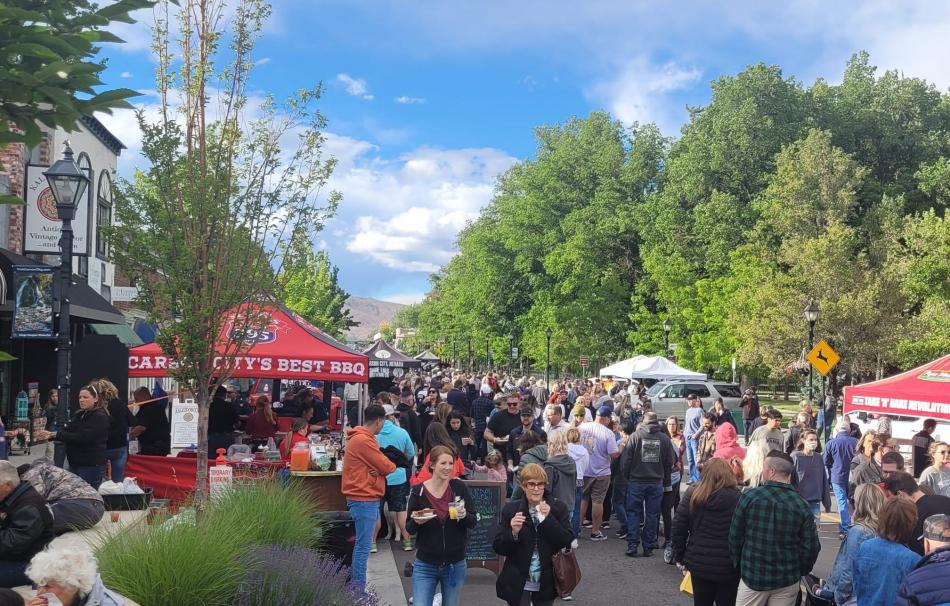
Downtown Carson City is the heart and soul of the community.
Its sense of place is defined by the lushly landscaped Capitol grounds, the many historic buildings that line Carson Street, the variety of local restaurants and shops, and its walkable and bikeable streetscape.
Over the past ten years, Downtown has been transformed through public investment in pedestrian improvements, lighting, signage, landscaping, and infrastructure; however, private investment has lagged behind, creating pockets of underutilized and poorly maintained property in high-traffic areas of the community.
Along the City’s major gateway corridors, aging strip commercial uses and longstanding vacancies present challenges to economic development, both visually and by hindering potential revitalization momentum. High profile sites, such as the Ormsby House and the old Kmart building, remain a source of frustration among residents who are eager to see a change.
Community members of all ages shared that, while they appreciate Carson’s small-town feel and retail/service offerings, they often travel to other destinations in the region to access services and amenities that are not available in Carson City.
Young adults and families with children in particular noted that they would like to see more restaurants, entertainment options, and activities in Carson City, that appeal to their demographics.
Goals
The revitalization of Carson City’s gateway corridors through public and private investment will be a priority to help enhance the visual appeal of the community, promote economic development, and create new opportunities for people of all ages, incomes, and ability levels to live, work, and recreate.
As part of these efforts, the City will continue to enhance the appearance, safety, and functionality of public rights of way, and promote adaptive reuse and reinvestment in properties, prioritizing the redevelopment of properties that have long sat underutilized.
The City will also continue to prioritize the ongoing revitalization of Downtown Carson City as a major asset of the community by supporting efforts to attract private sector investment and collaborating with major property owners and the business community to establish a broader “footprint” for and series of destinations within Downtown to enhance its visibility and appeal.
The main goals to achieve a vibrant downtown and gateway corridors include:
Enhance the Safety, Functionality and Appearance of Gateway Corridors
- Continue to implement Complete Streets improvements along N. Carson Street and E. William St.
- Collaborate with NDOT, area businesses and property owners and other stakeholders to develop and implement a coordinated vision and goals for the Highway 50 corridor.
- Design roadways to improve accessibility for bikes, pedestrians and transit vehicles/riders
- Incorporate landscaped medians, street trees public art, wayfinding signage, and other features
- Reduce sign “clutter” from businesses that impact surrounding views, and encourage historic signage like neon or painted murals where feasible.
- Establish direct connections between gateway corridors and adjacent residential neighborhoods to improve non-automobile access
Facilitate the Revitalization of Vacant and Underutilized Properties
- Accommodate a mix of commercial, employment, residential, entertainment and/or other supporting uses on vacant and underutilized properties along gateway corridors and in downtown
- Explore incentives such as capital project subsidies, tax credits and more to promote reinvestment in underutilized or vacant properties
- Support adaptive reuse, or the repurposing of vacant or functionally obsolete buildings where the original use intended for the building is no longer viable.
- Encourage infill of vacant parcels and the redevelopment of underutilized properties where adaptive reuse is not feasible
- Explore opportunities to establish distinctive names or branding for different corridors as well for different character areas within downtown
Promote Ongoing Revitalization of Downtown
- Promote private investment that complements public improvements
- Focus on the expansion of housing options in downtown and pursue the redevelopment or adaptive reuse of the Ormsby House
- Promote the downtown as the hub for year-round community and visitor-oriented events
- Reinforce identities and distinctions between areas including main street mixed-use, urban mixed-use, neighborhood transition, capitol complex, and state office complex.
- Promote a balanced approach to economic development and historic preservation within downtown
Priorities
From these goals, staff is recommending the following priorities, which means that the city should begin working towards these goals immediately following plan adoption:
Enhance the Safety, Functionality and Appearance of Gateway Corridors
Review and update access and connectivity requirements in Title 18 to support Complete Streets objectives and enhance multi-modal connectivity between gateway corridors and adjacent uses as infill and redevelopment
Collaborate with property owners and the development community on opportunities to consolidate driveway access points or implement other strategies that would improve the safety and functionality of gateway corridors as development proposals are brought forward.
Develop and adopt streetscape, signage, and access management standards as part of Title 18 for private properties with frontages that abut Highway 50. Incorporate requirements for native or drought-tolerant landscaping, pedestrian- and bicycle-connectivity, lighting, and site planning strategies that will promote the implementation of a cohesive and attractive appearance along gateway corridors over time.
Consider the need for additional Neighborhood Improvement
Districts and/or Landscape Improvement Districts to help fund ongoing maintenance of streetscape, wayfinding signage, landscaping, or other public improvements that benefit businesses and property owners in a defined area.
Facilitate the Revitalization of Vacant and Underutilized Properties Along Gateway Corridors
Explore the concept of a redevelopment champion to promote
redevelopment and revitalization goals, foster relationships with business and property owners, pursue grants, manage public/private partnerships (as applicable), and generally serve as a resource for City departments on Economic Development initiatives.Review and update commercial, office, and mixed-use zone districts in Title 18 as necessary to align with Master Plan goals and policies and land use categories, and allow desired uses by right. This process should consider:
- Allowed uses and the overall mix of uses desired in Corridor
- Mixed-Use and Downtown Mixed-Use areas;
- Dimensional standards that allow for compact, urban development (e.g., height, lot coverage, and setbacks);
- Use-specific and adjacency standards to address the siting of more intensive uses in a corridor or Downtown setting, and to address potential impacts on established neighborhoods; and
- Regulatory incentives, such as density or height bonuses, or parking reductions, for the incorporation of higher-density housing or other community benefits.
Consider establishing a program to encourage redevelopment along North Carson Street.
Engage the owners of vacant properties to gauge their overall
interest in redevelopment or adaptive reuse; potential barriers; and anticipated timing. Develop a short list of possible catalyst sites based on input received and conduct a preliminary feasibility analysis.Consider establishing a vacant building inventory and explore
possible strategies within state law to disincentivize long-term vacancies.
Promote the Ongoing Revitalization of Downtown
Engage major Downtown property owners to gauge their overall interest in redevelopment or adaptive reuse; potential barriers; anticipated timing. Develop a short list of possible catalyst sites based on input received and conduct a preliminary feasibility analysis.
Explore property and business owner interest in developing a
coordinated branding strategy, area plan, and/or Neighborhood Improvement District for the Urban Mixed-Use or Neighborhood Transition character areas in Downtown.Continue to support efforts to promote events and activities that
support local businesses, attract tourism, and generally enhance the vibrancy of Downtown.
Check back tomorrow for Part V: Livable Neighborhoods
The entirety of the Master Plan Update 2024 can be viewed here.