On Thursday, the Carson City Board of Supervisors will discuss proposed regulations for short-term or vacation rentals like those operated by AirBNB and VRBO.
Following more than a year of community outreach and workshops, Supervisors will hold the first reading of an ordinance to establish the city’s formal regulatory framework for short-term rentals (STRs).
If approved, STRs would be allowed in most single-family and multi-family residential zones, as well as agricultural and some commercial districts. However, they would remain prohibited in apartment buildings, industrial zones and public zoning districts. Owners must also attest that their property is not located in a development where Homeowners Association (HOA) bylaws or CC&Rs prohibit short-term rentals.
The current landscape
In February 2025, there were around 50 known units operating in Carson City, far below the several hundred operating between Washoe and Douglas County.
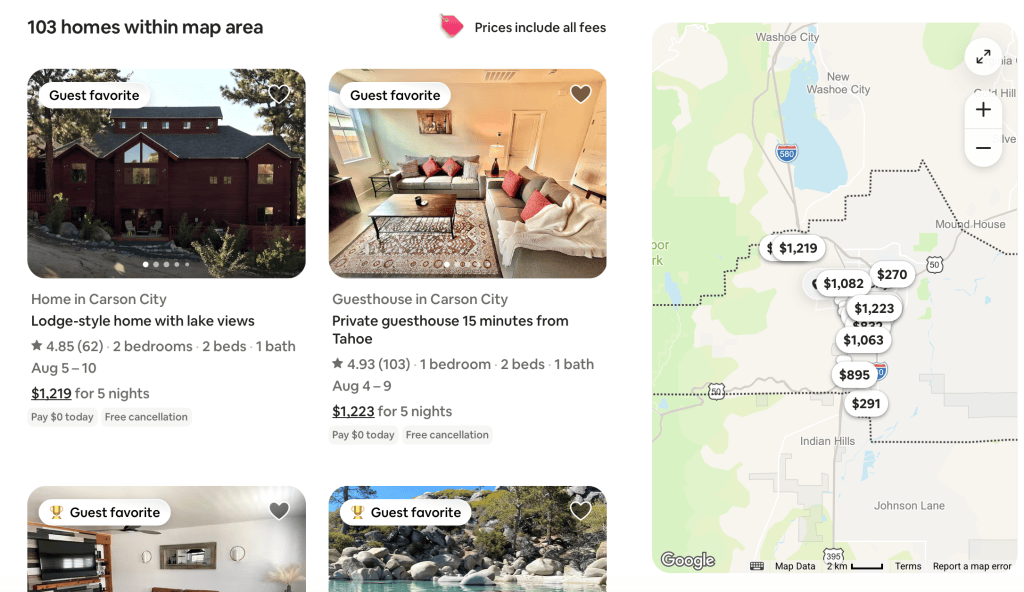
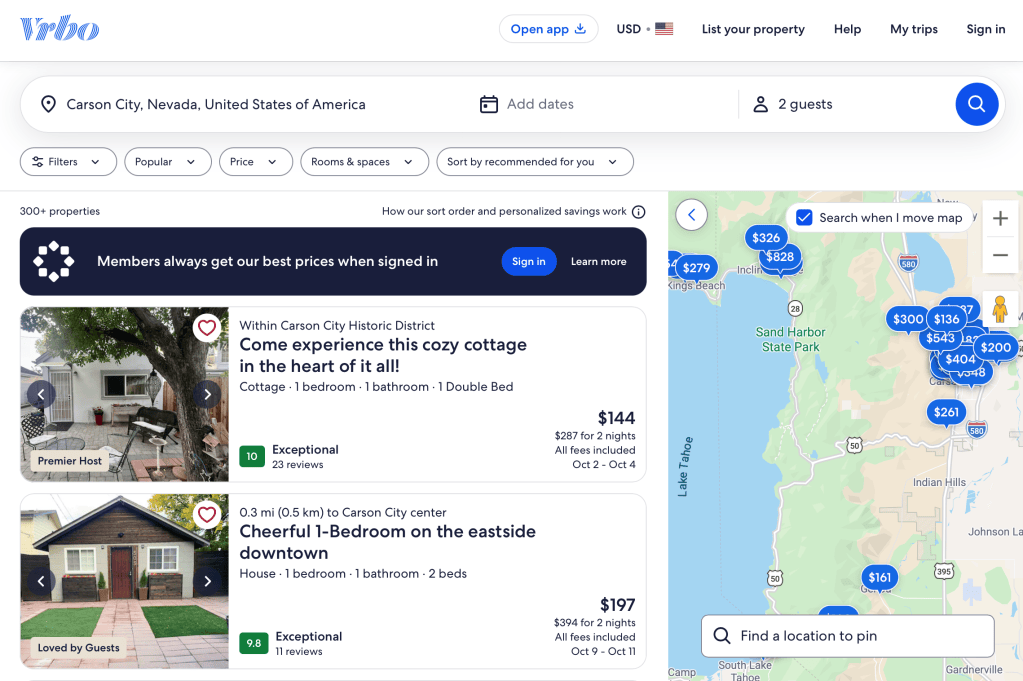
Today, that number has increased dramatically. Depending on which STR rental site reviewed, there are between 80 and 300 STRs listed as operating in Carson City.
Some municipalities have barred STRs entirely, especially those with a lack of affordable housing options, while others are deregulating in efforts to boost local economies through tourism.
While discussing goals for regulations, Carson City leadership said they wanted to protect the rights of residents and preserve neighborhood character — but without smothering business and tourism.
Community Outreach
The development of these regulations followed a series of “listening tours” designed to gather broader community input than traditional public hearings often allow. Community Development Director Hope Sullivan facilitated the sessions scheduled during evening and morning hours to accommodate working families.
The goal of the tours was to hear from a wide range of stakeholders — including proponents who use STRs for supplemental income alongside residents concerned about neighborhood character — and use that feedback to inform the final policy.
Costs to operate
While the proposed rules aim to integrate STRs into residential areas, they come with a high price tag for operators.
Mayor Lori Bagwell previously noted that the city assessor is already identifying advertised rentals to increase their property taxes. These properties have been bumped up from the 3% residential tax cap to the maximum 8% commercial-style cap.
Beyond taxes, several new costs to operators will be discussed:
- Annual Fees: A $500 annual business license fee and a $25 initial application fee
- Room Taxes: Operators must pay the city’s transient lodging (room) tax, with revenues potentially used to redeem bonds for city recreational facilities
- Inspections: Owners must submit to annual safety inspections to verify smoke detectors, fire extinguishers, and carbon monoxide alarms
Proposed Operational Standards
Proposed standards include the following:
- Occupancy and Events: Sleeping occupancy is limited to two people per bedroom. The rules prohibit weddings or large gatherings that exceed twice the maximum sleeping occupancy.
- Noise and Quiet Hours: Mandatory quiet hours are established from 9 p.m. to 7 a.m., during which outdoor amplified sound is prohibited.
- Responsible Person Requirement: Operators must designate a local contact who can respond to complaints by phone within 30 minutes and arrive at the property in person within one hour.
- Sanitation and Maintenance: Rather than commercial-grade inspections like a motel, operators must follow a health department sanitization protocol and maintain a written maintenance log for swimming pools and hot tubs.
- Waste Management: Metal or heavy-duty bear-proof trash bins are required and cannot be left at the curb for more than one day before or after collection.
- Fire Safety: Wood-burning fire pits are banned on the exterior premises, and gas-operated fire pits are restricted during National Weather Service Red Flag Warnings.
- Commercial Activity: Use of the rental for for-profit business transactions or commercial activities that would otherwise require a city business license is prohibited (one example discussed was renting an STR to host a private art auction).
- Information Binder: A binder must be kept on-site containing contact information for the responsible party, the city’s Department of Community and Economic Development, the Sheriff’s Office, and the Fire Department.
- Code of Conduct: A written “Code of Conduct” must be posted in a conspicuous area of the rental outlining the above.
Violations
The proposed ordinance states that city officials may conduct an annual safety inspection of the property, and additional site inspections may be conducted with at least 48 hours written notice to the owner. If the owner does not facilitate the inspection as requested, the city can immediately suspend their license.
The agenda also notes that the city intends to monitor hosting platforms such as AirBNB and VRBO to identify unlicensed properties and track calls of service resulting from criminal citations.
If an STR is caught “willfully” operating without a valid city-issued license, they will be barred from applying for a license for one year.
The city has proposed a tiered enforcement system for these violations over a rolling 24-month period. Meaning, if the first violation occurs in May of 2026, and the second in June of 2027, the June violation would constitute a second violation even though it occurs in a different calendar year.
The tiered-system for violations proposed is as follows:
- First Violation: A written warning.
- Second Violation: A $500 fine.
- Third Violation: A $1,000 fine.
- Fourth Violation: Mandatory revocation of the business license for one year.
Violations of the city’s zoning ordinance regarding STRs are formally considered public nuisances and can be addressed through civil or criminal action.
The board meeting will begin Thursday, August 6 at 8:30 a.m. in the Bob Crowell Board Room at the Community Center located at 851 E. William Street.
All meetings are streamed live on the city’s YouTube channel.
Read the full agenda below: