
During the Master Plan update, Carson City instituted a new community outreach program dubbed the “listening tours,” which sought to gather input from citizens outside of the process of formal and sometimes intimidating public meetings.
Throughout that process, around 800 citizens attended and provided input — an unheard of number when compared with formal board and commission meetings.
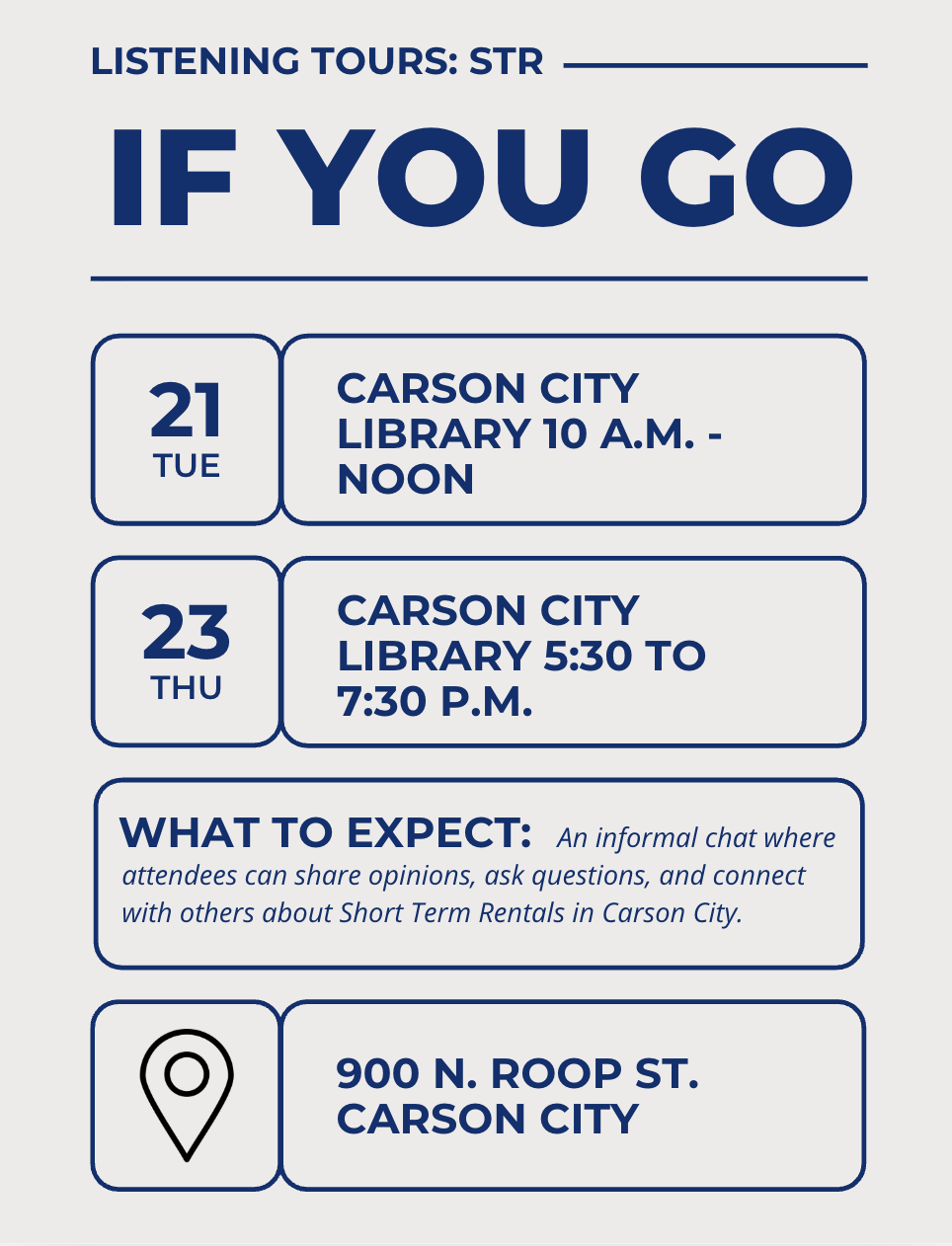
Now, the next policy decision up for discussion is whether to impose standards on short term rentals (think AirBNBs, VRBOs etc) and if so, what those would like. Two listening sessions will be held this week to solicit community input that will be directly used to inform the decisions of our representatives.
The importance of informal sessions
When it comes to city policies on growth and development, nearly all Carson City citizens have an opinion. Whether it’s more restrictions on building, asking for specific types of builds to be prioritized, or wanting to see certain types of businesses or use be cordoned off to various areas in town.
However, soliciting that feedback in a meaningful way has often been a challenge for municipalities of all sizes, especially when citizens find formal processes intimidating, or have trouble making day-time public meetings.
That’s why for Carson City’s Community Development Director Hope Sullivan, finding ways to bring in broader community engagement has been a major focus for her and her team.
“At the listening tours, every single solitary person there speaks and I facilitate the meeting,” Sullivan said. “And it’s really important to me that everyone has a chance to speak uninterrupted … it’s not that formal situation where the chair is going to call on you, you have three minutes, they can’t answer your questions. That’s hard for people. We get to be outside that framework — we’re just there to talk and to listen.”
The approach took off during Carson City’s Master Plan Update, when the Planning Commission pushed for outreach that went beyond surveys and beyond the small pool of people who reliably show up to formal hearings. Commissioners saw enough value in the format that they began referencing what they heard when reviewing later applications, Sullivan said.
Providing an informal setting for the public to talk and provide insights to government is a vital part of policy development, Sullivan said. And that shift matters because it changes who carries the burden.
In a standard public meeting, citizens have to decode government procedure — when to speak, how to address the chair, what to submit in writing — and do it fast with a three minute limit. Sullivan said staff will try to coach people through, but the learning curve is real.
By contrast, listening sessions are a conversation, and are often scheduled during times that working families are able to make, which can be a difficulty for other public meetings that occur during normal workday hours.
So far, Sullivan’s listening sessions have brought in somewhere around 800 individual residents, with the majority attending sessions during the Master Plan overhaul.
Now, the next policy update is here, as are the community outreach meetings.
Short Term Rentals
The upcoming listening sessions held this week are focused on Short Term Rentals.
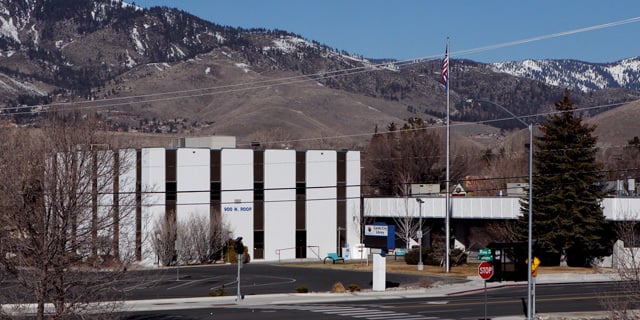
The first listening session will occur Wednesday, Jan. 21 at the Carson City Library from 10 am. to noon. with a repeat meeting held Thursday, Jan. 24 from 5:30 p.m. to 7:30 p.m.
Short Term Rentals, or STRs, have been a hot topic of discussion from a number of regulatory boards throughout the region — as well as on the international stage. Some tourist-destination cities such as Barcelona, Spain even have gone so far as to ban them in their entirety, while others are tightening regulations.
Closer to home, regulations have been imposed on various towns and neighborhoods up at the lake, ranging in limiting permits, to strict requirements such as having a 24/7 local contact available, density caps and more.
Reasons for being against STRs range from the model eating up inventory in cities and regions already suffering from a lack of affordable housing, to concerns of affluent residents regarding the transitory / recreational nature of STRs causing negative impacts on neighborhood standards.
However, proponents of STRs include everything from massive hedgefund corporations which buy up swaths of properties to rent out as STRs, to retired seniors with a backroom to rent out for supplemental income. Often found in the middle are individuals with lower incomes who purchased their homes before property values skyrocketed, and say they must choose between occasionally renting in short term capacities and selling the house altogether.
When it comes to the landscape of Carson City specifically, that is what the listening sessions hope to discover.
Currently, there are over 300 listings in Carson City for STRs including full houses, apartments, backyard cottages, condos, mobile homes, and everything in between.
Despite their presence, however, there are no municipal codes that specifically address them, which is why the Board of Supervisors directed staff to begin exploring what standards the city would like to see, if any.
“The board has said that the use already exists, they’re already here,” Sullivan said. “So let’s identify it in the zoning code and determine where we’ll allow it and what standards, if any, would be appropriate for Carson City.”
Sullivan clarified that a total ban on STRs is not an option. Under state law, the city can only outright prohibit two specific land uses: cannabis dispensaries and brothels. Instead, the city must decide where to allow them and what standards to impose, such as parking requirements or mandatory response times for property managers, or permitting requirements.
Staff has reviewed ordinances from Douglas and Clark counties to provide a “launching pad” for the discussion, but Sullivan said that those standards may not necessarily be right for Carson City. Still, it’s important to see what other municipalities have chosen for their own policies and what the results have been.
Sullivan said that for those unable to attend the meetings this week, the department is accessible via email, phone calls or even walk-ins.
“We 100% want to hear from the community and hear what the community’s thoughts are,” Sullivan said. “We don’t want to do our work in a vacuum.”