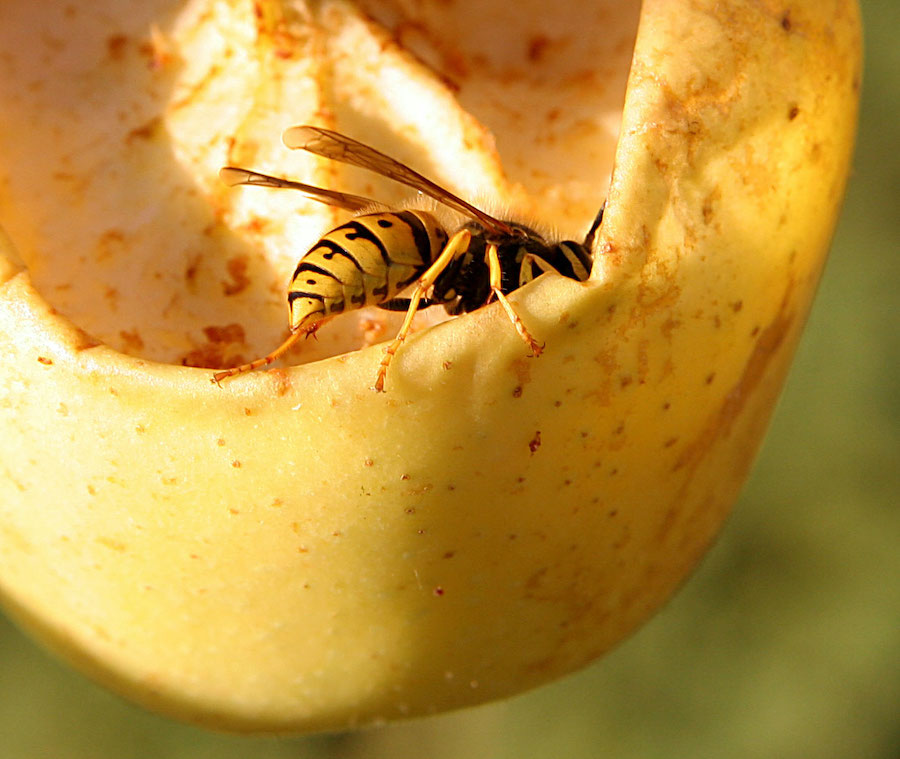
By JoAnne Skelly — Here’s an article I wish I wasn’t writing. As I was walking from our separate garage to the gate last evening about 5 p.m., I was stung at least three times by yellowjackets (wasps). I had almost made it in the gate when I heard a horrific buzzing and swarming all around me.
I took off in the opposite direction, hoping to avoid them, since I had already been stung the day before on my head. Unfortunately, although I was stung only once on that trip away from the gate, I had dropped my glasses and had to go back, and was stung two more times.

I knew these weren’t bees because the areas that were stung instantly hurt worse than any vaccine and immediately started burning. Bee stings don’t so that. They swelled up instantly, not like a mosquito bite bump but to about three inches by three inches. For the first sting on my head the day before, I had ice on it within about a minute or two. However, for the other three the next day, I could only hold ice on one at a time.
I had thought that the first sting was just a random occurrence, but the attack the next day made me realize there was a hidden nest by the gate. I had been through the gate multiple times in the morning; it was only in the early evening that they went nuts.
My husband suited up in heavy jeans, long-sleeve shirt, sweatshirt, work boots, gloves, hat and mosquito mask to go out and spray. I watched from the window and saw the wasps come hurtling out and swarming him. I yelled for him to wait until the next morning when it was cooler before spraying. The wasps would be less active then. He certainly couldn’t stand there trying to find the nest while they were attacking him. This morning, he suited up again, but this time wearing his sand-blasting hood and elbow length gloves. He sprayed the general area where we thought they were. However, later he drove the car out near and was able to tell where the nest was. Tomorrow, they get sprayed again.
Moral to the story, only spray in the cool of morning with a wasp spray that shoots a 20-foot stream while dressed in protective gear. You may have to spray more than once. Also know that while you may never have suffered an allergic reaction to a sting in the past, your body can change over time. You could go into anaphylactic shock within minutes to hours. You may need either an EPI pen or a trip to Emergency to keep breathing.
— JoAnne Skelly is Associate Professor & Extension Educator, Emerita at University of Nevada Cooperative Extension skellyj@unr.edu.