U.S. Forest Service
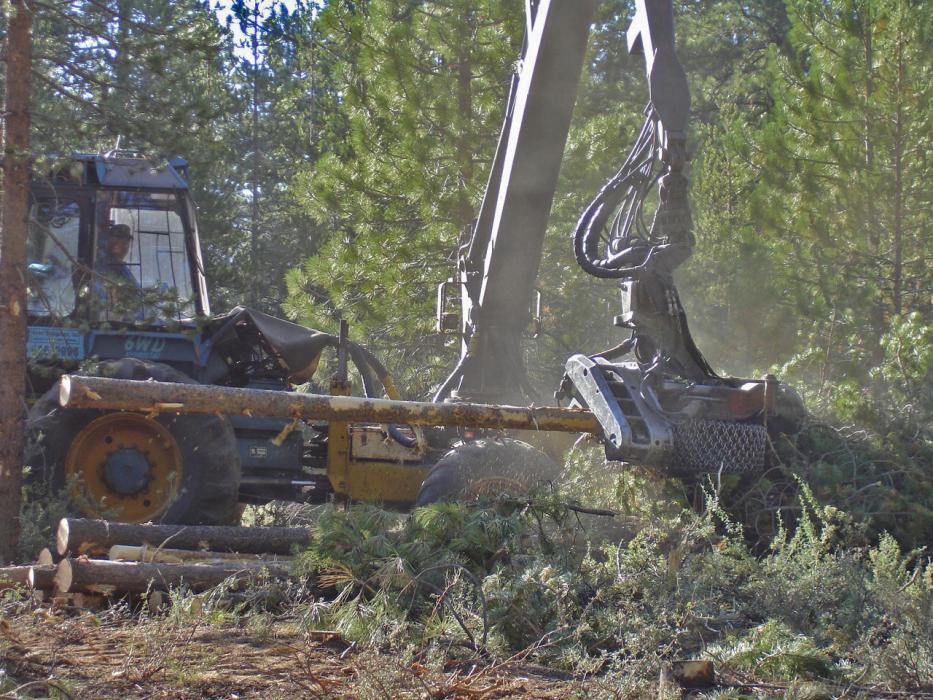
The U.S. Forest Service Lake Tahoe Basin Management Unit will resume work on the Carnelian, Incline and South Shore Hazardous Fuels Reduction and Healthy Forest Restoration projects in early May. These projects authorize thinning of trees and brush on National Forest System lands in the Lake Tahoe Basin to reduce the risk of severe wildfire and create healthier forests.
On the South Shore, hand thinning will take place near Angora Ridge, Twin Peaks, Fountain Place, Lower Echo Lake, Christmas Valley and Luther Pass. Mechanical cut-to-length thinning will take place near Pope Beach, 15th Street, Sawmill Pond, Spring Creek Tract and Christmas Valley. Mechanical whole tree removal will take place along Fallen Leaf Lake Road.
On the North Shore, hand thinning will take place near Kings Beach, north of Speckled Avenue and off Highway 431 near the Tyrolian Village in Incline Village. Mechanical cut-to-length thinning will take place on the east side of Highway 267 at the end of Beaver Street above Kings Beach. Whole tree removal will take place in Cedar Flat, near Forest Road 74 (Old County Road) and on the north side of Highway 267, near Forest Road 16N52 (Gasline Road).
Thinning methods used during these projects include mechanical and hand thinning. There are two types of mechanical thinning, cut-to-length (CTL) and whole tree removal. CTL thinning involves cutting the tree down, removing the limbs and cutting it into sections in the cutting area, and then removing the tree and as much material as possible. Whole tree removal involves cutting the entire tree and moving it to the landing to remove the limbs and cut it into sections. During hand thinning, crews with chainsaws remove trees and pile the material for burning later. CTL and whole tree removal require closure of the area during operations due to the hazards posed by heavy equipment operation and falling trees, while hand thinning generally does not require closure of the project area.
The Forest Service will post closure orders for mechanical work here.
In addition to short-term impacts to recreational access, major impacts from fuels reduction projects include changes to the appearance of Basin forests. Treated areas look disturbed at first, but recover visually within a few years. To learn more about these projects, visit http://www.fs.usda.gov/goto/ltbmu/CarnelianProject, http://www.fs.usda.gov/goto/ltbmu/InclineFuelsProject or http://www.fs.usda.gov/goto/ltbmu/SouthShoreFuelReduction.