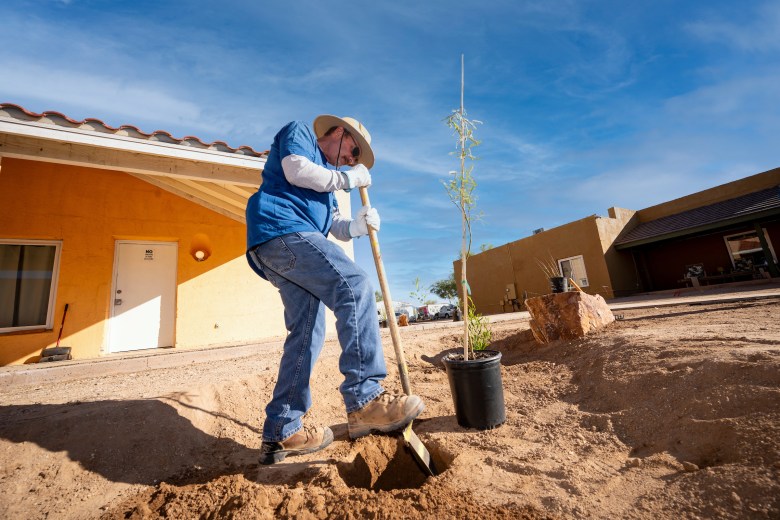
April marks the annual National Safe Digging Month, reminding Nevada residents to call the statewide 811 hotline (“Call Before You Dig” program) or place online requests through www.usanorth811.org two working days before beginning digging projects. The Public Utilities Commission of Nevada (PUCN) supports the efforts of the Nevada Regional Common Ground Alliance, sponsors of National Safe Digging Month in Nevada.
Chapter 455 of the Nevada Revised Statutes, as amended by Senate Bill 27 (2023), requires contractors to obtain a dig ticket if using mechanical equipment or hand tools. Non-contractors also always need a dig ticket if excavating with mechanical equipment or digging more than 12 inches deep with hand tools. However, it is good practice for everyone to call for a dig ticket whenever excavating regardless of depth.
When calling 811, homeowners and contractors are connected to USA North, Nevada’s 811 call center. USA North notifies the appropriate utility companies of the homeowner’s or contractor’s intent to dig. Professional locators are then sent to the requested dig site to mark the approximate locations of underground lines with flags, paint, or both. Homeowners are encouraged to take the following steps when planning a digging project this spring:
— Always call 811 a few days before digging, regardless of the depth or familiarity with the property.
— Plan ahead. Call on Monday or Tuesday for work planned for an upcoming weekend, providing ample time for the approximate location of lines to be marked.
— Confirm that all lines have been marked.
— Consider moving the location of your project if it is near utility line markings.
— If a contractor has been hired, confirm that the contractor has called 811. Don’t allow work to begin if the lines aren’t marked.
Calling 811 a few days before any planned home improvement projects that require digging – including common landscaping projects like planting trees and shrubs — is critical to preventing incidents like utility service outages and serious injuries.
When natural gas pipelines have been damaged and natural gas is escaping, the following steps are the most important to take, according to PUCN Senior Gas Pipeline Regulatory Engineer Neil Pascual: “Immediately cease work, evacuate the impacted area to minimize the hazard presented by the damaged pipeline, telephone emergency 911 services from a safe area, and contact the utility operator.”
Striking a single line can cause injury, the need for costly repairs, fines, and inconvenient outages. The depth of utility lines can vary for several reasons, such as erosion, previous digging projects, and uneven surfaces. Utility lines need to be properly marked because even when digging only a few inches, the risk of striking an underground utility line still exists. Every six minutes, an underground utility line is damaged because someone decided to dig without first calling 811. In Nevada, about one underground gas line is damaged every day.
For more information about safe digging procedures, please visit www.call811.com, www.usanorth811.org, or puc.nv.gov.