
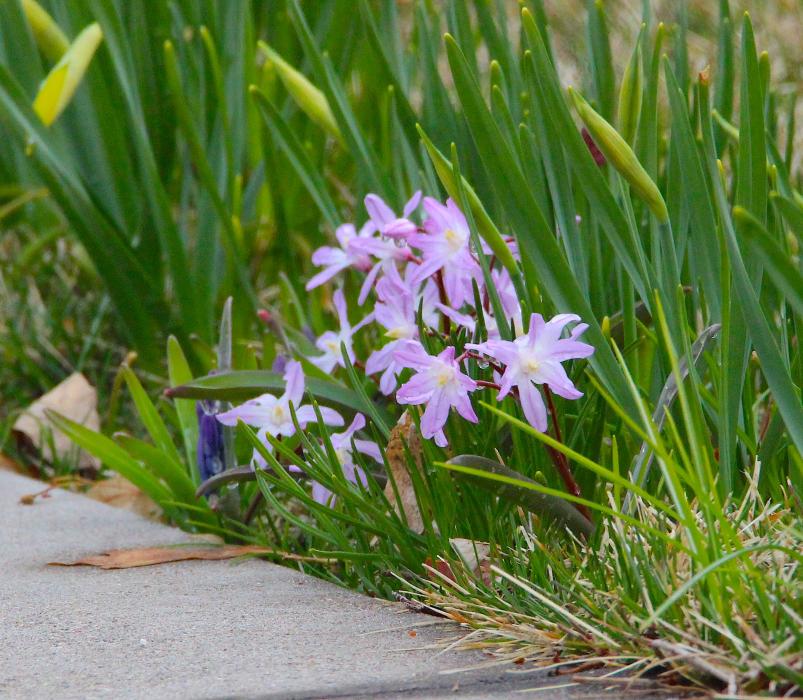
Almost every gardener will agree that grass growing in flower beds or in junipers is a huge maintenance challenge. For years I have dug the grass, primarily Kentucky bluegrass, out and finished each bed by edging with a shovel.
This often meant I lost flowers that had a mass of grass around them or messed up my arms on the junipers. It is a tedious process that requires getting the soil off each divot of grass by shaking or pounding with a trowel.

Years ago, being on my knees, squatting or sitting for hours was doable – not fun – but doable. This past week I started digging up the grass again. After an hour, I realized I really wasn’t making much progress to the detriment of my back and new hip. And, since I have such a huge yard with lots of flower beds, I hate to say it, but I resorted to a grass-specific herbicide.
The advantage to digging out grass is instant results and satisfaction. The bed looks clean and neat at the end of a rigorous weeding session. With an herbicide it can take one to four weeks for the grass to die.
It’s recommended on the label to reapply seven days after the initial application for best results. So, instead of seeing a clean bed immediately, I have to wait weeks before I can cut the grass back. The good news is the grass should be controlled for most of the spring and much of summer before growing back from underground runners. With digging it out, the grass grows back very quickly, and I have to keep repeating my efforts.
Younger, actively growing grasses are killed more easily. According to the label, “warm sunny weather will accelerate system movement from leaves and stems down to the roots to give complete kill.” Watering or rain within an hour or two after application will wash the product off.
The product I use comes in a 24-ounce handheld spray bottle with the primary active ingredient fluazifop-P-butyl. It is safe with many broadleaf plants, but some will discolor with application over them, so read the label. While this fluazifop herbicide can be used around non-bearing tree crops and vines, it should only be applied near plants that will not bear edible fruit for one year.
The label lists the protective clothing to be used when spraying as: PVC gloves, long-sleeved shirt, long pants, shoes and socks. Always wash hands well with soap and water after handling. Don’t apply to grass your pets might eat.
— JoAnne Skelly is an Associate Professor and Extension Educator, Emerita, University of Nevada Cooperative Extension. She can be reached at skellyj@unr.edu.


