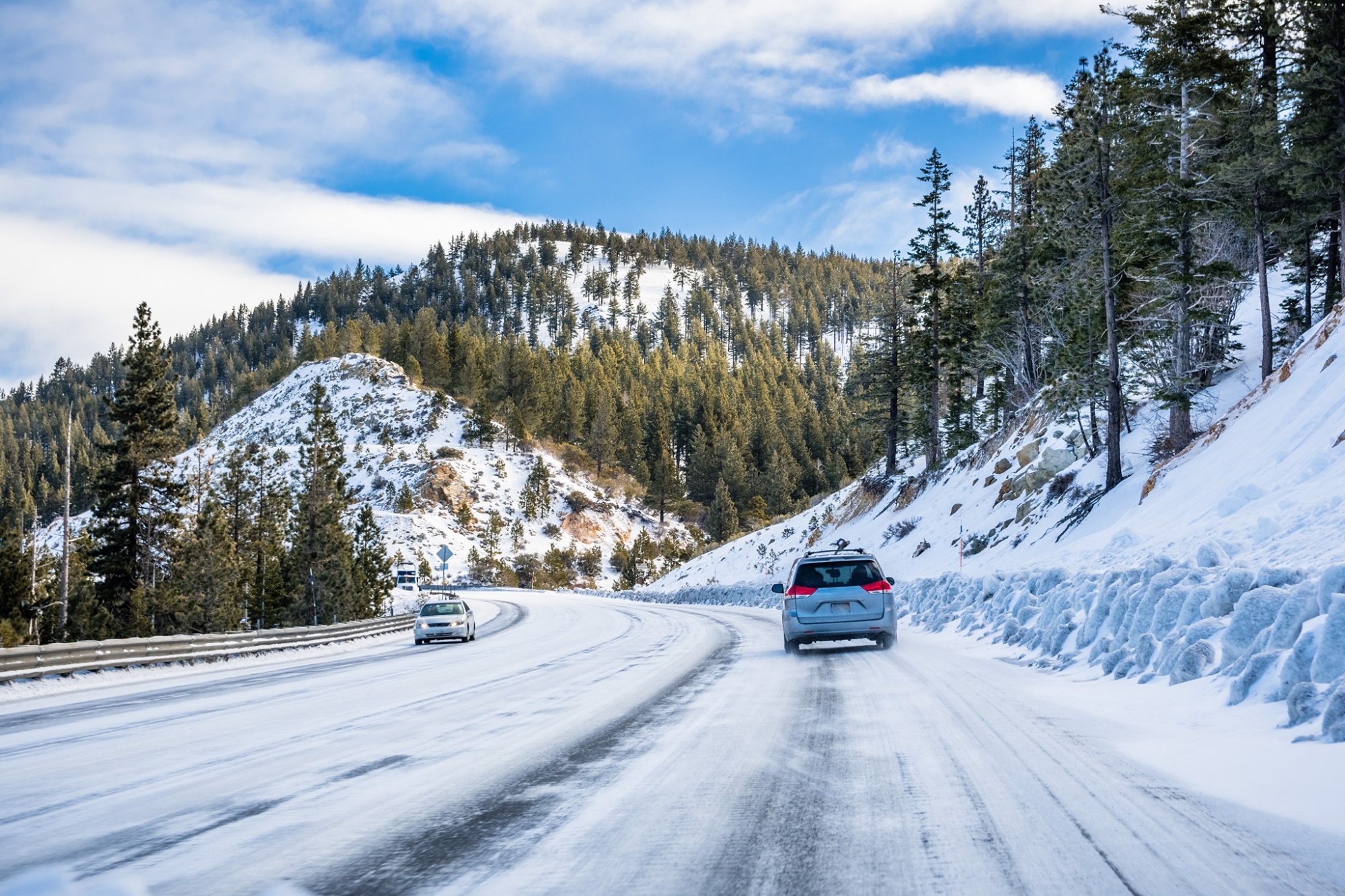
With winter storms setting up for Lake Tahoe, Carson City and surrounding counties, the Nevada Department of Transportation is reminding drivers to prepare for winter driving.
Statewide, nearly 1,000 crashes occurred in inclement weather between Oct. 1, 2024 and April 30, 2025. This includes seven crashes involving fatalities.
Many of the crashes were due to unsafe driving in snow, ice and other wet conditions, such as driving too fast for current weather conditions, following too closely, or failing to maintain a lane.
Particularly in winter weather, motorists must drive slowly for conditions and leave space between their vehicle and others. Wearing a seat belt and focusing on the road are other important driving tips for any type of weather. Drivers should also make sure that vehicle tires are in good condition and that they use proper traction control devices for their vehicle.
Updated state road conditions, including winter road closures and incidents, are available by dialing “511” or logging on to nvroads.com before driving. Drivers can also view live traffic cameras and sign up for free traffic alerts for their state road commute.
Winter Driving Safety
Winter driving safety tips are available at dot.nv.gov/winter.
∙ Only travel in winter weather when necessary, leave enough time to safely reach your destination and plan your route to help avoid snowy/icy areas and steep hills.
∙ Before driving, check weather and road conditions by logging on to www.nvroads.com, checking the Nevada 511 app or dialing 511 within Nevada (or 1-877-NV-ROADS outside of Nevada).
∙ Share your travel itinerary so others know when to expect you.
∙ Remove snow and ice from vehicle, including windows, mirrors, lights, turn signals, roof and license plates.
∙ Buckle up.
∙ Turn on headlights to see and be seen.
∙ Do not rely solely on GPS to find alternate routes, as it could lead to unmaintained roadways or hazardous areas.
∙ Turn off cruise control.
∙ Avoid quick starts, stops and fast turns. Accelerate, brake and steer smoothly and gradually.
∙ Reduce speed. Speed limits are based on normal road and weather conditions.
∙ Do not slam on brakes. Apply steady pressure on ABS-equipped (antilock braking system) vehicles and pump the brakes if necessary on non-ABS vehicles.
∙ Always comply with all posted traction device requirements.
∙ Keep additional distance from other vehicles.
∙ Watch carefully for snow removal equipment.
∙ Do not pass without good distance and sight clearance.
∙ Use extra caution on bridges, ramps, overpasses and shaded areas- they may freeze first.
∙ Maintain a high fuel level.
∙ If vehicle begins to skid, steer in direction of slide and slowly remove foot from accelerator.
∙ If parked or stuck in snow, leave window slightly cracked for ventilation and make sure vehicle exhaust system is clear of snow.
Check before you go: Tires, brakes, lights, battery, wipers, defroster, heater, and vehicle fluid levels.
Carry with you: Tire chains, flashlight, ice scraper, snow shovel, first-aid supplies, extra clothes/gloves, blanket, flares and non-perishable food/water.
NDOT Winter Preparation
NDOT begins annual winter preparations in August by readying snowplows and other pieces of snow and ice equipment for use in snow removal across northwestern Nevada.
As storms move in, NDOT maintenance personnel closely monitor professional meteorological forecasts detailing wind, rain, snow, ice and other weather on state roads. Staff also utilize more than 70 Road Weather Information System meteorological stations located along northwestern Nevada roadways to provide detailed reports of current air and pavement temperature, and pinpoint precise sections of roads needing brine, salt and sand or snow removal.
During major winter storms, crews work in 12-hour shifts, rotating personnel to provide 24 hour-a-day snow removal.