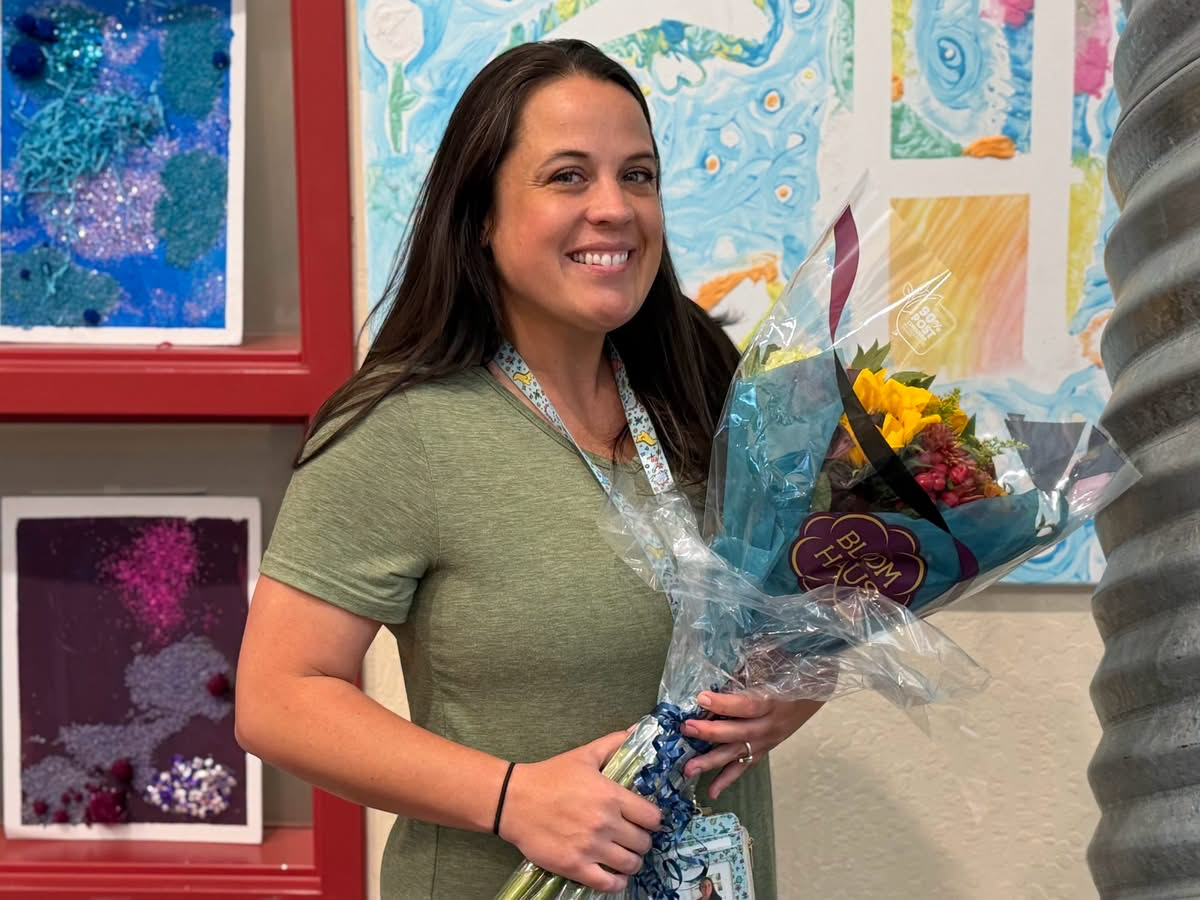
Morgan Wadsworth is a sixth-generation Nevadan who was on a path to medical school, majoring in neuroscience and volunteering in hospice centers, when she decided the best way to heal her community wasn’t as a doctor but as a legislator.
Now, the 26-year-old University of Nevada, Reno student and service industry worker is launching a long-shot bid to unseat six-term Republican incumbent Mark Amodei for Nevada’s 2nd Congressional District.
While Wadsworth considered starting with a local office, she ultimately set her sights on Washington. She argues that the federal government acts as a “ceiling” for what can be accomplished at the state level.
“I believe that good government comes actually from the top at the federal level,” Wadsworth said. “If the federal government, that ceiling is not very high, then the rest of our local, our states, our everyday communities can only go so high.”
Although running as a Democrat, Wadsworth expressed exhaustion with the polarization of the two-party system, describing modern politics as a “team sport” where party loyalty often overrides policy solutions.
“When it comes to the issues with the current Democratic party, there is no mission, there is no inspiration, there is nothing to rally their base to fight for,” Wadsworth said. “People want representation of their ideals, they want something to believe in and fight for. Saying ‘I’m not them’ is not a stance and it inspires nothing from the people they are meant to represent. Both parties are entrenched with older representatives who are not in touch with what their communities actually need right now, and both parties are more aligned with corporate interests and issues that affect their donors moreso than their own constituents.”
She noted that she would have preferred running as an independent as it aligns closer to her true values, but third-party candidates are forced to pick between the two major parties if they want to stand a chance.
“When running for office, you are forced to pick a party; it’s practically a death sentence running as an independent despite the fact that the majority of Nevadans are ideologically independent which just isn’t fair to constituents.”
To maintain independence, she has pledged to refuse money from corporate PACs, stating that taking large donations from industries like gaming and mining creates a fundamental conflict of interest.
“If you are taking massive donations from private corporations, you cannot genuinely represent the public interest,” Wadsworth said. “Period.”
In a nut shell: Morgan Wadsworth’s Politics and Values
Healthcare Reform
- Universal Healthcare: Explicitly supports Universal Healthcare alongside a private option, arguing that the current system is unsustainable and expensive.
- Rural Infrastructure: Proposes financial and educational incentives (scholarships, housing) to attract doctors and nurses to rural Nevada, which currently suffers from severe specialist shortages.
- Funding: Opposes cuts to healthcare; advocates for increased federal funding to support hospitals that rely heavily on Medicaid and Medicare.
- Medicaid Protection: Rural hospitals rely heavily on Medicare and Medicaid funding to survive and she opposes cuts to these programs, noting that they are essential for the survival of rural healthcare systems
Economy and Corporate Accountability
- Mining Industry: Believes the mining industry is not paying its “fair share” in taxes relative to the billions in profit it extracts. She does not want to end mining but wants to minimize the financial and environmental “giveaways” to the industry.
- Rejection of “Sweetheart Deals”: Opposes offering tax incentives to billionaires and corporations under the guise of job creation, arguing these deals often result in the state giving away resources with little return for the local economy.
- Diversification: Aims to diversify the economy beyond tourism and gaming by strengthening education and the workforce rather than relying on corporate tax breaks.
Environment and Technology
- Data Centers: Strongly opposes the influx of AI data centers, arguing they provide virtually no jobs while draining the region’s limited water and energy infrastructure.
- “Silicon Valley” Resistance: Rejects the narrative that Northern Nevada should become the next “Silicon Valley,” calling for immediate regulations on AI development rather than jumping in “headfirst”.
- Water Protection: Highlights the specific danger to the Great Basin’s “internal watershed,” noting that pollution generated by industry does not drain to the ocean but stays within the state, affecting local lakes and tribal lands.
- Public Lands: Opposes the sale of public lands, stating that once they are sold, the state never gets them back.
Education
- Funding and Mismanagement: Criticizes the diversion of cannabis tax revenue (approved by voters to fund schools) into “rainy day funds” or general accounts which occurred in the past.
- Teacher Support: Supports better wages and benefits for teachers to combat shortages and large class sizes.
- Early Education: Advocates for the expansion of pre-K and early childhood education programs.
Governance and Politics
- The “Ceiling” Philosophy: Views the federal government as the “ceiling” of governance; believes state and local progress is limited if federal laws (the root of governance) remain weak.
- Anti-Partisanship: Describes modern politics as a “team sport” that ignores actual issues. While running as a Democrat, she prioritizes constituent needs over party loyalty.
- Campaign Finance: Refuses to accept money from corporate PACs or groups like AIPAC to avoid conflicts of interest.
- Unions: Supports the right of workers across all industries to unionize, citing the positive difference in working conditions between unionized Las Vegas casinos and non-unionized Reno casinos.
Representation & Tribal Sovereignty
- Northern Nevada Focus: Aims to address the imbalance where Las Vegas receives the majority of political attention and resources. She criticizes the current incumbent for failing to hold town halls or be accessible to Northern constituents.
- Accessibility A core component of her platform is simply showing up. She criticizes the current leadership for being inaccessible to rural constituents and promises to hold town halls and maintain a physical presence in the communities she represents.
- Tribal Rights: Advocates for genuine representation for tribal communities, specifically regarding land rights, water rights, and the protection of education funds, which she notes are currently under attack.
- Lived Experience: Argues that a representative with a working-class background (service industry, renter) is better suited to understand constituent struggles than a career politician or lawyer.
Wadsworth faces a steep climb in a district that has leaned Republican for decades, but she believes her background as a working-class Nevadan resonates more with voters than the resume of a career politician.
“It’s more important for the average Nevadan to be represented by someone they relate to, rather than someone who attended law school before becoming a representative,” Wadsworth said. “Nevadans want someone who will hold town halls and understand their struggles as real and not as something they’ve never experienced themselves. We want our representatives to have a lived experience that aligns with our own.”
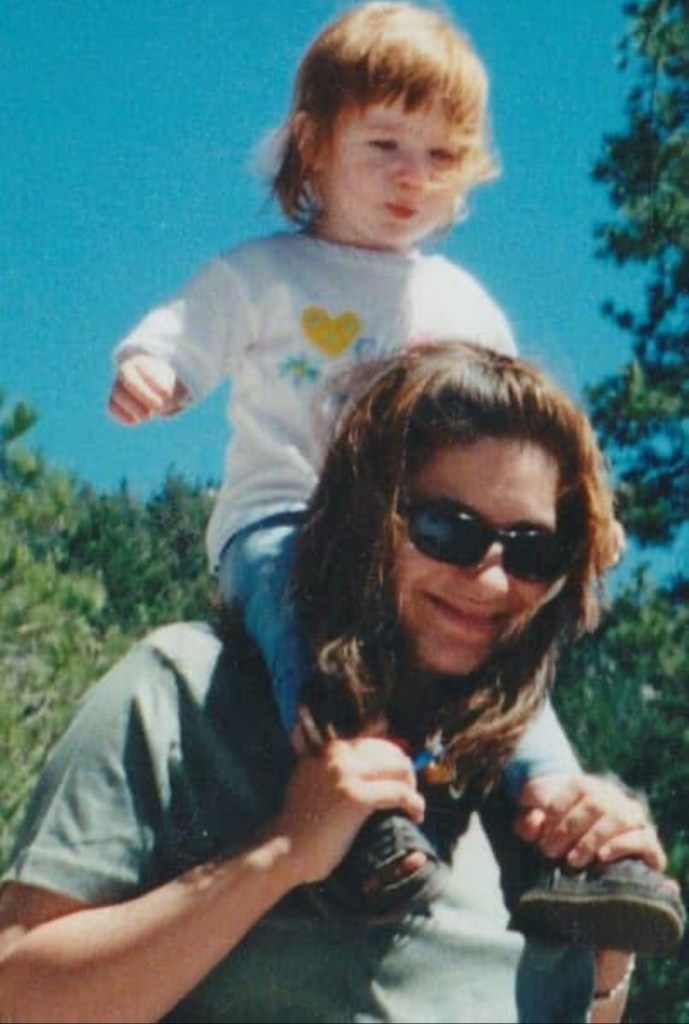
Wadsworth was born and raised in Reno’s North Valleys by a working single mom and relied on social safety nets like SNAP and CHIP while she was growing up, so she understands first hand the struggles average Northern Nevadans face.


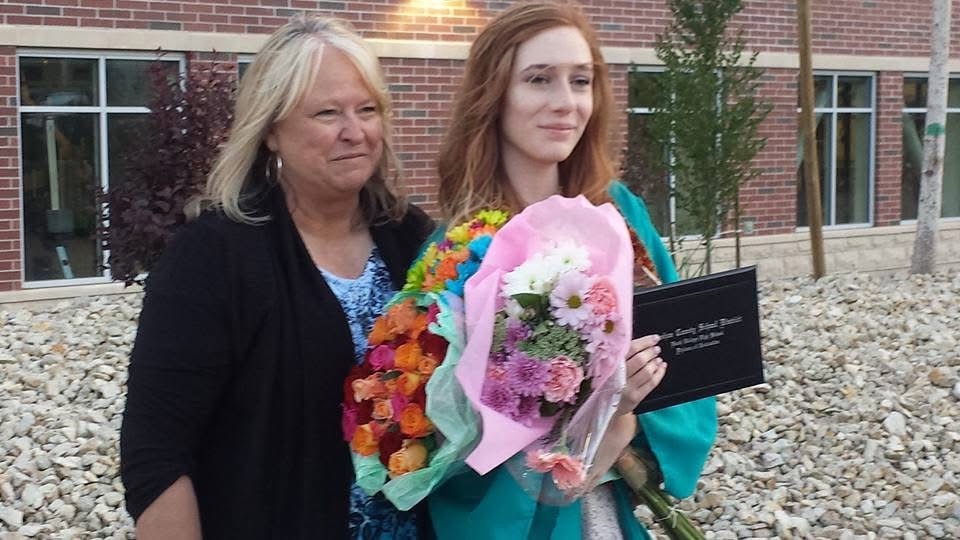
Wadsworth has worked in retail, as a casino cocktail waitress, a bartender, and veterinary assistant among other service industry jobs throughout the region, which she believes gives her a unique insight into what workers face — and what incentives and protections they need to flourish within our economy.
She describes her campaign as a reaction to what she sees as 15 years of stagnation under Amodei’s tenure. Her decision to run solidified after observing the incumbent’s voting record on healthcare legislation and what she describes as his lack of accessibility to constituents.
“You cannot represent a community if you are never here, or refuse to answer the phone to respond to issues your constituents are facing,” Wadsworth said, criticizing Amodei for failing to hold town halls in Northern Nevada.
Being a doctor wouldn’t have addressed these systematic issues in our state and country.
Drawing on her background as a former pre-med student, Wadsworth has made healthcare the centerpiece of her platform. She cites Nevada’s low national rankings—placing the state 41st or 47th depending on the metric—as a crisis point.
Her stance is personal. She recounted the struggles of her grandfather, a rural Nevada native who was shot in the head in a hunting accident as a teenager. He spent his life traveling to California for care because Nevada lacked necessary specialists.
Unlike many moderate Democrats, Wadsworth explicitly supports Universal Healthcare, arguing that a system with private options alongside public coverage is the standard in most developed nations.
“I don’t want okay, I don’t want good enough, I want the very best we can get,” she said. “Being a doctor wouldn’t have addressed these systematic issues in our state and country.”
Nevada doesn’t want to be the next Silicon Valley.
Beyond healthcare, Wadsworth is campaigning on a platform of economic and environmental protectionism for Northern Nevada. She is sharply critical of the state’s tendency to offer tax incentives to corporations, specifically targeting the influx of AI data centers.
Wadsworth argues these facilities strain the region’s energy infrastructure and water supply at the detriment of rural residents, while offering few jobs in return. She highlighted the unique environmental risks facing the region due to its geography.
“Our watershed, the Great Basin watershed, is one of the only places in the United States that is an internal watershed, which means our water does not flow out into the ocean,” Wadsworth explained. “First of all, we don’t have a lot of water to begin with. The water we do have, we cannot afford to have it polluted. All the pollution, all the trash, it stays here — it goes into Pyramid Lake, it goes into our tribal reservations, and then the tribes have to deal with it, and it destroys our natural resources.”
She said that her stance isn’t only an environmental one, it’s an economic one: “They’re not bringing jobs, period. We don’t have the infrastructure to support them, or the resources. It’s extremely irresponsible to allow these data centers to come here en masse the way they are and give away our public lands to become a corporate playground and a dumping ground for tech billionaires.”
Relating to rhetoric Nevadans have heard over the last decade about Reno becoming “the next Silicon Valley” thanks to the influx of Tesla and similar industries at the TRIC, Wadsworth pushed back not only on the fact that those promises haven’t come to fruition — but that Nevadans don’t want to be the extension of the tech bay.
“Nevada doesn’t want to be Silicon Valley,” she added. “Maybe our politicians who are getting paid by these people want us to be the next Silicon Valley, but Nevada does not want to be – especially Northern Nevada … We can’t jump headfirst into something like this without understanding and mitigating the risks.”
You can follow Wadsworth’s campaign on social media.