“What will winter bring?” is the question on many local minds as we gear up for the 2026-2027 winter season. Will we skate through the rest of November through March with an average amount of rain or snow or will we be paralyzed by snowstorms and floods given the much-anticipated, discussed and forecasted strong El Niño year?
During El Niño, trade winds weaken and warm water is pushed back east, toward the west coast and can significantly affect our weather. The warmer waters cause the Pacific jet stream to move south of its neutral position. With this shift, areas in the northern U.S. and Canada are dryer and warmer than usual, but along the West Coast, these periods are wetter than usual and often come with increased flooding and strong winter storms that can dump record amounts of snow across the Sierra.
NOAA forecasters have vigorously reported this El Niño year may be historic because these warm water and jet stream conditions have shown significant strengthening since summer, which could bring heavy rain to the West Coast and into Nevada and deep snow to the mountains.
El Niño years are not unusual for northern and western Nevada. What is unique is whether or not we get the brunt of them, given our location. Northern Nevada and the Lake Tahoe, Carson City and Reno areas lie on what is referred to as a “pivot line” of North American storm tracks. Slight shifts in the jet stream can push storms further south (drenching Las Vegas and Arizona) or leave northern Nevada dry, as happened during the El Niño years of 2014 and 2016, according to the University of Nevada, Reno.
That pivot line puts the capital city in this unique position. With any given storm series, will it rain or snow? Will it be heavy rain or heavy snow? Will the season turn out to be nothing of significance or a winter for the record books?
It’s anyone’s guess, though winter storms have begun to stack up through the Thanksgiving travel period. That in itself is not unusual. But will these storms continue at a rapid rate and intensity this season? That’s the question.
How prepared is the capital city for this year’s El Niño? Carson Now reached out to Carson City Public Works Director Darren Schulz to answer questions about the upcoming winter season, how the city is prepared to take on problem conditions if they arise and what residents can do to prepare.
Question 1: The National Weather Service has warned since summer of an increasing threat of a strong El Niño this winter. Can you explain if news of this has made Public Works look at its current winter snow removal, leaf removal and flood threat strategy?
Answer 1: Our strategy has not changed with snow and leaf removal. Our goal every year is to be prepared for winter weather, regardless of any forecast. More rain is possible this year, so we have supercharged our preparation. We have a machine that fills sandbags (instead of depending on manually filling them), that has been made ready. This will allow for quicker sandbag filling this year for city crew use. We are also stocking up on our sand and bag supply and planning for multiple sandbag filling locations for use by residents if needed.
Question 2: What is Public Works plan for this year given this NWS information. What changes were made if any?
Answer 2: Like Question 1 above, the plan is to prepare as we always do. Snowplows are already being processed through our fleet services to ensure they are ready for any snow events. We are stocking up on supplies for any sandbag operations that may occur as well as planning for sites for the public to be able to fill sandbags if needed. The city’s main sandbag filling location is the Public Works main office at 3505 Butti Way. The second location, if activated, will be the parking lot on the northeast corner of N. Curry and W. Ann Street. In addition, staff continue operating our three street sweepers daily city-wide to keep our streets clean and free of debris so our stormwater infrastructure works as designed.
Question 3: What’s our fleet looking like this year? How many snow plows and sanders are ready for action this year? Any increases this year for equipment?
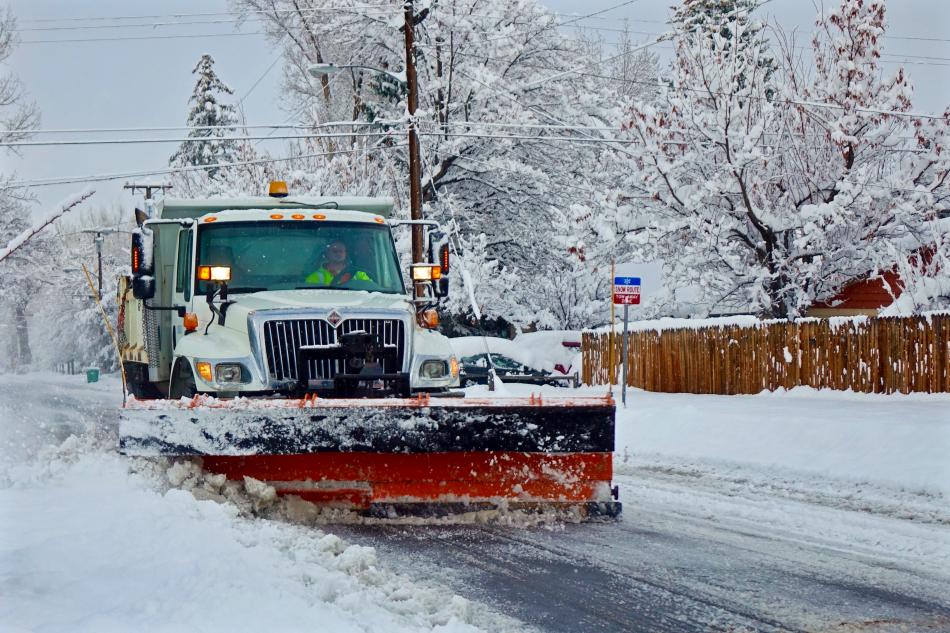
Answer 3: The Street Division has 14 plows with sanders, two brine trucks (brine is put down prior to a storm to prevent the water from freezing on the road). Eight of those plows have an additional wing plow enabling them to plow a wider swath. These plows are also capable of pre-wetting the sand with a brine material as it exits the hopper. This mixing process gives the sand a boost in its effectiveness of preventing slippery streets.
Question 4: How about manpower and staffing. Have there been any changes? Approximately how many will be working streets this winter? And how many hourly shifts during these storms?
Answer 4: No changes have been made in staffing, our newly-created Storm Drain Division is a crew of four (see response below to Question 6). Those four work under the Street Division which has a total of 23 employees (including the Storm division). When the city does experience storms (such as those that NWS has forecasted), it triggers a department-wide response, which would include multiple other Public Works Divisions (in addition to the Storm Drain Division) including the water and wastewater divisions. Manpower from those divisions includes 20 – 25 workers to assist with an emergency storm event. If needed, Public Works will institute two 12-hour day/night shifts and will work around the clock. The Department also receives help from other City Departments including Parks and Recreation and the Fire Department.
Question 5: Was there an increase in budgeting for this season or a special increase request made to the Board of Supervisors due to this year’s El Niño threat?
Answer 5: It’s difficult to forecast budget wise for an event that may or may not happen, so it’s been our practice to augment any additional funding needed after the event has taken place. Or in some cases during the event, although this has not yet occurred during my tenure with the city. Having said that, the Department has overtime budgets that are pre-loaded based on the average, and in mild weather years, that funding is not all used.
Question 6: Given our position in Carson City where it could either rain or snow, we’ve been prepared for both with plowing and sandbags for years. Has anything changed since these previous big-year storms in the way Public Works preps for storms?
Answer 6: The Stormwater Drainage Fund was originally created in 2001. In 2019 the Board of Supervisors directed it to be reimagined and better funded as the Stormwater Utility Fund. It is funded through utility rates charged to all improved properties in Carson City. Funding is used to support a small staff of technical and maintenance personnel who administer our stormwater related programs, perform inspections, manage stormwater projects, and in a most importantly, maintain our drainage systems. There have been improvements in several of our flood-prone areas in the past 7 years.
With the help of our storm water program, grants, and larger projects with infrastructure upgrades like S. Carson Street and William Street, many of the areas crewmen spent significant time at shouldn’t need as much attention, if any. But there is certainly still more to do! One project that will result in great benefit to prevent flooding is the North Carson Complete Streets project — this is still some years away, but a substantial investment into storm water infrastructure is planned.
Question 7: What areas are the main concern flood wise?
Answer 7: Any stormwater needs to drain from where it falls to the river. If it falls in the western foothills, it will need to travel all the way across our city to get to the river. Gentle and slow rains don’t really concern us anymore as infrastructure has been built to handle it. It’s the aggressive downpours that can lead to problems, depending on where they happen. This is like most municipalities, and for the city to build and maintain a drainage system to prevent all flooding would be cost prohibitive.
Question 8: What can the public do now and in the near future to prepare for this year’s storms?
Answer 8: If homeowners have known flooding issues at their property, Public Works recommends improving their drainage to take the water away from their home. Residents are urged to keep their home drainage inlets clear from any obstructions or debris, and when possible, park their vehicles about a foot off the curb line so the flow of water is not obstructed.
Depending on the storm, Public Works will have multiple sandbag locations available throughout the city if activated. The primary location is the Public Works main office at 3505 Butti Way, which is open and available to the public 24 hours a day, every day. The second location (when/if activated) will be the parking lot area on the Northeast corner of W. Ann Street and N. Curry Street. Other areas could be activated depending on the storm’s path or needs within different areas of the city. If other locations are activated those alerts will be pushed out on Alert Carson.