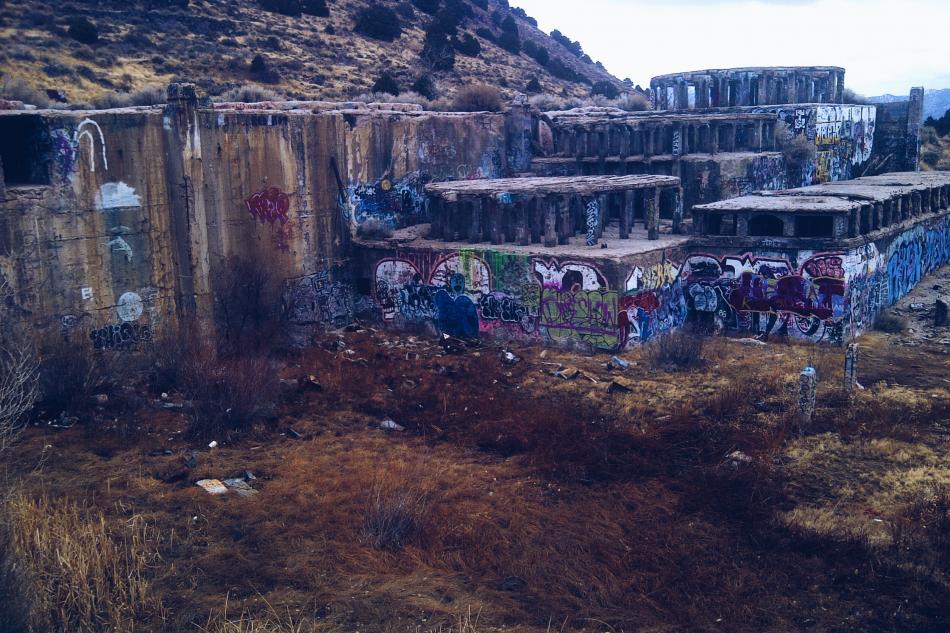

Most people who were raised in the area spent some portion of their teenage years creeping around the ruins of the United Comstock Merger Cyanide Mill near Virginia City, better known as the American Flats.
Unfortunately, the ruins were demolished in 2014 by the BLM, but they still live on in our Comstock-loving hearts.
The Flats were a looming, colorful colossus—a network of buildings half-destroyed by time that intrigued photographers from around the world, thrill-seeking climbers, graffiti artists, angsty teenagers, and history buffs alike.
The decision to demolish the Flats was a heated one, and many petitions sprang up in an attempt to save them. But the BLM ultimately determined that the site was a safety hazard, despite the fact that only two people had ever died there—one while the mill was still in production in the 1920s, and another in 1996, when a man attempted to ride an ATV up a stairwell and flipped.
The mill was actually in production for only four years after its completion in 1922. Cyanide was used in the process of extracting silver ore, but when the price of silver collapsed, the mill collapsed as well.
American City sprang up in the area near Virginia City, just south of Gold Hill, during the boom of the late 1800s and, for a brief moment in history, was actually considered as a possible capital after Nevada became a state in 1864.
However, after the demolition of the Flats, nothing of American City remains today.
During World War II, most of the metal was stripped from the buildings to help with the war effort, leaving behind the skeletal concrete remains, which eventually became a haven for artists.
The Fine Grinding and Concentration Building was the structure most people knew, with its towering ceilings and open floors. Groups of thrill-seekers would compete against one another to see who could climb the highest and leave their artwork and graffiti tags on the topmost portions of the concrete ruins.
The Ore Bin and Coarse Crushing Plant served, in a way, as the entrance to the site—a two-story building half-buried in the ground, with mermaid-green pools that seemed bottomless and decades’ worth of spray-paint cans floating on top of the still water.
The Precipitation and Refining Building was an easier challenge to conquer. The way inside was to climb to the open second story and descend a rickety iron ladder into the dark, cool belly of the structure.
Then there were the tunnels beneath the Cyanide Plant, where huge water tanks once stood.
Some people said they went down seven stories, others said twenty. Realistically, I don’t know myself because the lower tunnels were often hidden beneath deep water or blocked by collapsed rubble and stone. It was a labyrinth of pitch-black, short, narrow tunnels that sloped farther and farther down into the earth. People often reported spotting ghostly figures at the ends of the tunnels, always just out of sight or darting around corners.
People from around the world came to leave their artistic mark on the Flats. Each year, the previous artwork would be covered with new graffiti. Some were tags left by unofficial climbing clubs to mark that they had reached new, more impressive heights. Others were silly markers of attendance. As the years went by, massive, sweeping murals appeared that could cover the entire exteriors of the concrete buildings.
Naturally, the actual ruins were strictly off-limits and patrolled by federal rangers.
Once, I took my younger cousins and a few of their friends there as a rite of passage, just as I had been taken there as a teenager myself. A park ranger spotted us climbing up through the subterranean tunnels and detained us.
He was particularly unhappy when we admitted that, yes, we knew it was prohibited to be inside the ruins. He then called each of the minors’ parents, growing more and more frustrated as every parent told him that, yes, they knew where their kids were, and yes, they knew it was off-limits—but it was the Flats! They had all been taken there as teenagers themselves.
I walked away with a $75 trespassing fine as the only adult on scene. But it was worth it to know that a younger generation was able to experience the dangerous, historic playground before it was fully demolished a few years later.
The BLM also commissioned a documentary before the demolition, which can be viewed on YouTube.
The Nevada Lore Series is written by Kelsey Penrose and focuses on the legends of Nevada and the surrounding areas that help build our culture, from Washiw folklore, to ghostly visions from the Old West, and current modern-day urban legends.
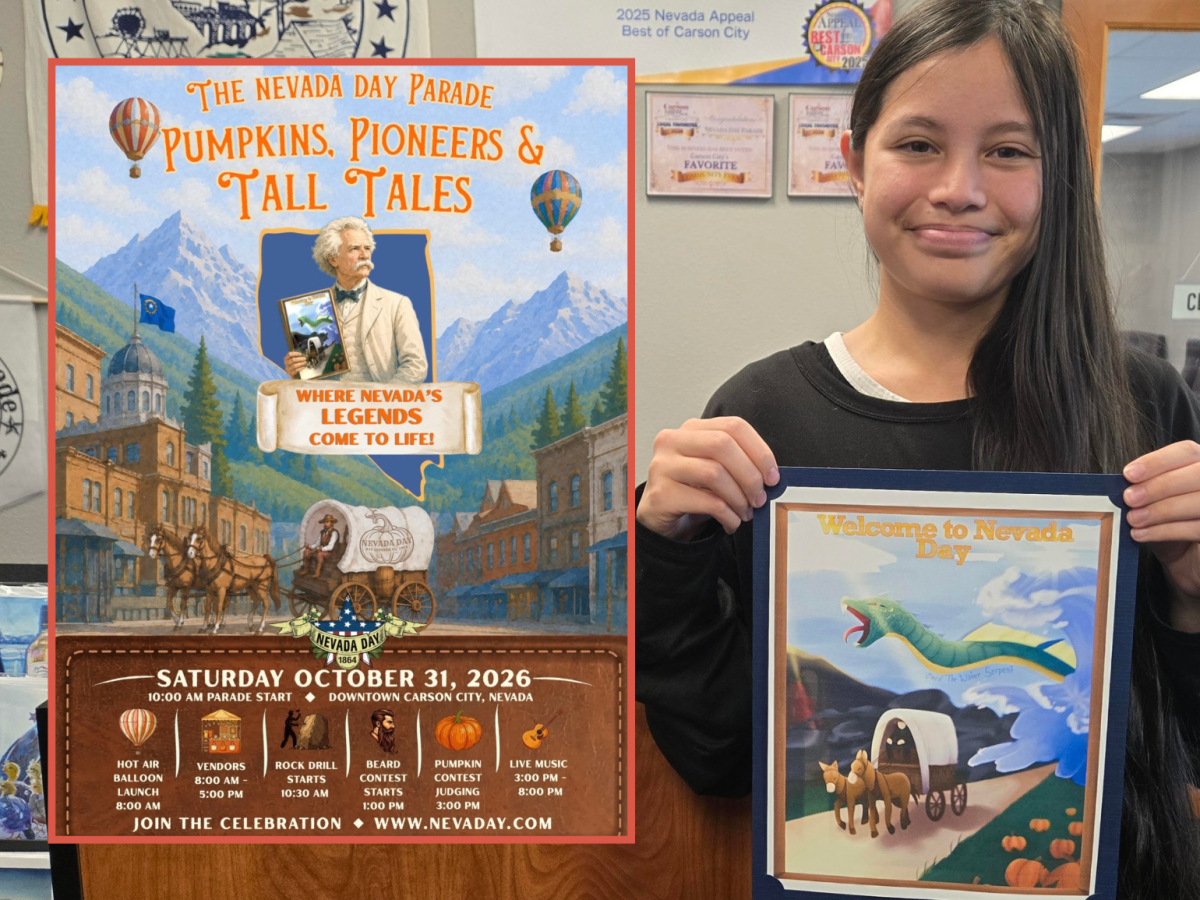
Did you know this year the theme for the Nevada Day Parade is Pumpkins, Pioneers and Tale Tales?
As we gear up to the Day of Days, we’ll be sharing some of the stories that will be appearing in the official Nevada Day Magazine, which will be handed out for free along the parade route day of!
As a reminder, because Nevada Day falls on its true birthday this year (October 31), Trick-or-Treating will be held Friday, October 30 in Carson City.