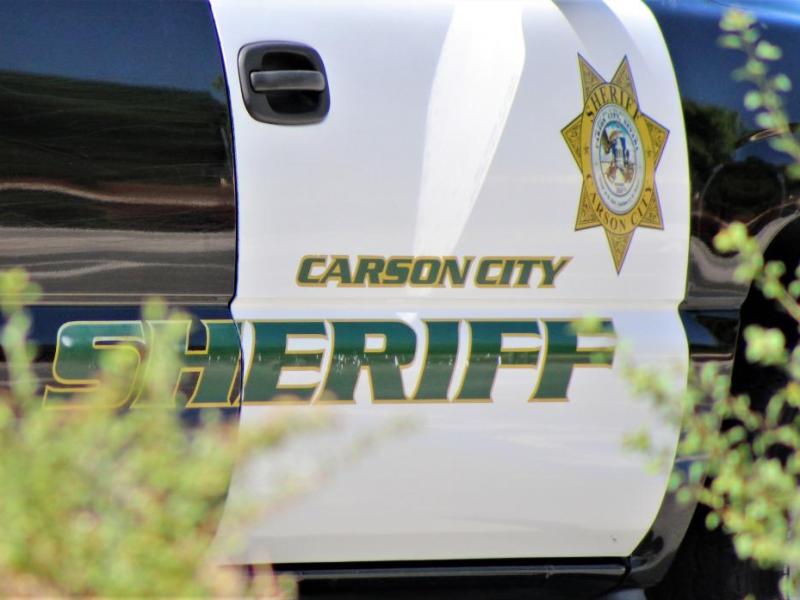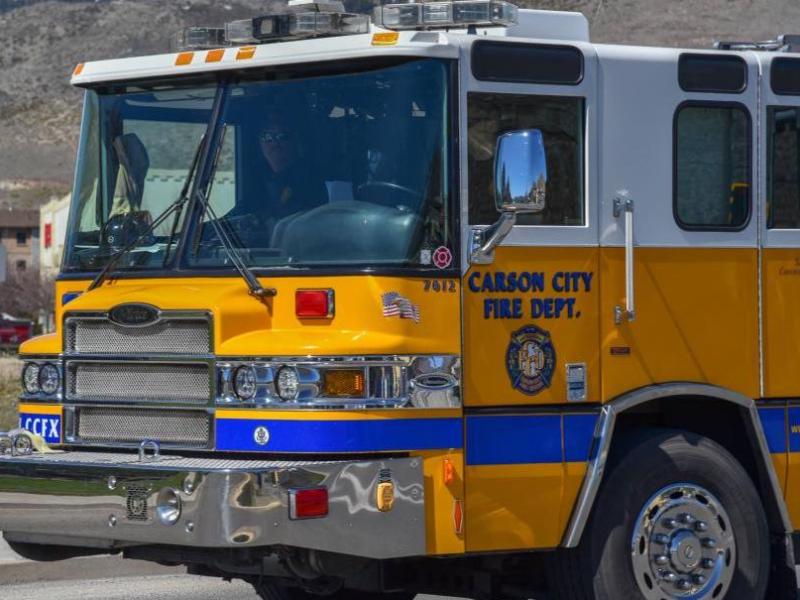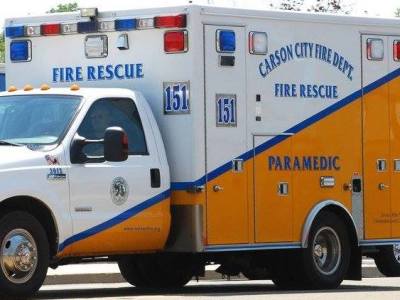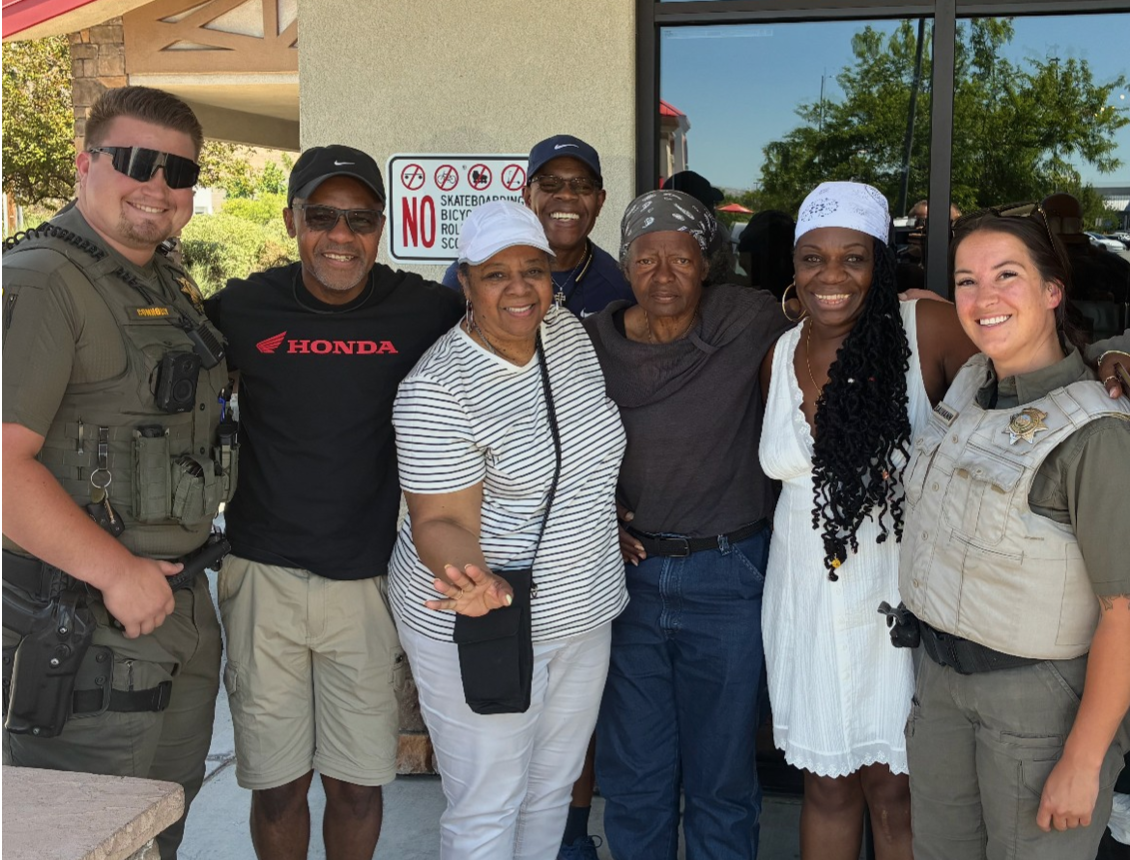
For over a decade, Carson City Sheriff’s Office’s Mobile Outreach Safety Team (MOST) has been operating as one of the city’s most unique resources.
While some specialized law enforcement teams are more straightforward — the Gang Unit tackles criminal activity of gangs, SWAT responds to high-risk crises involving armed suspects — MOST is an outlier.
If you’ve heard of MOST, it’s likely in relation to their work responding to individuals experiencing mental health, substance abuse or suicidal crises.
While all sheriff’s deputies are trained in crisis intervention, what’s different about MOST is that they operate as a two-person team: a sheriff’s deputy trained in crisis intervention paired with a licensed clinical social worker specializing in mental health.
If an individual is experiencing a psychotic episode, a 911 call could end up being a dangerous or violent situation for both the individual and the responding deputy. Or, it could also lead to that deputy spending an extended amount of time de-escalating that individual, removing them from their patrol beat.
That’s where MOST comes in. By having a licensed mental health professional respond with a crisis-trained law enforcement officer, they can not only assess a threat level and engage in crisis de-escalation, but they can also spend that extended time needed to help determine what resources they need — while keeping them out of jail at the same time.
Sheriff Ken Furlong said that, since the first version of MOST rolled out around 2014, very few encounters have ended in arrest.
“In the last three years to date, they’ve arrested one person,” Furlong said. “But even when they are arresting somebody, they’ve already got a plan in place, and that plan is typically to get them into mental health court to get them back working with Dr. Joe in the jail.”
Sgt. Taylor Mieras, the supervisor of both the MOST Division and the Student Resource Officer Division, added that the network of partnerships the MOST program is a part of works together to build the trust required in getting vulnerable people the services they need.
“These folks are here,” Mieras said of the MOST team. “They’re here to divert people away from emergency rooms and away from jails. And that’s part of the concept of a clinician and officer, because the more you can build the trust, both as a clinician and a uniformed officer, people know that they can call 24 hours a day, 7 days a week, and they will reach somebody who will listen.”
One of the largest obstacles in helping individuals from vulnerable populations — such as those who are unsheltered, dealing with mental health or substance abuse issues, or residents with disabilities living alone — has been coordinating services.
Between 2021 and 2023, Carson City piloted a Housing Plan, which was intended to create a centralized management system and coordinate the most important obstacle of all when it came to those experiencing homelessness: keeping track of who needs help, and how they’re being helped by others.
With so many nonprofit organizations, health care systems, state and city departments operating within the city and surrounding regions, these entities struggled with a major difficulty: data collection and what overlaps, if any, were occurring.
While that project did not succeed as hoped, MOST has quietly moved to fill the gap, becoming a connector between all of the agencies.
Both Mieras and Furlong repeatedly said that the success of MOST is due to their community partnerships, whether it be the nonprofits, churches, hospitals, or the justice system itself.
But what has likely made MOST succeed where others have not is the fact that, at its core, MOST is an arm of law enforcement. Which means their ability to coordinate with patrol deputies and first responders, access contacts and records through dispatch, and most importantly, the ability to respond at all hours, has set it apart.
Mieras said that no two MOST cases are alike. Some can be resolved in a few hours, while it can take some individuals years — if ever — to become housed or connected with services.
“The unsheltered population versus the unsheltered population seen and witnessed by this town are two completely different numbers,” Furlong said. “Many of the people on the streets are suffering from mental health crises, addictions, alcoholism…They will very frequently refuse services, or you get them there, and they become combative at the services. We see that a lot.”
The two agreed that success for MOST clients can look vastly different.
The Impact
One recent case occurred earlier this summer in which over the course of a few weeks, MOST helped a family from New York reconnect with their missing sister who had been living unhoused for 22 years.
On the other side of the spectrum, MOST helps coordinate a much smaller but equally impactful task once a month.
In the case of one client who is impacted by a significant mental health disorder, they require a monthly shot of medication to remain stable.
However, both in dealing with this condition as well as being unhoused, getting the shots on a regular basis has been difficult.
That’s where MOST comes in.
Once a month, if health care professionals had not seen their client, they would reach out to MOST to let them know they’re due for their shot. Within a few hours, MOST officers were typically able to locate the individual.
“They want to stay on top of it to keep them stable, because they know what happens when they’re not stable,” Mieras said. “Then they end up in jail and the cycle starts all over again. So instead, [the MOST team] will go to them, say ‘Hey, hop in, let’s go to Mallory [Crisis Center] and get your shot,’ and they say ‘Yeah, sure, let’s go,’ and that’s that.”
Mieras then added, “And recently, we were able to get housing for that person as well.”
What some may find surprising, however, is how often MOST is involved with two other vulnerable populations: the elderly, and students.
When local school social workers encounter students facing severe mental health crises or self-harm, MOST is able to step in to provide crisis holds and higher levels of specialized support. Because MOST operates 24/7, they also engage directly with the students’ families to provide broader support and resource connections outside of traditional school hours.
Mieras recalled several cases MOST has responded to when it came to seniors. These included something as simple as connecting an elderly woman with no psychiatric disorders, but who lived alone and was overwhelmed by daily tasks, with a NAMI peer support specialist who now visits weekly to help her order groceries, or a community member who asked MOST to talk to her elderly grandparents who were being scammed out of money online, but had refused to listen to family members.
In both cases, while any patrol deputy would have been happy to assist, the issue is in time: the cases MOST works on are often complicated, involve coordinating a number of different resources over days, weeks or months, which other law enforcement officers don’t have the same capacity for with their regular duties.
But this is another important aspect MOST has been stepping in to solve: without proper resources, individuals who need help can end up becoming a “high utilizer” of emergency services, when all they need is specialized support.
Mieras recalled a situation in which a veteran living with partial paralysis needed higher levels of care, but had been denied coverage.
“There’s an older gentleman who is a veteran, but hasn’t met certain conditions for the VA to get involved and provide higher levels of housing,” Mieras said. “And so what was happening was, this veteran was falling in his house, due to his paralysis. It was terrible. He needs more procedures to get done to help get his stability back, but in the meantime, he’s falling and calling dispatch for a lift assist to get him up and over to his chair.”
Mieras said that through their coordination within these systems, the veteran was classified as a “high utilizer” of services, triggering a MOST response.
“It starts with making phone calls, getting in with whoever this person’s contact is at the VA and updating them on the situation. Letting them know hey, this is becoming a bigger problem, this person needs higher levels of care, what can we do to help make sure he gets it?”
By having MOST acting in a quasi-case worker capacity, there are two direct impacts: one, to the individual, and two, in resource savings.
“Because if an ambulance is responding to someone’s house 17 times a day to provide lift assists, it means that when a car crash occurs, an ambulance much farther away has to respond,” Mieras said.
Looking forward
Currently, there are two two-person teams serving Carson City, with a third team being established.
Furlong said when it comes to expanding and adding more teams, it’s not necessarily a funding issue, because the community understand the value and the impact these teams make.
“We face the same struggle as every other agency statewide; finding qualified people who want to do the job,” Furlong said. “There is a massive shortage in this state. Getting people engaged in this type of a profession, paying them appropriately for what they do, it’s a challenge everywhere. But we have to ensure the integrity of those clinicians, they have to be well certified, well trained to be able to work with people in a very uncontrolled environment.”
The major difficulty Furlong noted is that to become a licensed and trained clinician, a student must essentially go to school full-time and work full-time to achieve the 3,000 supervised hours needed for those certifications.
However, despite these challenges, Furlong said that the third team is currently working through the necessary steps to come on board.
Furlong and Mieras both agreed that when it comes to what the most important thing the community can do to help support the MOST team is simply get the word out.
During the most recent Board of Supervisors meeting where MOST was discussed, Furlong provided a recent statistic demonstrating a drastic uptick in suicide: in just the first four months of 2026, 13 deaths by suicide were recorded, compared to 12 in all of 2025.
Furlong said none of those individuals had any prior contact with MOST.
Furlong said that he has the “utmost confidence” in the MOST teams, and in the resources offered by the community.
“It’s the person that we don’t know that worries me,” Furlong said. That’s why it’s so important to interact with people all the time … it’s the person that you don’t know, who’s on that rail or on that edge and has bad thoughts that’s going through a crisis — that’s the one I worry about, the one we haven’t reached.”
And Furlong said that the MOST teams have excelled in making themselves known to those individuals who deal with being unsheltered, having a mental health disorder, or both.
“I was out patrolling one night and a guy was having an episode on a corner,” Furlong recalled. “And so I stopped to see if he needed help, and he immediately told me he was okay—he said had MOST’s phone number, and if he needed help, he would call them. There is no better feedback than that.”
But what is more critical, Furlong and Mieras said, is the general public awareness of everything that MOST covers, and the knowledge that they can contact the Sheriff’s Office for non-emergency support.
Mieras said they’re trying to overcome the assumption people may have that they should only contact the Sheriff’s Office during an immediate, life-threatening emergency.
He said that if the entire community knew they could reach out to MOST for early intervention, “that would be enormous,” because MOST has the capacity to help almost anyone facing a quality-of-life or health struggle.
They agreed the largest challenge is in advertising everything MOST actually does—ranging from helping those in active crisis, to connecting isolated seniors or supporting students—because traditional public awareness rarely captures the broad, proactive nature of the teams.
To learn more about MOST, what they do, or how you can support, visit the MOST page on the Carson City Sheriff’s Office website.
Looking for resources or how to contact MOST directly?
Community Resources:
• Mallory Crisis Center (775) 445-8889
• Carson City Community Counseling Center is a Certified Community Behavioral Health Center (CCBHC) (775) 885-1544
• Vitality Unlimited is a Certified Community Behavioral Health Center (CCBHC) (775) 461-0025
• Carson City Health & Human Services (775) 887-2190
• Partnership Carson City (775) 841-4730
• Fish (775) 882-3474
• Ron Wood Center (775) 884-2269
• Northern NV Dream Center (775) 443-4090
• National Alliance Mental Illness (NAMI) (775) 241-4212
• 24 hours Suicide Crisis Line: 988
For emergencies, call 911.
For non-emergencies, call:
MOST1 as (775) 350-5118, Monday – Thursday 7 a.m. – 5 p.m. or email most@carsoncity.gov.
Call MOST2 at (775) 230-6002, Tuesday — Friday 9 a.m. — 7 p.m. or email most@carsoncity.gov.
When reaching out, please provide a complete description of the concern you would like MOST to assist with.