
While the best-known rivalry in the valleys is that between Carson High School and Douglas High School (which we all know only has one true blue winner), there is one far, far older.
Two communities have spent over a hundred years in a tense standoff over one question: who was here first?
Now, a caveat: obviously, the entire region has been the home of the Washiw, the Northern Paiute and the Shoshone for over 10,000 years. They weren’t “nomadic” as some historians previously claimed, meaning they wandered aimlessly through the landscape. Instead, like many snowbirds today, the native peoples of the Great Basin moved seasonally, following a circulatory migration pattern based on factors like weather and food availability.
In addition, the Southern Paiute tribes of what is today the Las Vegas Valley did not move seasonally, as they were skilled farmers similar to their Pueblo neighbors to the south.
All that is to say, when we’re talking about the “oldest settlement,” we’re talking about the oldest established settlement of white European immigrants in what would become recognized communities of the territories and, later, the United States.
The small village of Genoa, tucked against the eastern foothills of the Sierra in Douglas County, has long been the claimant of the first (white) settlement title.
However, to the northwest, the growing town of Dayton in Lyon County has always taken issue with this, claiming that they are the true silver state’s oldest community.
Genoa stakes its claim to fame on the Mormon Station, a historic trading post established in 1851 the state touts as Nevada’s first permanent non-Native settlement. The replica stockade and museum are now the centerpiece of Mormon Station State Historic Park. A nearby plque honoring the Pony Express was installed in 1961, stating that the express “passed through Genoa, the oldest city in Nevada, until the completion of the telegraph.”
The informational signs at the park itself state that the John Reese party established the post in 1851 as a business venture, and travelers often referred to the post as “the Mormon Station.”
“Mormon Station is often considered to be Nevada’s first permanent, non-native settlement,” the sign reads. Interesting choice of words, Nevada State Parks!
However, another sign states that “the museum tells the colorful story of the first settlement of Nevada.”
And, for the most part, the world has agreed. However, Dayton has been quietly fuming over what they see not only as an incorrect fact, but as a representation of the longest rivalry ever known: that between the merchant and the working class.
According to the Historical Society of Dayton Valley, a California-bound wagon carrying Lucena Parsons and her husband George was forced to remain at Gold Canyon for nearly two weeks due to snow. Lucena Parsons recorded that over 200 miners were working in the canyon, which made Dayton “the first and oldest permanent non-native settlement in Nevada.”
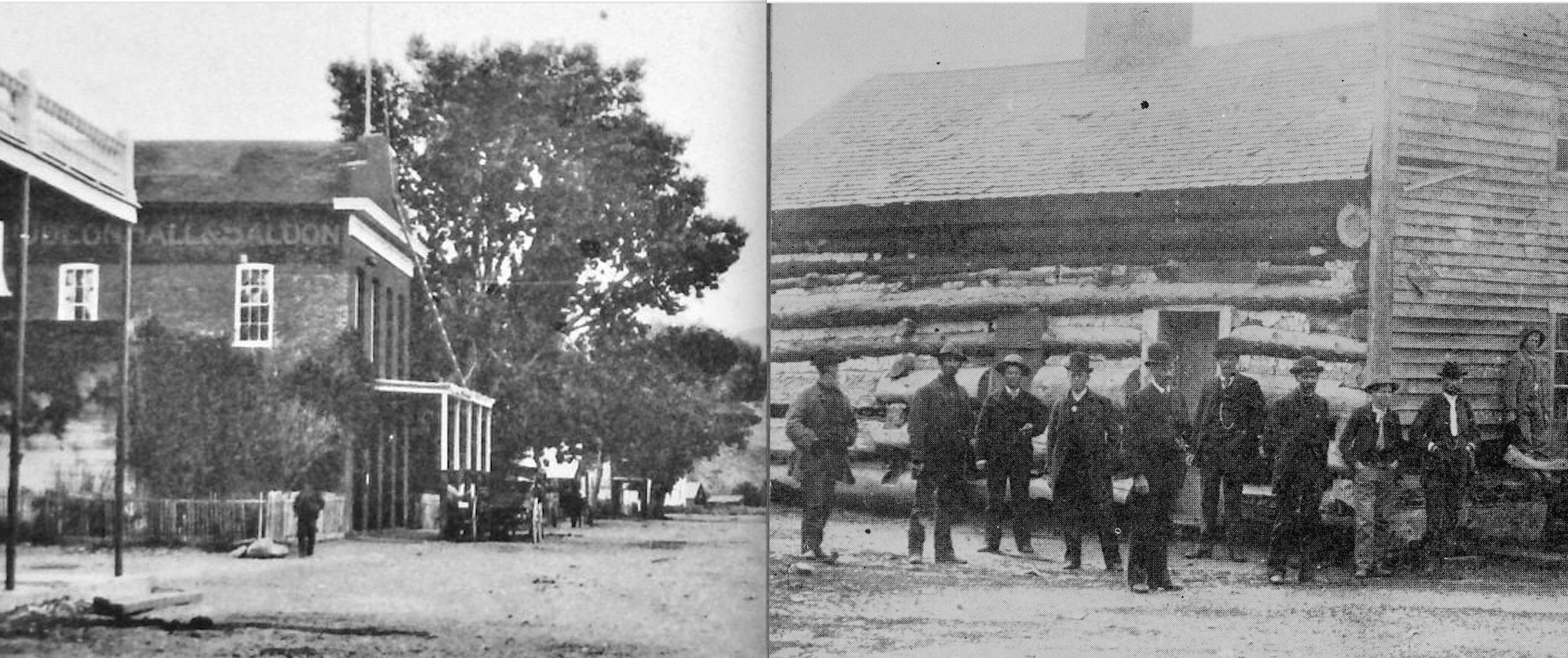
It’s established fact that the first recorded gold discovery in Nevada was in Gold Canyon, found in the little creek that still exists beside the historic Odeon.
The discovery was recorded in July 1849, panned by Abner Blackburn. William Prouse made the second discovery further up Gold Canyon the following May.
By the spring of 1851, the placer miners had arrived to stake their claims.
While the State Park markers seem to side with Genoa, the State Historic Preservation Office appears to be on the side of Dayton.
State Historical Marker No. 257 states: “The continuous occupation of Gold Canyon’s mouth makes this site Nevada’s first non-Native American settlement. Dayton, also known as Chinatown, became a mineral milling, commercial, and agricultural center after prospectors and placer miners worked their way up Gold Creek.”
You might be asking, so what’s the difference? Who is right?
For some, it might just seem like semantics: the wording for Genoa relies on being the first permanent settlement, using the establishment of the Mormon Station as its proof.
But those in favor of Dayton argue that this dismisses the contributions, and even the basic existence of the miners upon whose backs the state was built.
Semantics aside, the feud represents two different Nevadas: Genoa represented the merchant class of the emigrant trail, part of the Mormon expansion west from Utah.
Meanwhile, Dayton represented the grittier working class, the multicultural miners traveling to the hills from around the world, often with little more than the clothes on their backs. They slept rough, created lean-to shacks, and threw themselves into their work on the dream of being the one to stake the claim that would turn them into millionaires.
While each version of Nevada is as true as the other, they contribute to the ongoing feud between the two oldest settlements of what would later become our very own state of Nevada.
So, where do you stand? Who should get to claim the trophy of Oldest Settlement of Nevada?
This story comes to you from this year’s Nevada Day Magazine; be sure to grab a hard copy along the parade route!