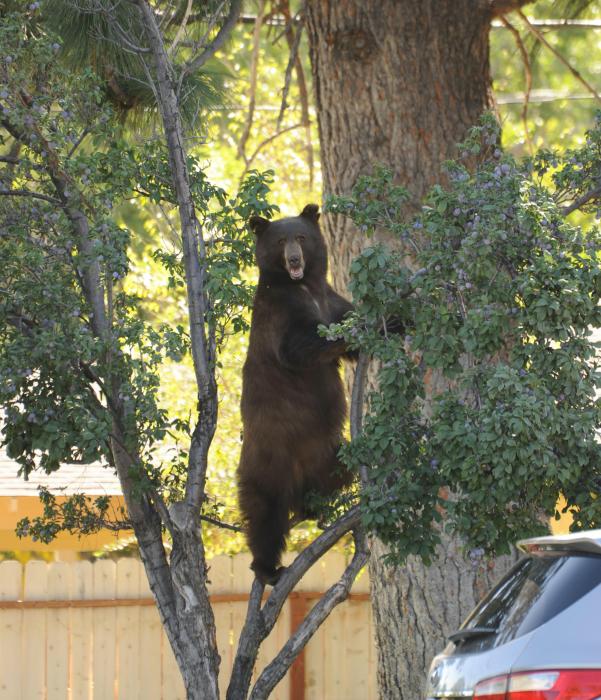
As we enter the final week of summer, black bears throughout the Lake Tahoe Basin have begun their seasonal forage for food to pack on the pounds before winter. Some of Tahoe’s bears will often come down from the foothills into Carson City, Carson Valley and surrounding communities looking for food sources.
During this phase, known as hyperphagia, bears can consume as many as 25,000 calories a day and spend much of their time searching for food, according to the Tahoe Interagency Bear Team, a collective of federal, state and local agencies who study bear behavior.
This period typically continues through the fall until cold temperatures and diminishing natural food sources prompt bears to begin denning for the winter. In the wild, bears rely on naturally available foods such as berries, insects, seeds, grasses and other seasonal food sources.
Garbage, pet food, birdseed, coolers and other human attractants, however, can provide an easier and more concentrated source of calories, according to the Nevada Department of Wildlife.
The agency reminds residents and visitors that while bears need to eat significantly more during this time of year, human food should never be part of their diet.
Black bears are incredibly adaptable and will opportunistically take advantage of unsecured human food sources like garbage. Once a bear receives a food reward, it is likely to continue returning to that area. The most effective long-term solution to reduce bear conflicts is to eliminate attractants, especially unsecured garbage.
BearWise Home Checklist
- Use a bear-resistant trash container whenever possible.
- Keep trash can lids closed and latched.
- Store garbage inside a secure garage or enclosure until collection day.
- Put trash out the morning of pickup, not the night before.
- Rinse recycling and clean trash cans regularly to reduce odors.
Carson City Bear-Resistant Trash Ordinance
Carson City’s bear-resistant trash ordinance was adopted to reduce bear attractants and improve public safety. The ordinance makes it unlawful to allow bears access to garbage or intentionally feed bears. Residents who receive repeated violations may be required to install or purchase a certified bear-resistant trash container or enclosure. Continued violations may result in citations and fines. Residents who need a bear-resistant trash container are encouraged to contact Waste Management about available options.
By securing trash and removing other food attractants, residents can help keep bears wild, reduce conflicts in neighborhoods, and improve public safety.
When bears repeatedly find food sources around homes, campgrounds, vehicles or neighborhoods, they quickly learn to associate people and developed areas with an easy meal, wildlife officials say. Food-conditioned bears may cause property damage, break into vehicles and homes, and create potentially dangerous situations for both bears and people.
Residents and visitors can help keep bears wild by taking the following precautions:
- Secure garbage in a bear-resistant container and make sure it is properly latched.
- Never leave trash outside or next to a full dumpster or garbage container.
- Remove food, coolers, trash and other scented items from vehicles, and keep vehicle doors and windows closed and locked.
- Never intentionally feed a bear.