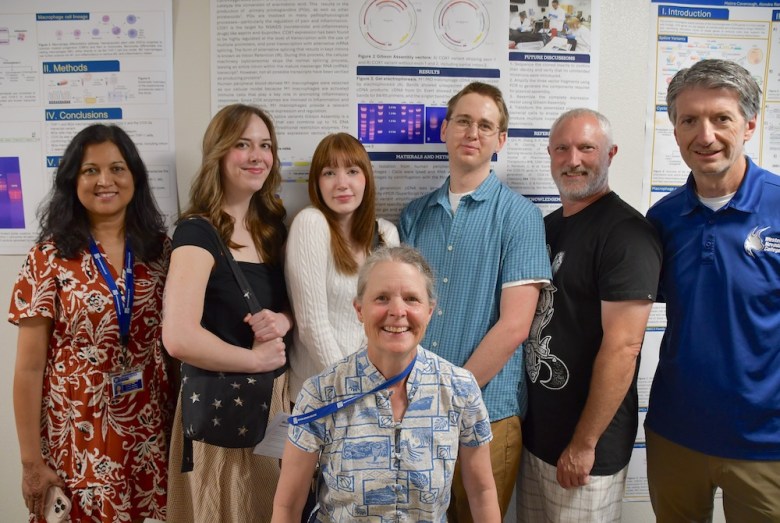
While many college students spend summer break away from campus, a dedicated group of Western Nevada College student researchers devoted a month advancing biomedical science through paid research experiences as part of the IDeA Network of Biomedical Research Excellence (INBRE) program.
Working alongside faculty mentors on WNC’s Fallon and Carson City campuses, students explored complex biological questions involving immune response, inflammation, viral defense mechanisms and molecular genetics while gaining hands-on laboratory experience that extends beyond the traditional classroom. They shared their research work during a poster presentation event on June 18 in the Aspen Building on the Carson City campus.
The INBRE program, funded through the National Institutes of Health, supports biomedical research opportunities in states that have historically received lower levels of federal research funding and helps prepare students for advanced studies and a career in science, healthcare and research fields.
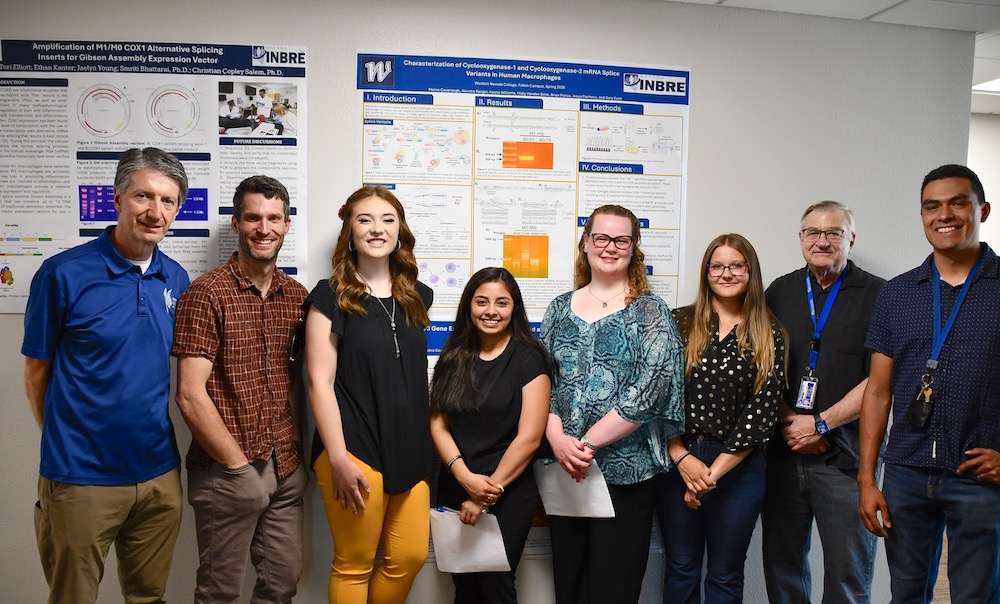
Students on the Fallon campus investigated two gene families that help immune cells respond to challenges. Cyclooxygenase genes play an important role in inflammation, while APOBEC genes contribute to viral defense and are also associated with genetic mutations involved in cancer development. They also studied COX-1, the Characterization of Cyclooxygenase-1 and Cyclooxygenase-2 mRNA Splice Variants in Human Macrophages.
Participating Fallon students included Meirra Cavanaugh, Alondra Rangel, Kaena Williams and Holly Vanden Brink. These students were mentored by Dr. Brian Prince, Dr. Josue Pacheco and Dr. Gary Evett.
On the Carson City campus, students conducted research focused on alternate gene splicing and molecular biology techniques through the project Amplification of M1/M0 COX1 Alternate Splicing Inserts for Gibson Assembly Expression Vector.
Participating Carson City students included Tori Elliott, Ethan Kanter and Jaelyn Young. Their research efforts were guided by Dr. Smriti Bhattarai and Dr. Christian Copley Salem.
Coordination and oversight of student research opportunities across both campuses was led by Dr. Elizabeth Tattersall.
For faculty members, research represents an opportunity to create a connection for students where what they learn in the classroom is reinforced with hands-on application.
“We talk about these topics in lectures, but actually getting to perform the techniques and watch the science unfold makes it click,” Dr. Prince said. “Research becomes real for students, and that experience is incredibly valuable whether they pursue research professionally or continue into healthcare and graduate education.”
Dr. Tattersall emphasized that early access to research opportunities can shape students’ futures.
“It’s about giving students the opportunity to do research as freshmen or sophomores in college,” she said. “That kind of opportunity didn’t exist when I was an undergraduate. Being able to offer these experiences — and pay students to participate — is huge. It helps students stay engaged in science and makes their education feel real.”
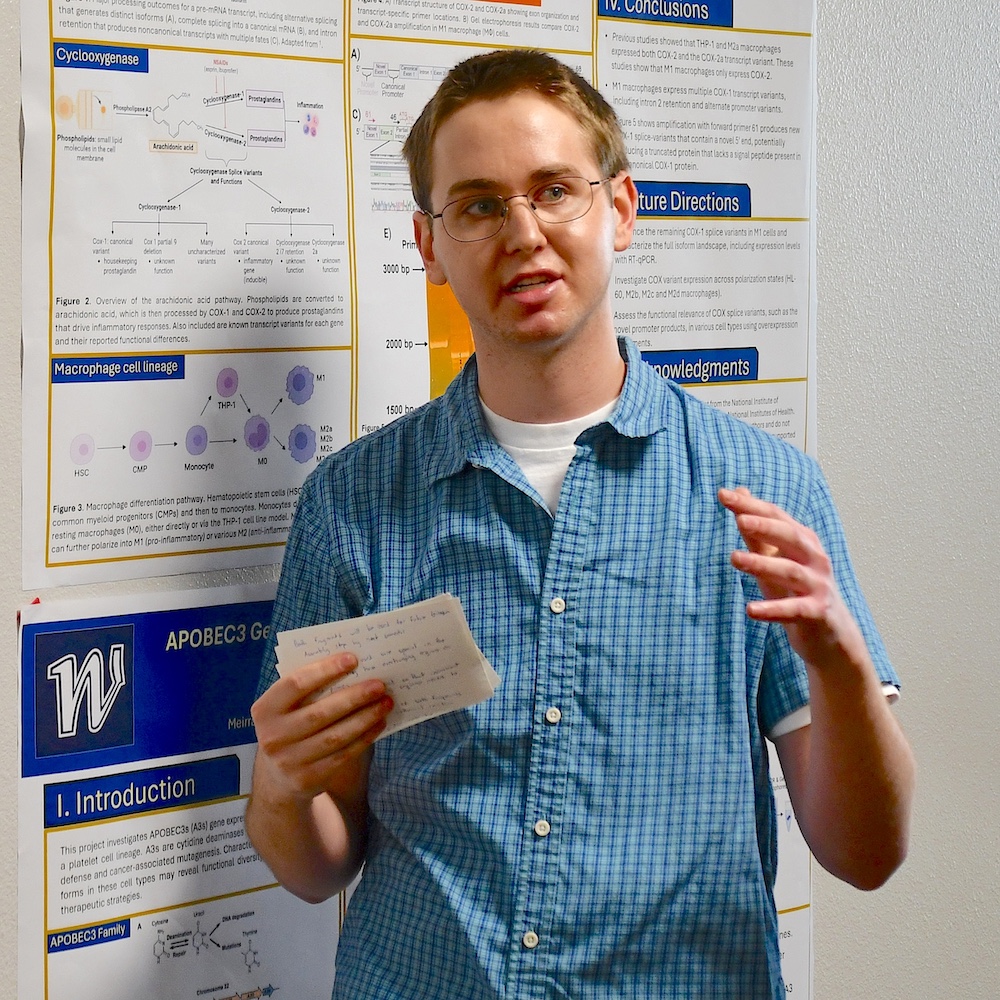
For student researcher Ethan Kanter, the experience offered valuable exposure to advanced scientific methods and collaborative problem-solving.
“It was a great experience for me,” Kanter said. “I was able to use techniques that I wasn’t familiar with, including PCR and laboratory technology we don’t normally work with. We had a really great team, and Dr. Bhattarai and Dr. Copley Salem helped fill in the gaps whenever we had questions. It definitely felt like a team effort.”
Kanter recently completed an Information Systems degree at WNC and is now completing prerequisites for the Physician Assistant Studies Program at the University of Nevada, Reno.
Western Nevada College President Dr. J. Kyle Dalpe said the research initiative reflects the college’s commitment to creating meaningful learning experiences.
“These students are demonstrating curiosity, discipline and a willingness to tackle scientific questions that have real-world implications,” President Dalpe said. “Experiences like INBRE allow our students to engage directly in discovery while building skills that prepare them for future careers in science, healthcare and research. We are proud to support opportunities that place students at the center of innovation.”
Students will have opportunities to present their research again during upcoming statewide INBRE gatherings with fellow Nevada researchers.
For information about paid undergraduate research opportunities at Western Nevada College, contact Dr. Elizabeth Tattersall at elizabeth.tattersall@wnc.edu or Dr. Brian Prince at brian.prince@wnc.edu.
ABOUT WNC: For more than 55 years, Western Nevada College has been a gateway to learning and opportunity, accessible to all, adaptable to change, and dedicated to supporting every learner. Serving a diverse 12,000-square-mile region and beyond, WNC offers associate and bachelor’s degrees, workforce development, industry credentials, and lifelong learning opportunities aligned with the needs of students, employers, and communities. WNC advances learner success, workforce readiness, organizational health, and community engagement while expanding educational access across Nevada. Whether on campus, online, or through community partnerships, WNC helps students start here and go anywhere.