By JoAnne Skelly — Preventing deer injury to plants is a definite challenge. Advice always starts with “Plant species less desirable to deer.” Sounds easy, but there is rarely a reliable deer-proof, plant list. What they eat depends on how hungry they are. Plants with strong smelling foliage, tough or prickly leaves may reduce deer interest.

The Sunset Western Garden Book suggests the following perennial plants to reduce deer interest: Aster, bee balm, black-eyed Susan, boxwood, broom, buckwheat, butterfly bush, coreopsis, crocus, currant, daffodil, daylily, foxglove, heavenly bamboo, iris, juniper, Jupiter’s beard, lavender, lilac, lupine, Oregon grape, penstemon, phlox, poppy, potentilla, pyracantha, quince, red-hot poker, Serbian bellflower, smokebush, snow-in-summer, spiraea, St. John’s wort, sweet woodruff, sumac, tulips, viburnum, vinca and yarrow. Sunset also lists ash, cedar, cypress, fir, hackberry, hawthorn, oak, pine, spruce and western redbud as deer-resistant trees. I suspect deer aren’t interested in junipers.
Fencing is by far the most effective solution, especially if deer numbers are high. Not just any fence will do. Baited electric fences, both temporary or permanent, attract deer with the bait. When they touch the fence, the electric shock teaches them to avoid the area. These can be costly and need regular maintenance.
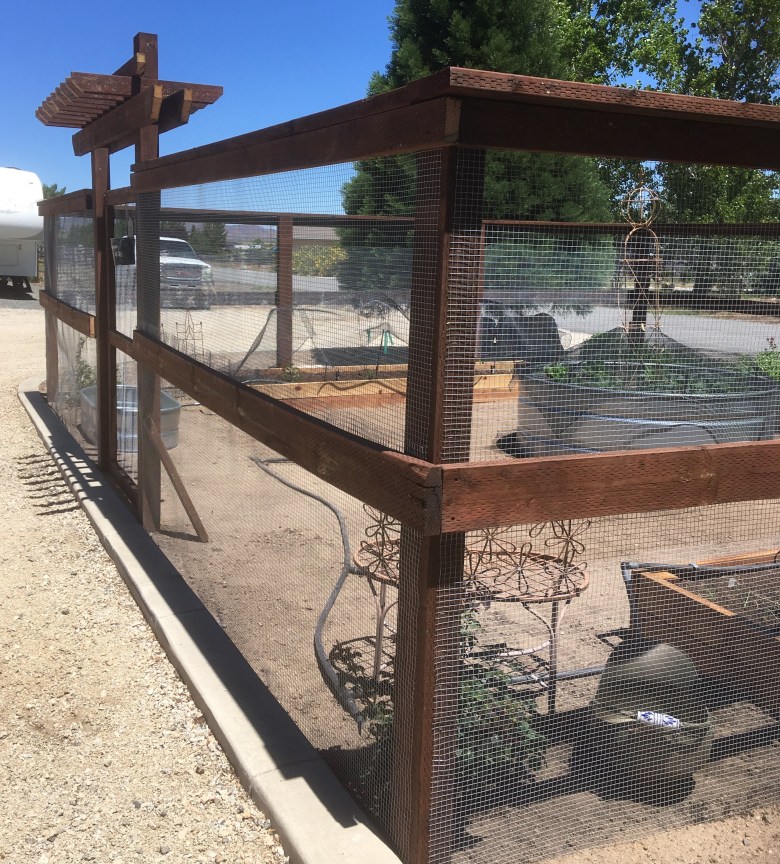
Other options include 7-foot or taller fences, a double offset fence, or slanted seven-wire fence. Fencing has to be properly constructed. Individual plants can be protected with rigid woven wire cages supported by t-poles. Extend them as plants grow. These aren’t the most attractive solution, but they can protect young trees and shrubs. It is also possible to protect individual plants with tree wraps or growing tubes designed for deer protection.
A wide variety of repellents is available. Some repel by smell, others by taste. Some are applied directly to plants, while others are applied over an area. Area repellents are usually less effective than contact ones.
Dormant applications are sometimes recommended. Since regular applications are required, costs can be high, and effectiveness is variable. Rainfall or irrigation can reduce the benefits of a repellent. Repellents reduce damage but rarely eliminate it. If a deer is hungry, bad taste or strong odor won’t keep it away from your plants.
Scare tactics, such as dogs, only provide temporary relief. As soon as the dog is gone, the deer return. Ultra-sonic devices, motion sensor noise makers and other similar things may scare deer initially, but they get used to the sounds over time and ignore them. Go here for more information.
— JoAnne Skelly is an Associate Professor and Extension Educator, Emerita, University of Nevada Cooperative Extension. She can be reached at skellyj@unr.edu.