Every day we hear about fertilizer price increases and shortages occurring from the disruptions to the world oil market. Most ammonia, a major ingredient in synthetic nitrogen fertilizers, is made from fossil fuels. Phosphorus and potassium on the other hand, the other macronutrients in most balanced fertilizers, are mined from ores.

Nitrogen-based fertilizers are made by extracting nitrogen from the air and hydrogen from natural gas (methane) at high temperatures (400-500 degrees C) and high pressure (100-200 atm) to create ammonia (Sellars, S. and V. Nunes. “Synthetic Nitrogen Fertilizer in the U.S.” farmdoc daily (11):24, Department of Agricultural and Consumer Economics, University of Illinois at Urbana-Champaign, February 17, 2021.)
The Haber-Bosch process, standardized in 1913, turns nitrogen from the air into liquid ammonia (anhydrous) to be used in synthetic nitrogen fertilizers. It is an energy intensive process using significant resources. Natural gas serves not only as the source of energy to create the high temperature and pressure necessary to create the reaction, but also as the actual source, the feedstock, of hydrogen. This discovery revolutionized food production and prevented mass starvation.
Ammonia is the basis for many forms of nitrogen (N) fertilizer such as “urea (most consumed N fertilizer in world), urea-ammonium nitrate solutions, ammonium sulfate, and calcium nitrate” (Sellars and Nunes).
Most of what is produced here in the U.S. is made by international companies and used in the U.S. However, the U.S. “was the 9th largest exporter of ammonia and the 2nd largest importer of ammonia in the world, and the 2nd largest importer of urea in 2019”. “Most ammonia production in the U.S. occurs near large reserves of natural gas in Louisiana, Oklahoma, and Texas” (Sellars and Nunes).
“The United States has a strong domestic fertilizer industry, supplying nearly 60% of its demand for the primary macronutrients: nitrogen (N), phosphorus (P), and potassium (K). Even so, it remains exposed to major supply disruptions and sharp increases in fertilizer prices” (Colussi, J. and M. Langemeier. Middle East Conflict Revives Concerns Over Fertilizer Dependence in the U.S. and Brazil. farmdoc daily (16):68, Department of Agricultural and Consumer Economics, University of Illinois at Urbana-Champaign, April 20, 2026.
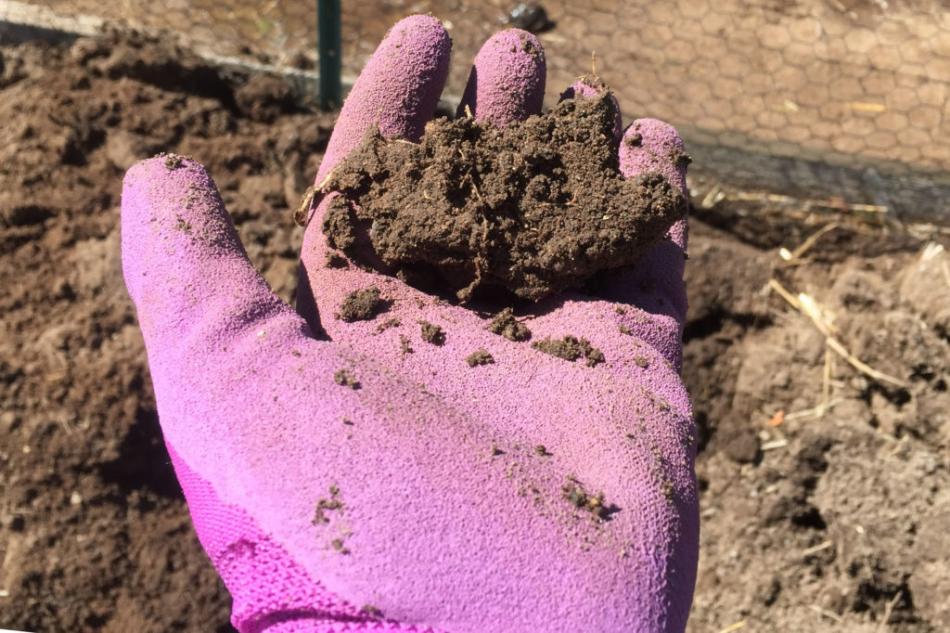
While the U.S. is experiencing higher prices for fertilizers and transportation costs, which increase food prices, other countries are a great risk of significantly reduced agriculture production and food insecurity. Perhaps we gardeners as fertilizer consumers can turn to organic products and produce our own compost as an alternative to the petrochemical-based synthetic fertilizers.
— JoAnne Skelly is an Associate Professor and Extension Educator, Emerita, University of Nevada Cooperative Extension. She can be reached at skellyj@unr.edu.