By Brett Fisher
Today is April 12, a seemingly ordinary day just like any other.
But 155 years ago, April 12 was anything but ordinary.
It was the day America went to war against herself.
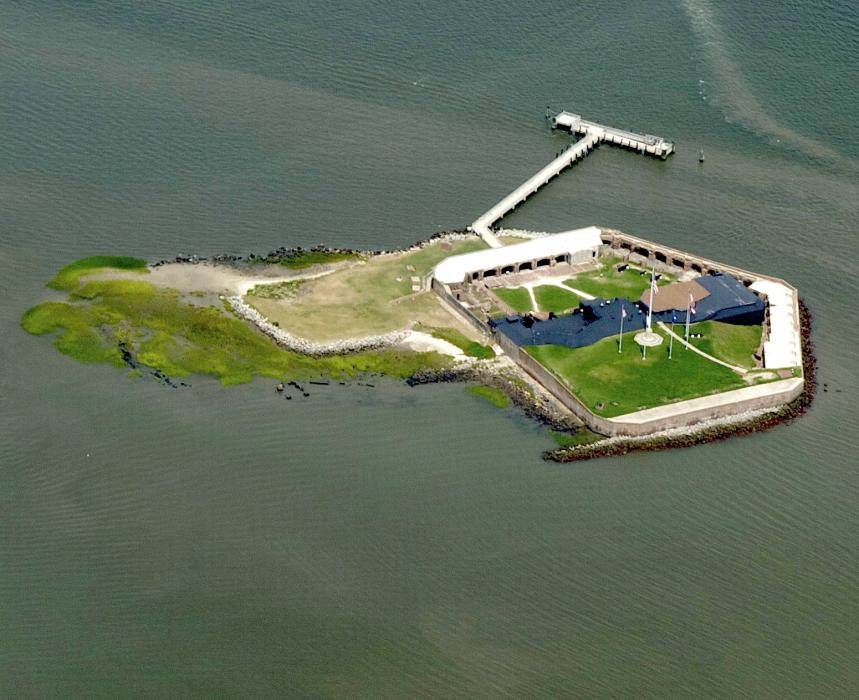
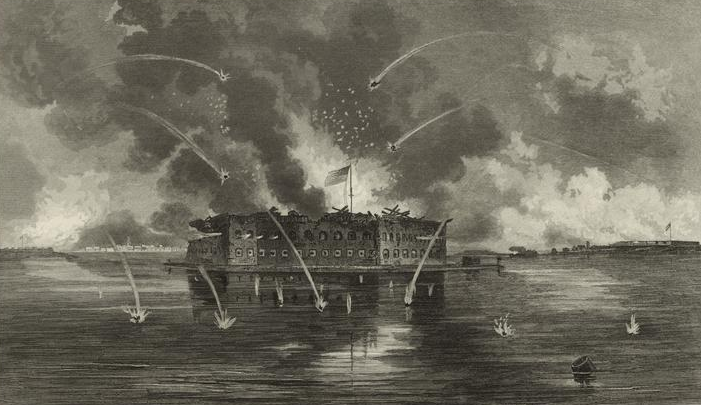
Early in the morning before dawn on April 12, 1861, Confederate artillery forces in Charleston, South Carolina, released cannon fire on Fort Sumter, a federal military installation in Charleston Harbor.
The ensuing artillery barrage lasted for hours before the fort’s commander, Maj. Robert Anderson, surrendered the property to the state of South Carolina and the Confederate States of America.
Already torn in two by secession, America was now at war.
The American Civil War turned out to be our nation’s most costly mistake, and its greatest tragedy.
Despite predictions from both sides, the fight was not brief.
It lasted four very long and agonizing years, costing the entire country the lives of more than 600,000 men and boys.
Not to mention the tens of thousands of the displaced refugees who had become victims of the bitter fighting.
America’s fighting spirit was severely underestimated yet again, just as the British dismissed the fortitude of the rough colonials 80 years earlier during the Revolution.
On the one hand, the Civil War saw an end to the institution of slavery. But on the other, it is a shame that brothers had to go to war against one another, spilling each other’s blood, producing widows and orphans, destroying the landscape, and leaving scars — both physical and emotional — that never went away.
I am the great-great-grandson of at least two U.S. Army veterans who fought as Illinois volunteers during the Civil War. I am also the great-great-grandson of at least two Confederate Army veterans; one who rode with a Texas cavalry unit and one who served in a Virginia cavalry unit.
After my dad passed away, I was entrusted with the revolver of his great-grandfather, a private in the Seventh Virginia Cavalry. It is a relic I cherish, not just because it is a family heirloom, but because it’s a piece of real history.
It represents a period in our nation’s history that was perhaps its most critical.
And my family was in the middle of it all, fighting and surviving.
The study of the American Civil War, and especially its social ramifications, has been one of my most zealous passions for several years.
I want to know all I can about this period, including the way our nation’s choices back then resulted in such tragic consequences.
Why? Because I don’t want America to reap those consequences again by making similar mistakes.
I want her people to learn from these mistakes through a respect for history. It’s why I am writing this column and remembering what happened 155 years ago today in Charleston, South Carolina.
I disagree that the American Civil War was a mistake that should never have been made, that it should never have happened. Not when hindsight is 20/20, and foresight is something considerably less.
History is what it is. War happened, and so did its aftermath.
The water is under the bridge, and has been for the past century and a half. We can’t wish it away.
The horses are out the barn already, so what’s the use in trying to shut the doors now? All we can do today is appreciate history for what has happened. Lamenting that it happened in the first place doesn’t do us any good.
I can only advise to just remember what happened, and endeavor not to let history repeat itself, because we already know the outcome.
Remembering history, and our mistakes, keeps us cognizant and vigilant as things continually change in the world around us.
As for lamentations, a person is not judged by how much he regrets what is lost. He’s judged by what he does with what’s left.