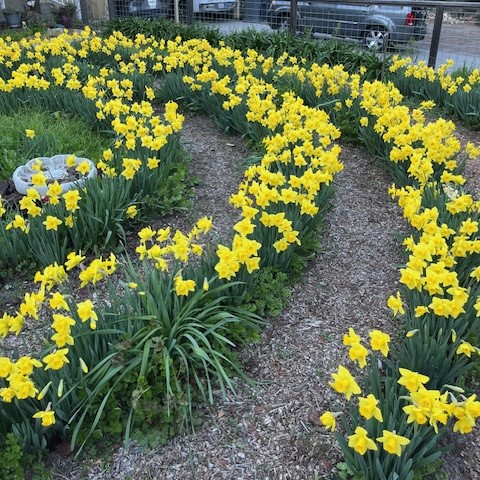
Now that my daffodils are coming up, I’ve been wondering if I should fertilize them. I know that when you first plant bulbs it is advised to work a 5-10-10 fertilizer into the soil around the bulbs to give them a good start. However, I’ve read that the tradition of putting bone meal into soil on planting isn’t effective, because it takes too long for the meal to break down.

With old established daffodils such as mine, I read that I can give them a boost before they burst into bloom with a 5-10-10 worked lightly into the soil. As they flower, I can top-dress with 0-10-10 or 0-0-50. High-nitrogen fertilizers (the first number in the analysis) should be avoided according to The American Daffodil Society (ADS).
Since I really enjoy daffodils with their bright first color of spring, I am going to feed them. Besides their lovely blooms, another feature I appreciate about daffodils is that ground squirrels leave them alone.
“Daffodils need lots of water while they are growing” (ADS) until three weeks or more after blooming but they can go dry for much of the summer after the leaves have died back. Good drainage is important. They flower best in full sun.

On another spring gardening note, St. Patrick’s Day is the traditional date for planting peas. I love the taste of raw fresh-picked peas. It’s like eating candy. There are tall vine types that grow five feet tall, producing peas over a long period. Bush types are an alternative that reach two to three feet tall but produce peas all at once. Most varieties produce within 60 days but stop producing when the temperatures get warm. Best growing temperatures are between 55 degrees and 65 degrees.
I soak pea seeds in a damp paper towel in a plastic bag for 24 hours before planting to facilitate germination. According to University of Minnesota Extension, you plant vining types near a trellis in a single row with netting or string between to support the vines. The bush types can be planted in a row between 12 and 18 inches wide and will actually support each other as they grow. Plant seeds about one inch deep and six to seven inches apart.
Tamp the soil down over the seeds. If you want to extend your harvest, plant again in one week and then again a week after that. Water and keep the beds weeded. For detailed information go to https://extension.umn.edu/vegetables/growing-peas.
The busiest time of the gardening year is almost here!
— JoAnne Skelly is an Associate Professor and Extension Educator, Emerita, University of Nevada Cooperative Extension. She can be reached at skellyj@unr.edu.