Carson City’s Public Guardian office is managing 58 cases for vulnerable adults while navigating systemic institutional barriers, including bank delays, healthcare shortages, and “unconsented hospital discharges”, according to an annual report presented to the Carson City Board of Supervisors Thursday.
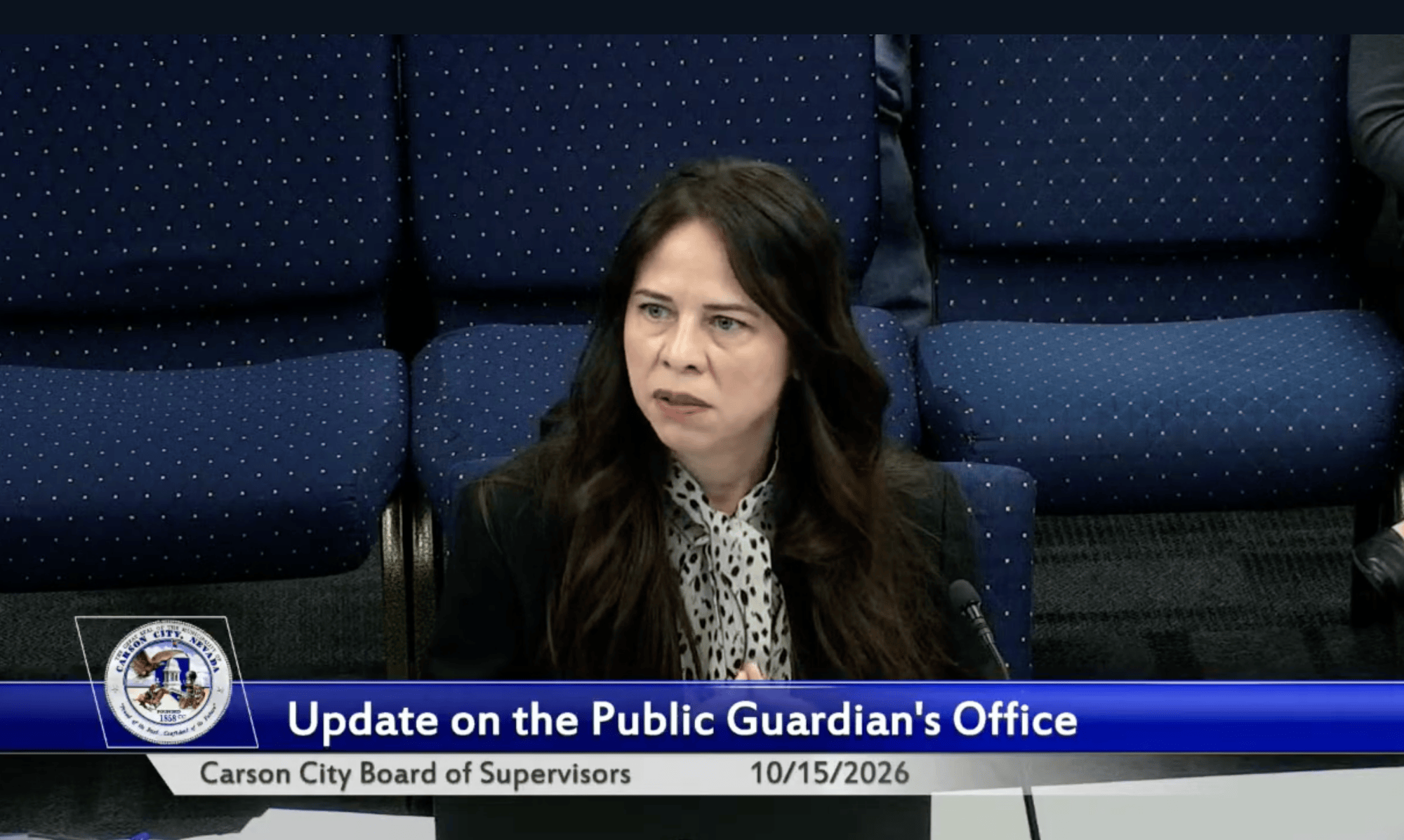
Speaking before the Carson City Board of Supervisors, Carson City Public Guardian Sandra Doughty outlined the operations of her office, which serves as the “guardian of last resort” for adults aged 26 to 98 who are unable to manage their personal or financial affairs.
The agency oversees protected persons across Carson City and neighboring Storey County through a regional contract established in 2019.
Despite operating with a small four-person team that far exceeds recommended caseworker-to-client ratios, the agency restored the full legal rights of three protected individuals over the past year, up from two the prior year.
The office also successfully shifted several clients from skilled nursing facilities into less restrictive settings, such as group homes and independent living arrangements.
“Paramount to what we do is we have to consistently keep in mind that there is the potential to restore individuals’ rights,” Doughty told supervisors during the presentation.
However, according to Doughty, systemic obstacles continue to disrupt daily operations and delay client care.
She reported routine resistance from financial institutions that refuse or delay honoring valid court orders, preventing her office from accessing client bank accounts to pay for essential living needs.
The office also faces challenges within the healthcare sector, including a critical shortage of facility beds contracted with Nevada Medicaid, which funds 45 of the agency’s 56 active clients.
A statewide deficit in specialized behavioral and psychiatric care has forced local skilled nursing homes to fill the gap for patients with severe mental health issues.
Additionally, Doughty cited repeated instances of “unconsented hospital discharges,” where medical facilities released protected persons without notifying or receiving consent from their appointed guardians.
High turnover rates among regional healthcare and social service personnel have further complicated case coordination.
To address gaps in financial management before individuals reach full guardianship, the agency plans to research establishing a local representative payee program in partnership with the state’s Aging and Disability Services Division. The program, if successful, will allow individuals who only need help managing bills to maintain their legal rights without entering full court-ordered guardianship.
Supervisors commended the agency’s critical work, acknowledging the high strain on staff.