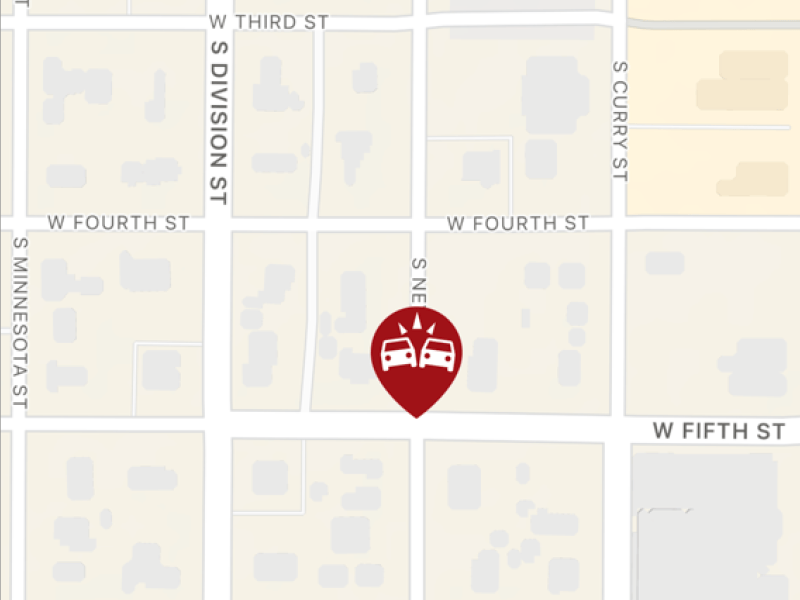
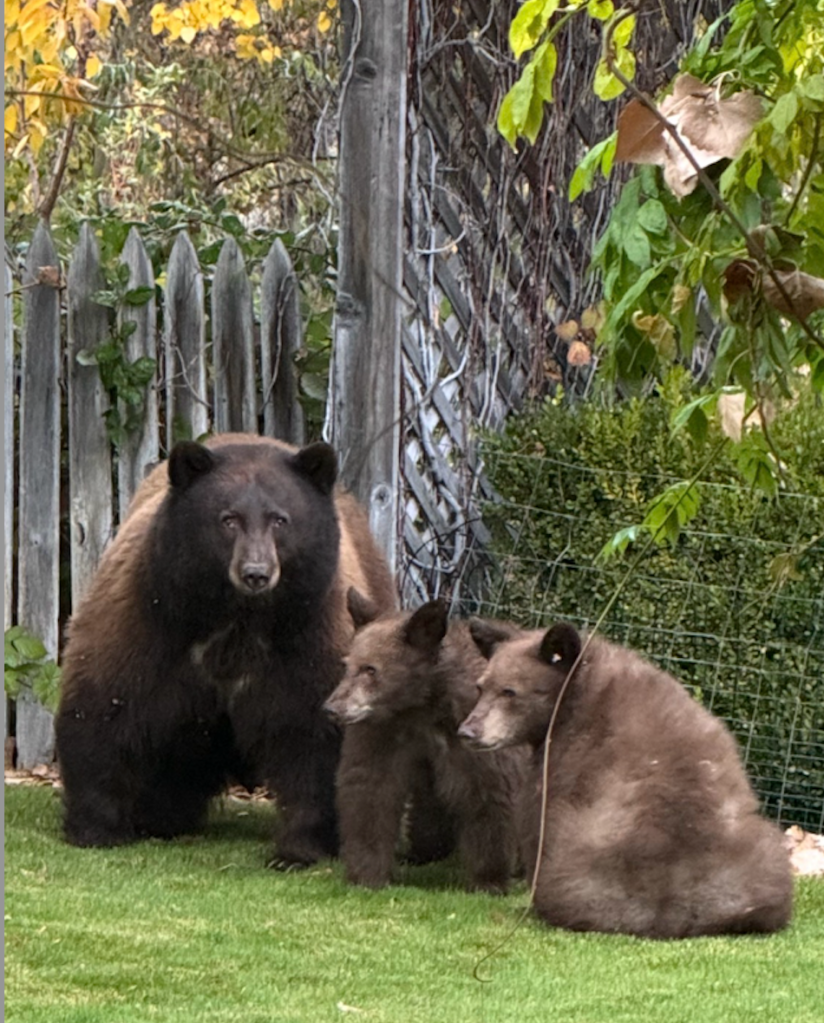
A bear cub was reunited with their mother and sibling cub after it was captured in a trap on Nov. 4 in Carson City on Mountain Street, according to the Nevada Department of Wildlife.
After a Carson Now reader reached out asking about the status of the bear family, NDOW confirmed the cub was captured in a trap near north Mountain Street in Carson City and released back to their family.
“Trapping a sow and her two cubs can be challenging, as our goal is to keep the family together,” said NDOW spokeswoman Kenzie Margiott. “Each situation is unique, and our response depends on the circumstances. In this case, the cub was released on-site and immediately reunited with its mother and sibling, who were waiting nearby outside the trap.”
NDOW biologists are currently aware of three separate family groups of mother bears and cubs in the Carson City area, said Margiott.
“We’ve also seen a significant increase in bear-related calls, many involving bears accessing unsecured trash,” she said.
Typically, NDOW does not set traps for bears simply getting into unsecured garbage. Instead, NDOW emphasizes the importance of removing attractants and securing potential food sources to prevent bears from becoming habituated to human-provided food.
Carson City has an ordinance addressing wildlife attractants, including unsecured garbage, Margiott noted. Keeping trash secured and removing other food sources are among the most effective ways residents can help reduce human-bear conflicts. Two written violations within two years can result in a fine.
As bears continue preparing for winter, they are actively searching for food and may travel through neighborhoods in search of easily accessible meals. While natural food availability can vary from year to year, unsecured trash remains a significant attractant.
“We appreciate the community’s concern for these bears and are glad to report that this particular family was successfully reunited,” she said.
As temperatures continue to drop across western Nevada, NDOW reminds residents that black bears remain active and searching for food.
While black bears typically begin entering their winter dens in November and December, cooler temperatures do not necessarily mean bear activity has slowed or stopped, said Margiott. Bears are currently in a period known as hyperphagia, when they consume large amounts of food to build fat reserves for the winter months.
During this time, bears can consume upwards of 25,000 calories per day and may travel considerable distances in search of food. Easily accessible attractants, including unsecured garbage, bird feeders, pet food, and other human-provided food sources, can encourage bears to remain active longer.
NDOW encourages residents to continue taking precautions, even as winter approaches:
- Secure garbage in bear-resistant containers and only place trash outside on the morning of collection.
- Remove bird feeders and other potential food attractants.
- Never leave pet food outdoors.
- Pick up fallen fruit and properly dispose of pumpkins.
- Remain alert for bears while driving, particularly around dawn and dusk.
Not every bear sighting is cause for alarm. Seeing a bear moving through an area does not necessarily mean there is a problem, and routine sightings do not need to be reported to NDOW.
However, if a bear appears injured, is unable to move, or poses a public safety threat, residents are encouraged to contact NDOW’s Bear Hotline at 775-688-BEAR (2327).