This is my last article for 2026, so I thought I would take a look at what happened horticulturally and what lessons I have learned this past year.
Early in the year ‘Chaos Gardening’ was trending and I laughed when I saw that, because who knew my 38-year-old lazy garden style was suddenly in.
Waiting until February to clean the bluebird boxes was too late. We had warm weather prior. But then winter arrived in late February, followed by unseasonably warm weather. We turned on the irrigation in mid-March, but kept our eyes on the night-time lows. After that the “spring teases and freezes” (K. Johnson Univ. Illinois) continued.
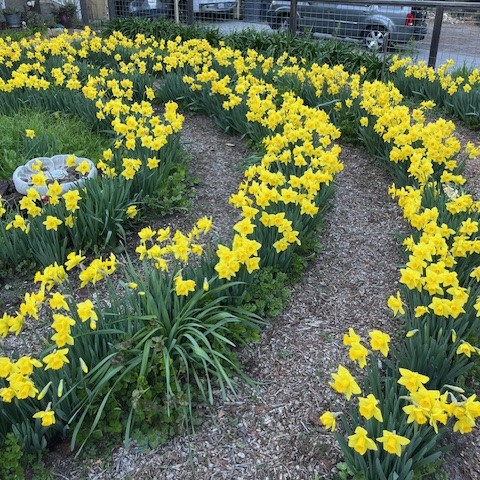
The daffodils seemed to last only a week. The lawn was filled with purple violets.
The first week of March is time to put out the yellowjacket traps. I strongly suggest, based on personal experience, using the 10-week traps rather than the 2-week ones. Then remember to replace the lures at the end of the 10 weeks to ensure continued summer and fall yellowjacket deterrence.
When planting next year, consider replacing ornamental plants with edible ones. But don’t fall for a false spring as I did and plant tender, non-hardy plants (especially tomatoes) too early.
It was awesome watching the redtail hawks nest and fledge in a creek-side spruce and the house finches in the conehead spruce. Robins came early, left for most of the summer and now are back enjoying the juniper berries and the bird baths.
As always, the ecologist in me struggles with the landscape perfectionist in how I take care of the yard. Do I plant and maintain for the critters, particularly the birds, pollinators and beneficial insects? Or do I focus on neat and tidy aesthetics? The lazy gardener usually wins. Climate change is definitely noticeable.
Pests: never thought our lawn would have a fairy ring. Yes, we have snails in Nevada. The pests started with ticks, progressed to scales, weeds, rabbits, yellowjackets, ground squirrels, voles, moles and grasshoppers.
I had to have a number of my long-time tree friends removed to prevent their roots from destroying the septic leach lines. Lesson – plant far away from septic systems.
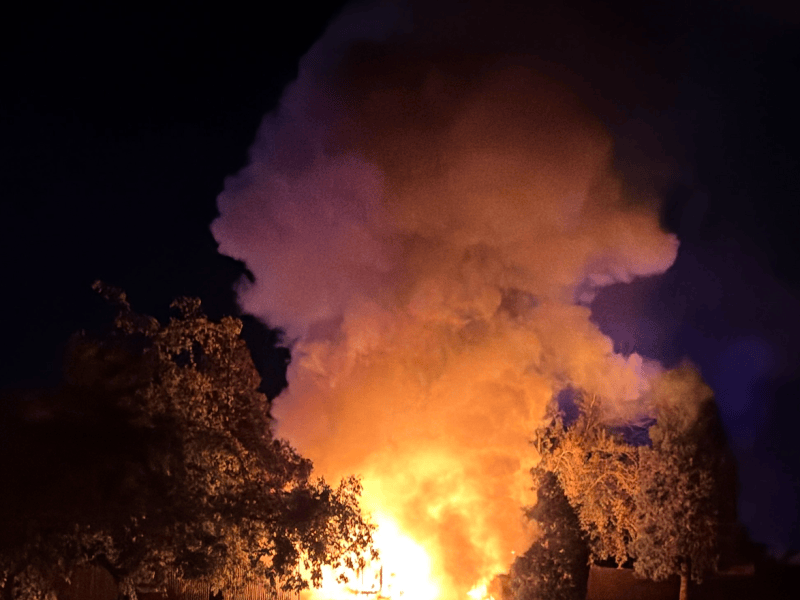
Always be prepared for wildfires.
Harvesting your first tomato is a joy.
Fall is the best time for planting. I’m excited about putting in a new flower bed. It is also a great time for fertilizing lawns, so I finally stopped procrastinating and did so. The autumn leaves always win, so I’m glad I enjoy raking!
Naked ladies! Enough said. It was a good year.
— JoAnne Skelly is an Associate Professor and Extension Educator, Emerita, University of Nevada Cooperative Extension. She can be reached at skellyj@unr.edu.