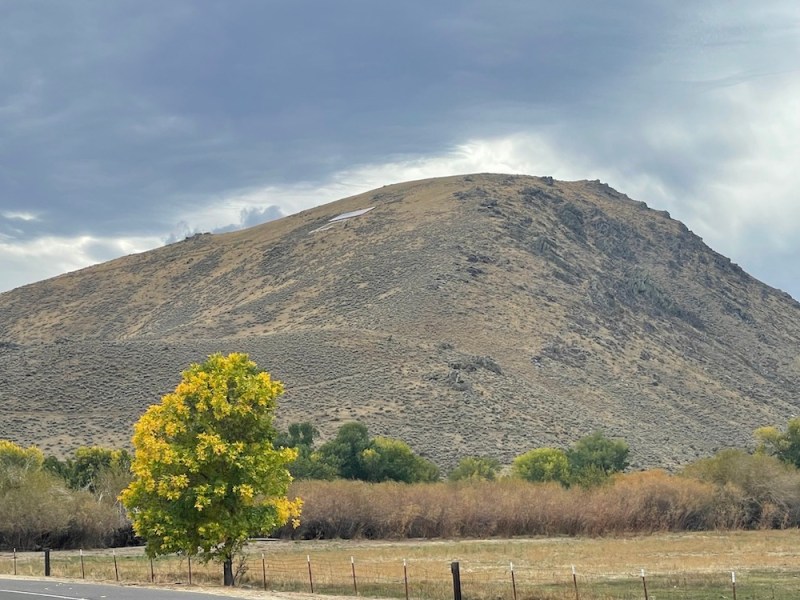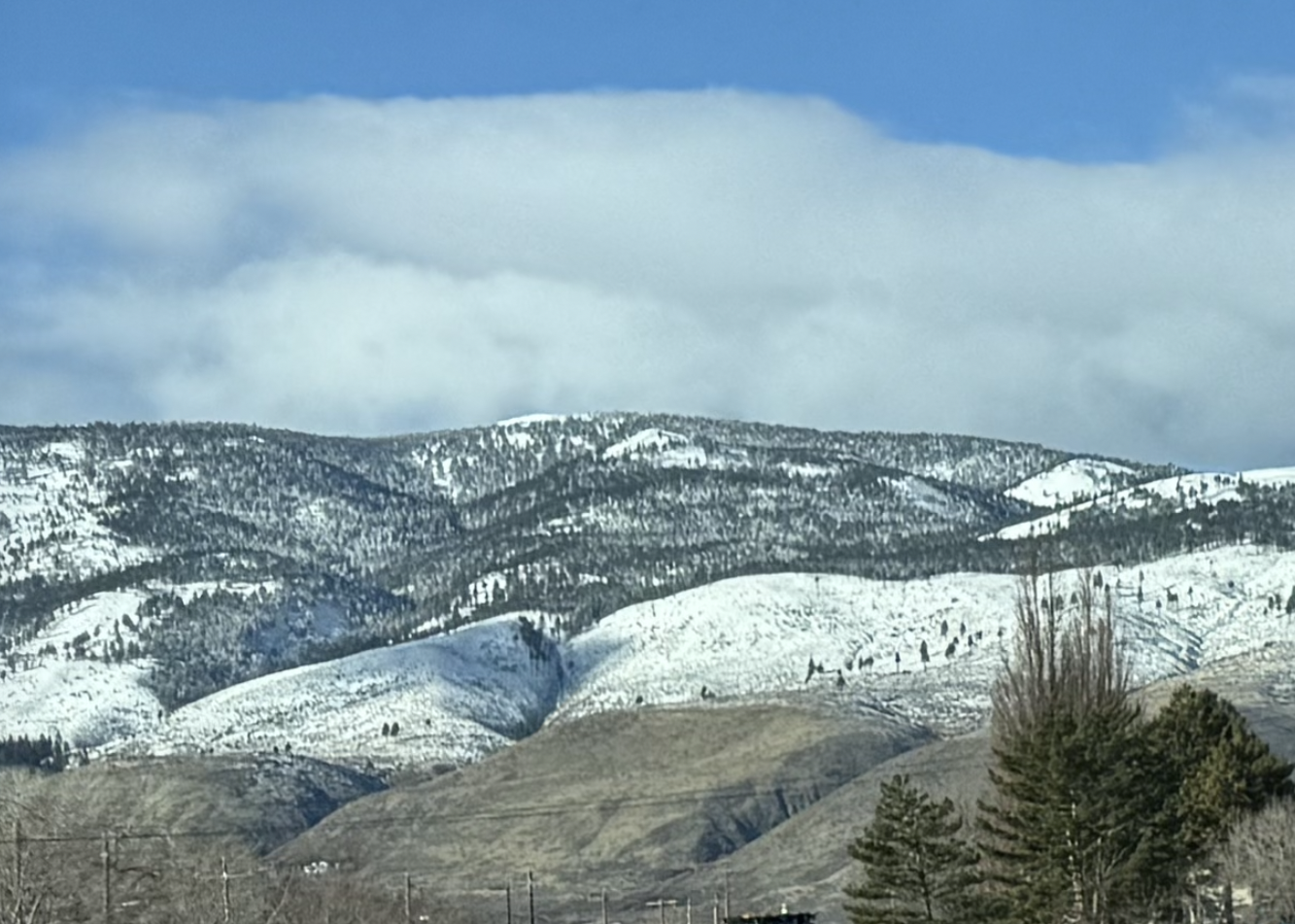

As we are about to head into February, there’s one thing on everyone’s minds (whether they’re excited about it or in dismay): where the heck is the snow?
This winter, Northern Nevada is setting yet another swath of records as we continue to forge our way into the unknowns of a changing climate. While Carson City was named the fastest-heating city in the country in 2014 (before losing that ranking to Reno soon after, which has held it ever since), we are now in the middle of what will likely be the warmest winter on record for the region as historic records tally up month after month.
Heat
So far, in Reno, the average temperature from Dec. 1 through mid-January was around 41 degrees F — a full 4.6 degrees above normal, which has earned it the spot of the warmest beginning to winter on record.
December also saw a new all-time high average temperature in Reno for 43 degrees — 6.8 degrees above the 1991-2020 normal range. The highest temperature recorded during the month by the Reno-Tahoe Airport was 66 degrees. The average maximum (recorded between 1888 and now) is 55.1 degrees, for context.
The holiday season throughout the region saw multiple days of spring-like highs, with very few dipping below 50 degrees, and a notable number of days had lows many degrees above freezing.
Climatologists also noted that this was the warmest start to the water year as well as the winter season, which begins on Oct. 1. So far, the water year has recorded an average of about 3.1 degrees above normal for October through December.
The region also saw its latest first freeze on record (Nov. 19) and the latest first measurable snowfall (Jan. 8).
Precipitation
While it may end up being the warmest winter, this is not the driest winter on record, however. We’ve seen several storms move through, each of which in turn was thought to provide some amount of local snow. However, the one storm resulting in a dusting of snow in the valleys was gone by the end of the day.
In December, 1.89 inches of precipitation was recorded, which is 0.79 inches above the norm for the month. However, without that precipitation turning into snow, it marks a large decrease from the norm: 5.2 inches below normal, to be precise.
By comparison, 4.58 inches of rain was tallied since Oct. 1, which is 1.5 inches higher than the norm.
During the four-day Christmas storm that took place from Dec. 24-27, higher elevations logged several inches of snowfall (including a whopping 9 inches in Virginia City), but the valleys simply saw a swath of rain during the storms.
In fact, the first measurable snowfall in Carson City didn’t come until the holidays were over — with a smattering of snow sticking for at least a few hours on Jan. 8.
But just because we got some form of precipitation doesn’t mean we’re in a good place, environmentally. The region relies on the melting of the snowpack throughout the spring and even into summer to feed local waterways, and too much rain means there’s a bigger chance for flooding rather than drought.
The National Oceanic and Atmospheric Administration (NOAA) named the Sierra Nevada and the Great Basin as being in an “extreme snow drought” already this year — with water snow water equivalents at less than 50% of the median. By comparison, recorded soil moisture levels from rainfall were 118% above the median.
Regional effects
While a dry winter almost guarantees a rough fire season, a rain-heavy one is a bit of an unknown —- at least at the levels we are seeing.
However, there have already been affects on recreation: this year, most ski resorts delayed openings or limited terrain through November and most of December due to a lack of snow, and the inability to make snow due to the consistently high temperatures. While snowfall levels have ebbed and flowed throughout the years, this inability to make snow is a new (and concerning) development for the winter tourism and recreation industry.
Four of the last five winters in the Sierra have recorded some degree of “snow drought,” whether from low precipitation or higher temperatures.
If the warming trend continues for our region, which data indicates it will, what does that mean for the future of our outdoor recreation economy? Outdoor recreation as a whole is one of Nevada’s main industries, which generates around $14 billion per year in economic activity, supporting 75,000 jobs. This is also important as our economy has continued to tailspin from issues that arose with a decrease in tourism for gaming, as outdoor recreation contributed $2.3 billion in tax revenue in 2023 alone.
And winter snow sports from skiing and snowshoeing to sledding and snowmobiling are considered to make up the majority of the “high spending” categories, which “generate substantial aggregate economic contributions across Nevada’s outdoor recreation economy.”
In the Carson City/Reno area, less snowpack in the Carson Range and Sierra means the spring runoff could underperform, even though total precipitation has been ample since much of it has soaked into soils or run off quickly. Additionally, a warm winter affects ecosystems, meaning plants and wildlife attuned to historical seasonal cues may be thrown off by the lack of snow and extended mild periods.
So, will this be the hottest winter ever recorded for our area? The clock is ticking down, as the meteorological winter (different from the astronomical winter) ends on Feb. 28. With the average high for January forecasted to be 54.2 degrees F, unless some drastically cold temperatures strike in February — we are likely to be well on our way to setting yet another historic record this year.