by Lucia Maloney, Carson City
Why the 2026 Midterm Elections Are a Critical Turning Point for Nevada
Nevada is at a decisive moment. The 2026 midterm elections will determine whether the state continues down its current path or chooses a new direction on affordability, public safety, healthcare access, and economic opportunity.
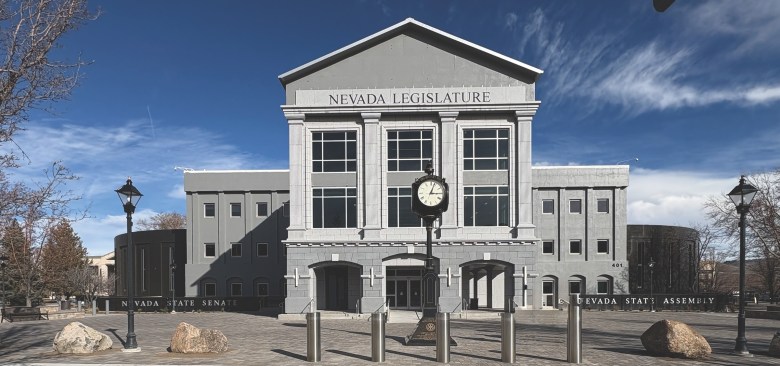
For more than a decade, Democrats have controlled the Nevada State Legislature. Democrats have held the majority in the Nevada Assembly continuously since 2015 and have largely controlled the Senate during that same period. That dominance was reinforced after the 2020 Census, when Nevada completed its most recent redistricting in 2021. Democrats controlled both legislative chambers and the governor’s office in 2021, giving them full authority over how legislative district maps were drawn.
Nevada’s resulting redistricted maps helped entrench Democratic legislative majorities even as Nevada voters became more politically conservative statewide. While Nevadans have increasingly supported Republican candidates for statewide office, including electing Republican Governor Joe Lombardo, the Legislature has remained firmly under Democratic control.
At the same time, Nevada’s rapid population growth has weakened what was once a reliable Democratic stronghold. Clark County and surrounding regions have seen significant in-migration from other states, growth in nonpartisan voters, and steady gains in Republican registration. This past October, Republicans surpassed Democrats in statewide voter registration for the first time in nearly twenty years.
Despite these shifts, the Legislature has not meaningfully changed. In the 2025 session, Democrats held 27 of 42 seats in the Assembly and 13 of 21 seats in the Senate. While not technically a supermajority, this margin placed Republicans near super-minority status. Democratic leadership controlled the committees, the agendas, and decided which bills were granted hearings.
That control mattered. During the 2025 session, numerous Republican sponsored bills never received hearings at all. Proposals addressing healthcare workforce shortages, housing supply, regulatory reform, and public safety were blocked before public testimony could even be taken. This was not because they lacked merit or public support, but because the majority party decided not to advance them.
Nevada’s Housing Affordability Crisis and the Bills That Never Advanced
Nevada’s housing affordability crisis is now impossible to ignore. Rents and home prices have increased far faster than wages, pushing working families, seniors, and young professionals to the brink. Teachers, nurses, first responders, and hospitality workers are increasingly priced out of the communities they serve.
Republican lawmakers have repeatedly introduced legislation aimed at addressing the supply side of the housing crisis. These efforts focused on reducing regulatory barriers, addressing unlawful occupancy, and streamlining development timelines.
In the 2025 session, Republican Senator Ira Hansen sponsored Senate Bill 202, which addressed tenant protections related to unlawful occupancy and sought to bring clarity and balance to rental enforcement laws. SB202 failed to advance out of committee and never received a full hearing.
Also during 2025, Republican Senator Carrie Ann Buck sponsored Senate Bill 222 which sought to expand transparency and homeowner rights in common-interest (HOA) communities; an issue affecting the pocketbooks of hundreds of thousands of Nevada homeowners. The bill never received a hearing.
Republicans pushed zoning and development reforms during the 2023 session to encourage the construction of workforce housing, particularly in fast-growing counties. Several of these bills stalled without hearings due to committee inaction.
Rather than focusing on supply expansion, the Democratic majority prioritized measures such as Assembly Bill 121 in 2025, which regulated rental fee disclosures. While transparency is important, telling prospective renters about all the fees that are making rents unaffordable, does nothing to bring down the actual cost of their rents. On the contrary, the additional regulatory barriers and administrative paperwork of this progressive law is likely to cause rents to rise (“I guess I need to pay someone to do all this additional reporting. I’ll just add it in as another fee to the renter.”) and/or drive small landlords out of the market (“It’s too complicated to rent my house out”).
Housing affordability cannot improve without building more homes and without reducing the regulatory burdens that drive rental rates up. Republicans have offered solutions. The Democrat-controlled Legislature has blocked them.
Public Safety, Crime Reform, and Legislative Resistance
Public safety is a quality of life issue. Families will not stay, businesses will not invest, and tourism will suffer if communities feel unsafe.
Governor Joe Lombardo, a Republican and former sheriff, made crime reduction a top priority in the 2025 session. Working with Republican legislators, he proposed a comprehensive public safety package aimed at strengthening penalties for repeat offenders, addressing organized retail theft, and protecting hospitality workers.
That effort failed during the regular session after Democratic leadership delayed action until the final hours, effectively killing the bill. Only after public backlash did lawmakers address crime reform during special session, where a revised and narrower version of the proposal was finally approved.
Republican lawmakers also introduced Assembly Bill 4 during the 2025 special session, a public safety reform package that addressed DUI penalties, stalking, and repeat criminal behavior on the Las Vegas Strip. While AB4 ultimately passed, the delay illustrated how public safety reforms face resistance under one-party legislative control, and the narrowed scope has many in our community wishing for more.
The pattern is clear. Republicans push proactive crime policies. Democratic leadership stalls, narrows, or blocks them. The result is delayed action while we all bear the cost.
Healthcare Access and the Nurse Shortage Nevada Refused to Fix
Nevada suffers from a severe healthcare workforce shortage, especially among nurses. Rural communities are hit hardest, but urban areas also face long wait times and limited provider availability.
Republican lawmakers have repeatedly proposed licensure reciprocity as a practical solution. In the 2025 session, Senate Bill 34 was introduced to allow Nevada to join interstate licensure compacts for healthcare professionals, including the Nurse Licensure Compact. This would have allowed qualified nurses from neighboring states to practice in Nevada without duplicative licensing requirements.
Assemblyman P.K. O’Neill, Republican from Carson City’s Assembly District 40, was a leading advocate for licensure reciprocity. His efforts throughout the course of his multi-term career focused on expanding the workforce quickly, lowering healthcare costs, and improving patient access. SB34 did not receive a hearing and failed to advance.
The consequences are predictable. Fewer providers mean higher costs, longer delays, and worse health outcomes. Nevadans continue to leave the state for care that should be available at home.
This was – and continues to be – a solvable problem. Republican lawmakers proposed solutions. The Legislature declined to act.
Economic Growth and the Bills That Died in Committee
Nevada’s long-term prosperity depends on more than tourism. It requires a regulatory environment that encourages innovation, entrepreneurship, and job creation.
In the 2025 session, Assemblyman P.K. O’Neill sponsored Assembly Bill 376, which would have created a regulatory sandbox for insurance and financial services innovation. The bill aimed to attract new companies, encourage competition, and expand consumer choice while maintaining oversight. AB376 never advanced out of committee.
Also in the 2025 session, Republican Senator Jeff Stone sponsored Senate Bill 129, which would have lowered workforce barriers for professional practice in Nevada, supported small business growth, and addressed workforce shortages. The bill never received a committee hearing.
These examples are but a few of Republican-sponsored licensing reform and regulatory modernization bills introduced during recent sessions that could have lowered barriers for small businesses and startups. Many of these proposals stalled without hearings.
When businesses face excessive regulation, workers pay the price through fewer jobs and slower wage growth. This isn’t a matter of “greedy business owners” as Democrats and legacy media would like us to believe – it’s a matter of a Democrat-created regulatory environment that locks everyday Nevadans out of a path to prosperity.
Republican lawmakers have consistently advocated for a pro-growth approach benefiting all Nevadans. The Democratic majority has consistently blocked it.
Why 2026 Matters
The 2026 midterm elections are not symbolic. Every seat in the Nevada Assembly and nearly half of the Senate will be on the ballot. Voters have the power to restore balance to a Legislature that has been controlled by one party for too long.
A Republican majority would bring immediate change in priorities:
- Expanding housing supply to lower costs
- Advancing healthcare workforce reforms to improve access
- Strengthening public safety and law enforcement support to restore stability and public trust in the system
- Creating a pro-growth economic environment that benefits everyone
These are not partisan experiments. They are practical solutions to problems Nevadans live with every day.
Give Change a Chance
Nevadans are paying the price for inaction. Housing is increasingly out of reach, nurses are scarce, streets feel less safe, and wages are falling behind rising costs. For too long, good ideas have been blocked before they were even debated. This is not ideology. This is today’s Nevada.
In 2026, every voter has the power to restore balance in Nevada’s government. Elect Republicans at every level – from Assembly to Senate – and give new solutions a chance to become law. Expand housing options. Strengthen public safety. Improve healthcare access. Create real economic opportunity for all of us. Don’t let another session pass while critical reforms are stalled. Make your voice count.
Nevada has waited long enough. Affordable homes, safer streets, accessible healthcare, and economic opportunity are within reach, if we act now. In 2026, let’s give Nevada a new direction. Let’s give change a chance.
About the Author: Lucia Maloney is a Nevada native, wife and mother of two young kids, small business owner, and is passionate about achieving practical policy solutions to create a stronger, more prosperous Nevada. You can reach her through her website, LuciaMaloney.com.